Your local guide to Korea, written in Seoul

Eat, travel and live like a local in Korea

Author: Jimmyjung

  • Sentimet Review: Australian-Style Brunch Near Maebong Station, Seoul

    Sentimet Review: Australian-Style Brunch Near Maebong Station, Seoul

    Short answer: if you want a proper sit-down brunch in southern Seoul, Sentimet (센티맷) near Maebong Station is the one I’d send you to. I’ve eaten there myself. Every brunch plate is ₩18,000 (about US$13), it opens at 8 a.m. on weekends, and you can book a table on Naver.

    Most of the restaurants on this blog are local picks I found through Naver Map reviews. This one is different: I went, I ordered, and the photos below are mine. It sits on a quiet street in Dogok-dong, a few minutes from the Yangjaecheon Stream walking path, so it’s an easy add-on if you’re staying in Gangnam or heading to the stream for a walk.

    Last checked: 2026-11-01. Prices and hours are from Sentimet’s Naver Map page. Menus change, so check the Naver Map link before you go. US dollar amounts use Naver’s base exchange rate on 2026-11-01 (₩1,335.80 = US$1), rounded.
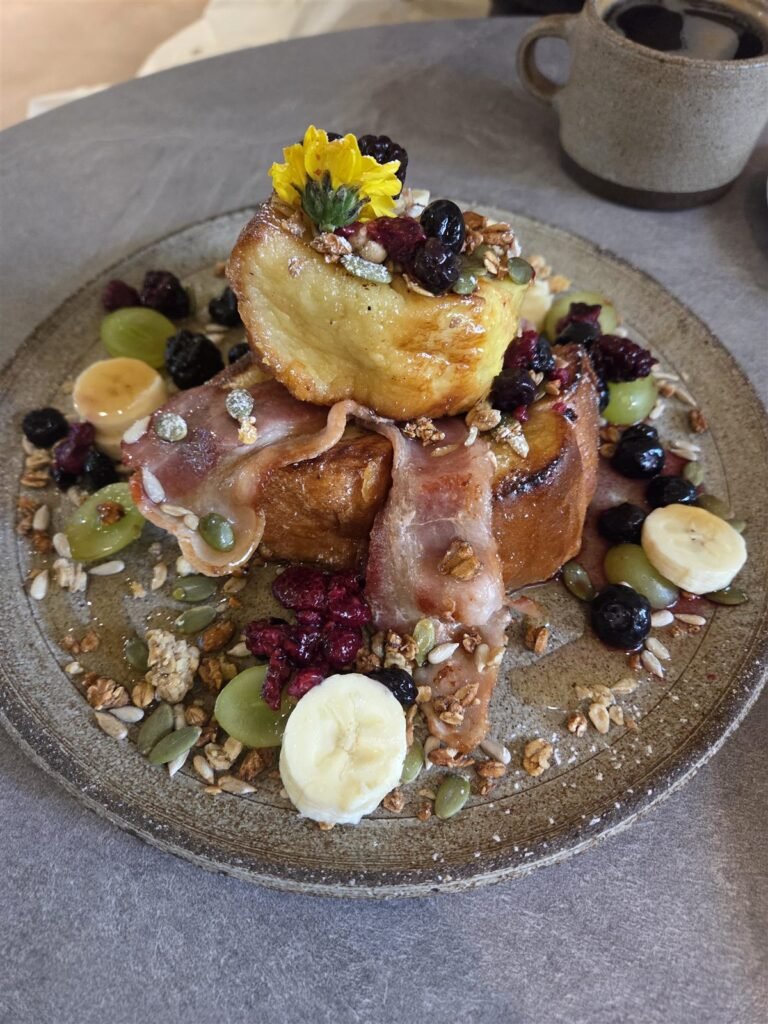
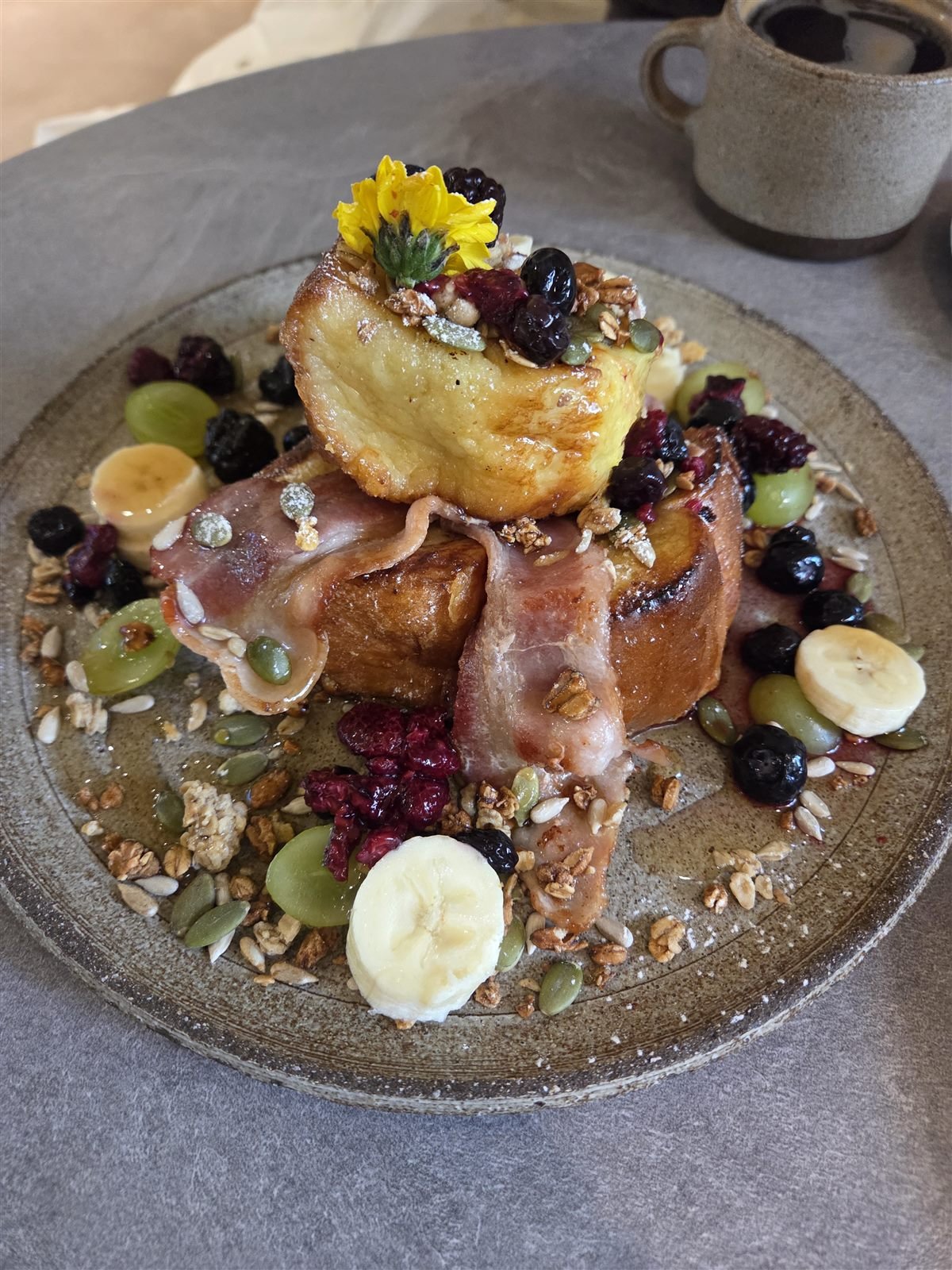
    Brioche French toast with bacon, berries, banana, grapes and granola at Sentimet brunch cafe near Maebong Station, Seoul
    The brioche French toast at Sentimet: thick-cut brioche, bacon, fruit, granola and seeds. Photo: Jimmy / All About Kor

    Sentimet at a glance

    Details
    What it is All-day brunch café with Australian-style coffee
    Area Dogok-dong, Gangnam-gu, near Yangjaecheon Stream
    Nearest subway Maebong Station (Line 3), Exit 4, about 5 minutes on foot
    Brunch plates ₩18,000 (about US$13)
    Coffee ₩4,800 to ₩8,000 (about US$4 to US$6)
    Hours Mon to Fri 09:00 to 18:00, Sat and Sun 08:00 to 19:00
    Booking Naver booking (1 to 4 people); CatchTable page also listed
    Naver rating 4.94 from 603 ratings, 2,829 reviews in total

    Why I recommend it for brunch

    Sentimet is a brunch place first. The menu is short and every dish on the “all day brunch” list costs the same ₩18,000, so ordering is easy even if you can’t read the Korean side of the menu. The English names are printed on the menu board.

    The coffee list reads like a Melbourne café: short black, long black, flat white, piccolo, babyccino for kids, Melbourne Breakfast tea and Bundaberg ginger beer in the fridge. If you’ve been missing a flat white since you landed, this is a good place to fix that.

    We ordered two plates. The brioche French toast (top photo) comes stacked with bacon, berries, banana, grapes, granola and pumpkin seeds, so it’s sweet and salty at once and big enough to share. The salmon eggs Benedict (below) is two poached eggs with hollandaise on toast, with smoked salmon, sliced avocado, radish and capers on the side.
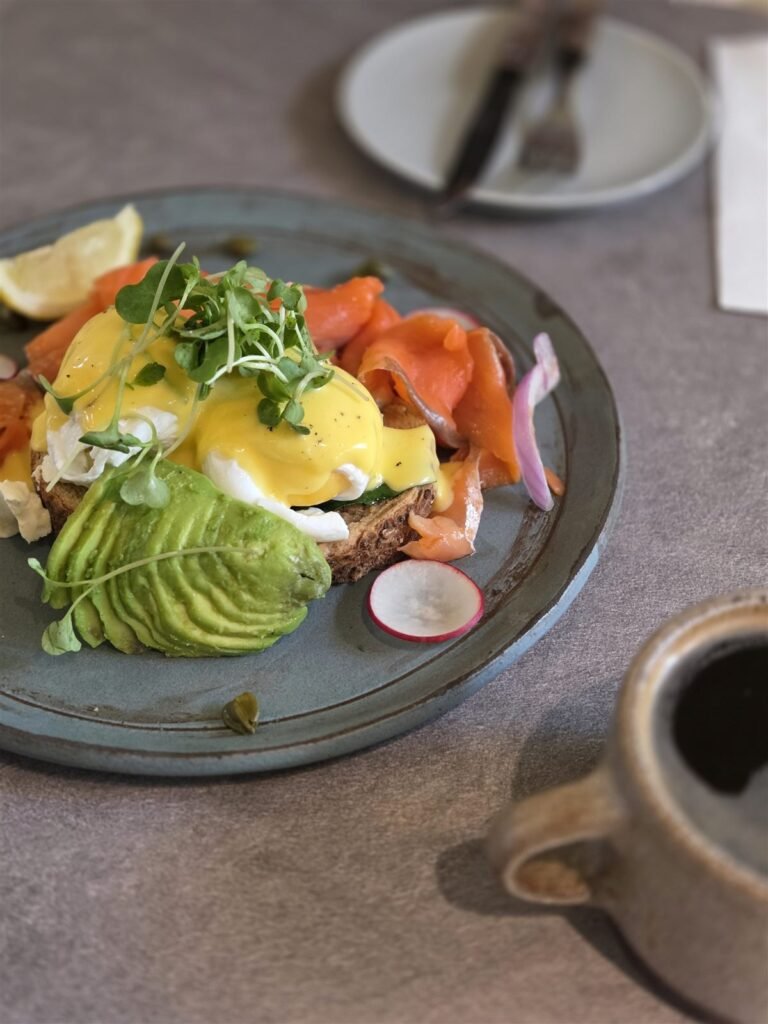
    Salmon eggs Benedict with hollandaise, smoked salmon and avocado at Sentimet brunch cafe in Dogok-dong, Seoul
    Salmon eggs Benedict with smoked salmon and avocado, and a black coffee on the side. Photo: Jimmy / All About Kor

    Jimmy’s note

    I went for brunch and I’d recommend it for exactly that. If you’re driving, weekends are easier: you can park at the public lot right in front of the café.

    Menu and prices

    These are the prices on Sentimet’s Naver Map menu (updated 2026-10-23).

    Dish Price
    Eggs Benedict (bacon pancake, salmon cream cheese or truffle mushroom) ₩18,000 (about US$13)
    Brioche French toast ₩18,000 (about US$13)
    Sentimet brunch plate ₩18,000 (about US$13)
    Eggs in hell (shakshuka), extra bread +₩3,000 ₩18,000 (about US$13)
    Caesar salad / burrata salad ₩18,000 (about US$13)
    Salmon feta cheese salad ₩19,000 (about US$14)
    Italian parsley oil pasta / ricotta pomodoro pasta ₩19,000 (about US$14)
    Acai bowl ₩15,000 (about US$11)
    Pavlova ₩15,000 (about US$11)
    Mushroom cream soup ₩8,000 (about US$6)
    Americano, long black, cold brew ₩5,500 (about US$4)
    Flat white, latte, cappuccino, piccolo ₩6,000 (about US$4.50)
    Glass of wine / bottled beer ₩13,000 / ₩10,000 (about US$10 / US$7.50)

    Plan on about ₩24,000 (around US$18) per person for one brunch plate and a flat white. Oat milk, soy milk, decaf or an extra shot is ₩500 more. Corkage is allowed for a fee.

    Getting there

    Take Line 3 to Maebong Station and leave by Exit 4. Walk toward Daechi Middle School; Sentimet is on the ground floor right in front of the Dogok 2-dong Community Service Center, about 370 meters from the exit. Naver lists the address as 34-10 Nambusunhwan-ro 378-gil, Gangnam-gu (서울 강남구 남부순환로378길 34-10, 1층).

    Type 센티맷 into Naver Map and it comes up straight away. Google Maps directions in Korea are patchy, which is why I use Naver for everything on this site. My Korea travel checklist explains how to set it up in English.

    Hours, booking and parking

    • Hours: Monday to Friday 09:00 to 18:00; Saturday and Sunday 08:00 to 19:00. Naver doesn’t list a last order time or regular closing day.
    • Booking: reservations go through Naver booking for groups of 1 to 4. Sentimet also lists a CatchTable page. Weekend brunch is the busy slot, so book ahead if you can.
    • Parking: there’s no parking at the café itself. On weekends you can park free at the Dogok 2-dong Community Service Center and the street-side public lot in front. On weekdays, Sentimet asks guests to use nearby paid lots such as Maebong Parking.
    • Seating: regular tables, a terrace and single seats. Wi-Fi is available.

    Walk it off at Yangjaecheon Stream

    Sentimet is close to the Yangjaecheon café street, and the stream’s walking and cycling path runs a few blocks away. After brunch, a stroll along the water is the obvious next move, especially in autumn when the trees along the bank change color.
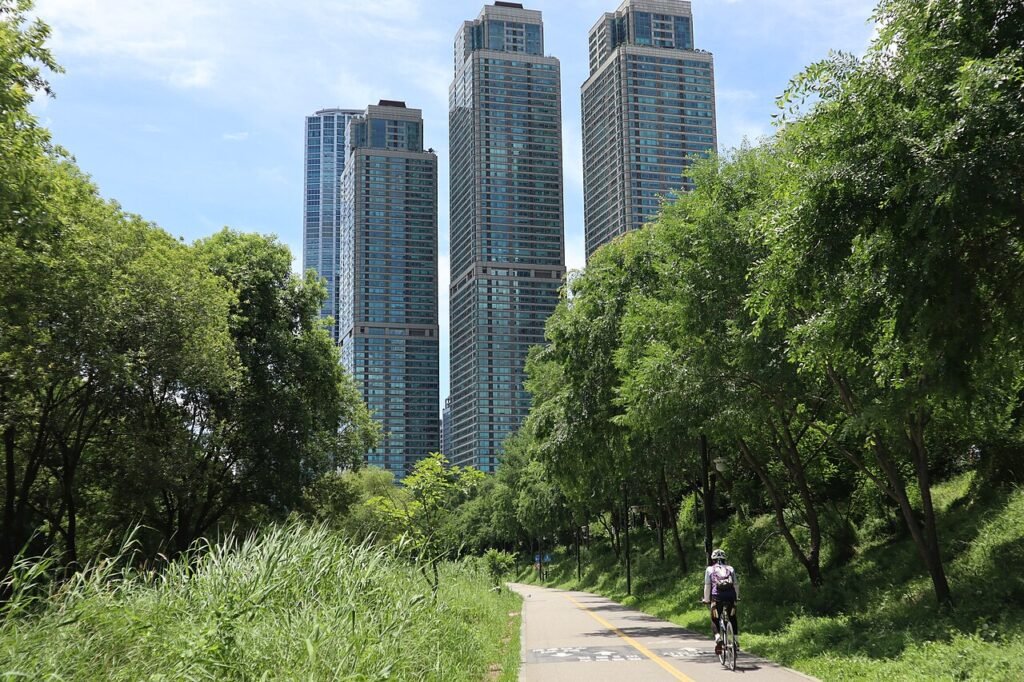
    Yangjaecheon Stream walking path in Dogok-dong with Tower Palace apartments behind, a short walk from Sentimet
    Yangjaecheon Stream in Dogok-dong, with the Tower Palace apartments behind. Photo: S h y numis, CC BY-SA 4.0, via Wikimedia Commons

    FAQ

    Is Sentimet worth the trip if I’m staying in central Seoul?

    Line 3 runs straight there from Chungmuro, next to Myeongdong, with no transfer. It’s still a fair ride, so I’d pair it with something else in the south, like a walk along Yangjaecheon or an afternoon in Gangnam. If you’re already staying in Gangnam, it’s an easy morning.

    Do they have an English menu?

    The menu board lists dishes and drinks in English, with Korean names next to the brunch dishes.

    Is it good for kids?

    There’s a babyccino on the menu, which is usually a sign kids are welcome. Weekend mornings will be busier.

    Can I just walk in?

    You can try, but brunch is the busy time, especially on weekends. A Naver booking takes a minute and saves the wait.

    Do they serve alcohol?

    Yes. Wine by the glass is ₩13,000, bottled beer is ₩10,000, and there’s a wine list if you ask the staff.

    Naver Map: Sentimet (센티맷) on Naver Map
  • Things to Do in Myeongdong (2026): 8 Places Beyond the Shopping Street

    Things to Do in Myeongdong (2026): 8 Places Beyond the Shopping Street

    Short answer: if you have one afternoon in Myeongdong, do three things: ride the Namsan Cable Car up to N Seoul Tower, step inside Myeongdong Cathedral, and walk the main shopping street after dark when the food stalls are out. If your trip is in early 2027, note that N Seoul Tower says its observatory will be closed from January to March 2027 for renovation.

    Plenty of visitors shop in Myeongdong and move on, but within walking distance there is a 19th-century cathedral, a hanok village, Seoul’s biggest traditional market and a free museum in a 1912 bank building. Below are eight places, with the station exit for each and the closing days that catch visitors out.

    Last checked: 2026-10-28. Hours and prices come from Visit Seoul (the Seoul Tourism Organization’s official site) and each attraction’s official website. Where official sources disagree or say nothing, I’ve left the number out. US dollar amounts use Naver’s base exchange rate on 2026-10-28 (₩1,332.80 = US$1), rounded.

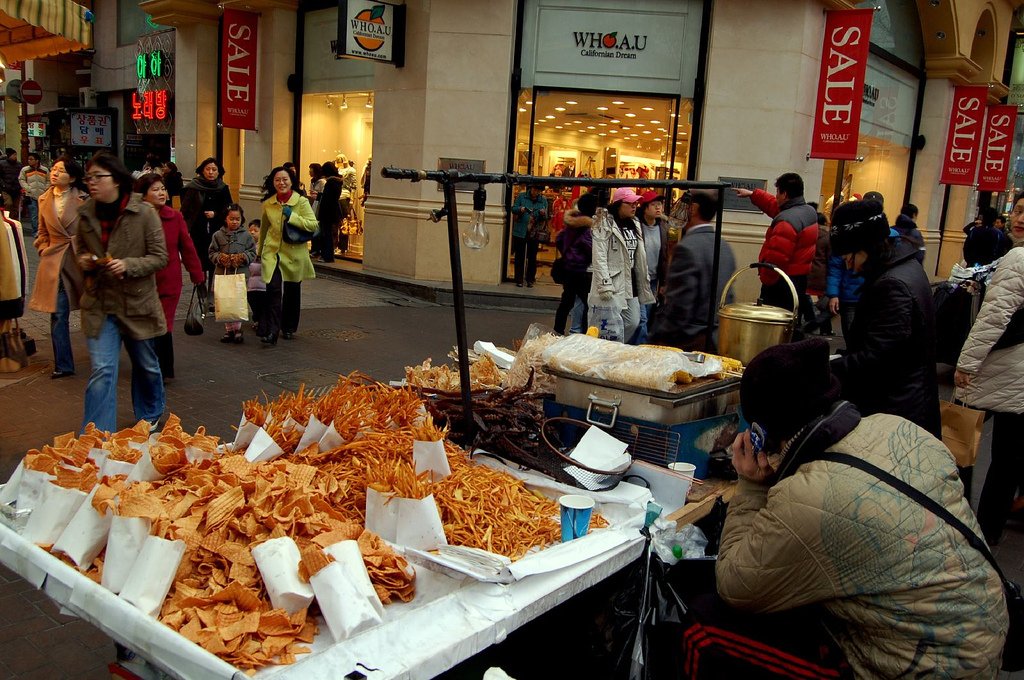
    A street vendor selling fried snacks on a busy Myeongdong shopping street
    Street food stall in Myeongdong. Photo: thelearnr, CC BY 2.0, via Wikimedia Commons

    Things to Do in Myeongdong at a Glance

    Place What it is Cost Time needed Nearest station
    Myeongdong Shopping Street Shops by day, food stalls by night Free to walk 1–2 hours Myeongdong (Line 4), Exits 5–10
    Myeongdong Cathedral Korea’s first Gothic church No ticket 30 minutes Myeongdong (Line 4), Exit 8
    Namsan Cable Car & N Seoul Tower Cable car and city viewpoint Cable car ₩15,000 round trip; observatory ₩29,000 2–3 hours Myeongdong (Line 4), Exit 4
    Namsangol Hanok Village Restored traditional houses Free 1 hour Chungmuro (Lines 3/4), Exit 4
    Namdaemun Market Huge traditional market Free to browse 1–2 hours Hoehyeon (Line 4), Exit 7
    Bank of Korea Money Museum Currency museum in a 1912 bank Free 45 minutes Hoehyeon (Line 4), Exit 7
    Nanta (Myeongdong theater) Non-verbal kitchen percussion show ₩50,000–70,000 One evening show Euljiro 1-ga (Line 2), Exits 5/6
    Department stores & underground mall Christmas displays, souvenirs Free to browse 1 hour Euljiro 1-ga / Hoehyeon

    1. Myeongdong Shopping Street and the Night Food Stalls

    Why go: This is the part of Myeongdong you see in photos: cosmetics shops, fashion brands and K-pop music from shop speakers, packed into a grid of pedestrian streets. In the evening, food carts line the middle of the main street.

    • What to do: Browse the beauty and fashion shops, then eat your way down the stalls. Skewers, tornado potatoes, kimchi-wrapped pork belly and tanghulu (candied fruit) are the usual picks.
    • Getting there: Myeongdong Station (Line 4), Exits 5–10 all come up inside the shopping area.
    • Hours: Open daily; each shop sets its own hours.
    • Cost: Free to walk around.
    • Tip: Stall food here costs more than at a traditional market. Treat it as a snack, and have a proper meal at one of the places in our Myeongdong restaurant guide.

    2. Myeongdong Cathedral (명동대성당)

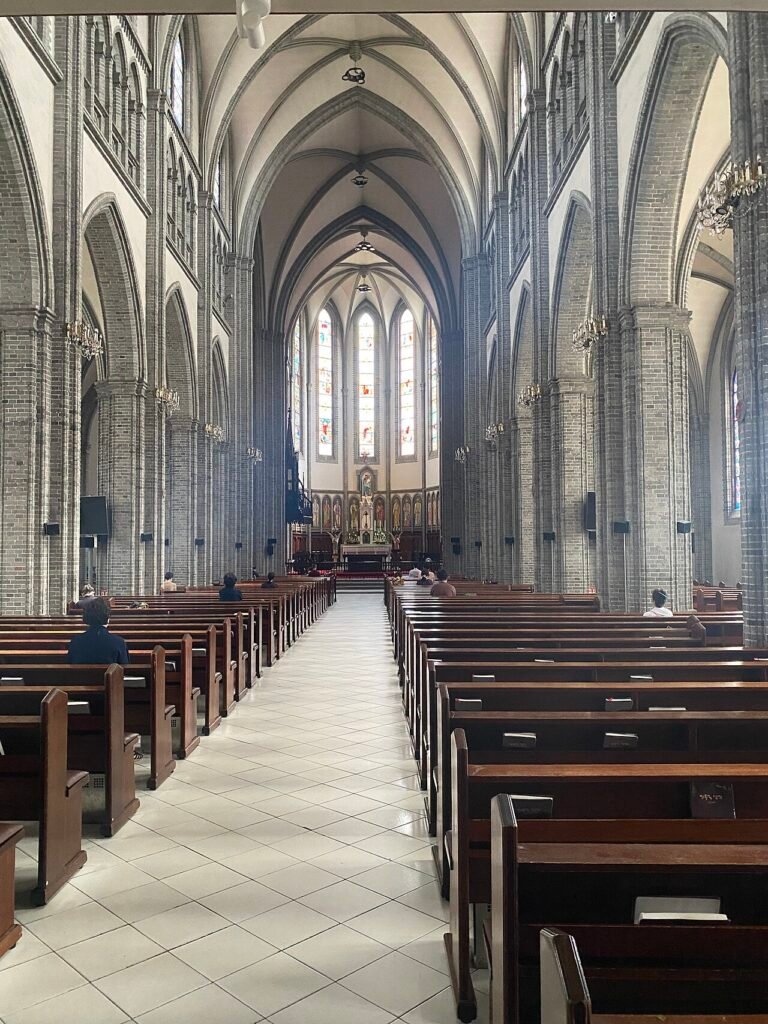
    Why go: Finished in 1898, it was Korea’s first Roman Catholic parish church and its first Gothic building, and it’s made of brick instead of stone. It sits on a small hill a short walk from the shopping streets.

    The Gothic nave of Myeongdong Cathedral with brick columns and stained-glass windows
    Inside Myeongdong Cathedral. Photo: Immanuelle, CC BY 4.0, via Wikimedia Commons
    • What to do: See the nave and stained glass, then go down to the 1898 Myeongdong Cathedral space in the basement, which has a café, gallery and bookstore.
    • Getting there: 74 Myeongdong-gil. Myeongdong Station (Line 4) Exit 8, about 590 m.
    • Hours: You can’t enter the main hall during Mass. Visit Seoul’s two listings give different visiting hours, so check mdsd.or.kr before you go.
    • Cost: No ticket.
    • Tip: It’s a working church. Keep your voice down and don’t take photos during services.

    3. Namsan Cable Car and N Seoul Tower

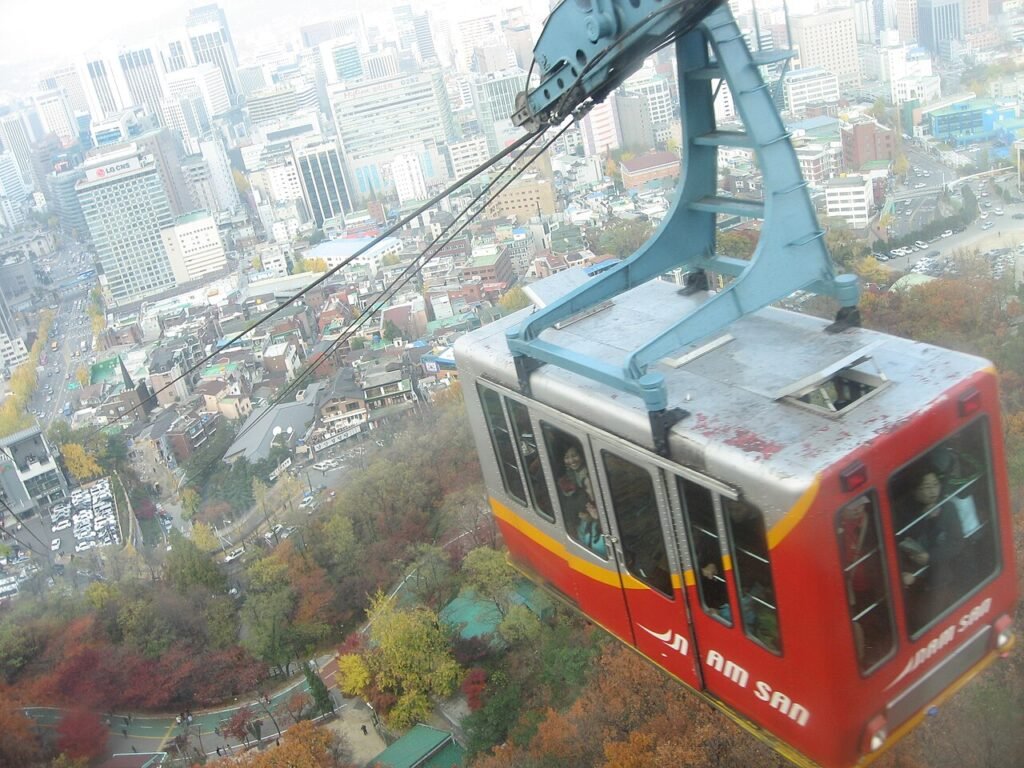
    Why go: The cable car lower station is a walk uphill from Myeongdong, and the ride to the top of Namsan takes about three minutes. At the top is N Seoul Tower, with a 360-degree view over the city and the famous love-lock fences.

    A red Namsan cable car above autumn trees with central Seoul below
    Namsan Cable Car. Photo: Andrew Bell, CC BY 2.0, via Wikimedia Commons
    • What to do: Ride up, walk the plaza and lock fences for free, and pay for the observatory if you want the view from inside the tower.
    • Getting there: Myeongdong Station (Line 4) Exit 4, about 570 m to the cable car.
    • Hours: Cable car daily 10:00–23:00. Tickets stop 30 minutes before closing, and the cable car can stop running in bad weather. Observatory: weekdays 10:00–22:30, weekends and holidays 10:00–23:00, last entry 30 minutes before closing.
    • Cost: Cable car round trip ₩15,000 for adults (about US$11) and ₩11,500 for children (about US$9). One way is ₩12,000 for adults (about US$9) and ₩9,000 for children (about US$7). Observatory ₩29,000 for adults (about US$22) and ₩23,000 for children aged 3–12 and seniors 65+ (about US$17).
    • Tip: N Seoul Tower’s official site says the observatory will be closed from January to March 2027 for renovation, with the reopening date still to be announced. If your trip falls in those months, you can still ride the cable car, but check nseoultower.co.kr before you buy an observatory ticket.

    4. Namsangol Hanok Village (남산골 한옥마을)

    Why go: It’s the nearest place to Myeongdong to see traditional Korean houses, it’s free, and it sits at the foot of Namsan.

    • What to do: Walk through the restored hanok and the garden, and check for traditional craft programs or events on the day you visit.
    • Getting there: 28 Toegye-ro 34-gil. Chungmuro Station (Lines 3/4) Exit 4, about 300 m.
    • Hours: Tuesday–Sunday. April–October 09:00–21:00; November–March 09:00–20:00. Closed Mondays.
    • Cost: Free.
    • Tip: Chungmuro is the next stop after Myeongdong on Line 4.

    5. Namdaemun Market (남대문시장)

    Why go: Visit Seoul calls it the largest traditional market in Seoul, with more than 10,000 stores around Namdaemun Gate. It sells clothing, food, household goods and souvenirs, many at wholesale prices.

    • What to do: Eat hotteok (sweet filled pancakes), try the kalguksu (knife-cut noodle) alley or braised cutlassfish (galchi-jorim), and shop for souvenirs.
    • Getting there: Hoehyeon Station (Line 4) Exit 7 opens right into the market.
    • Hours: Monday–Saturday; each stall sets its own hours. Closed Sundays.
    • Cost: Free to browse.
    • Tip: There’s a tourist information center inside the market with maps and interpretation help.

    6. Bank of Korea Money Museum (화폐박물관)

    Why go: It’s free and sits in the old Bank of Joseon building, opened on this site in 1912. It has more than 20,000 Korean and foreign banknotes, coins and tokens, and it explains how Korean money is made.

    • What to do: Look at old Korean currency, the world money hall and the old bank building itself.
    • Getting there: 39 Namdaemun-ro. Hoehyeon Station (Line 4) Exit 7, about 310 m.
    • Hours: Tuesday–Sunday 10:00–17:00 (last entry 16:40). Closed Mondays, Lunar New Year and Chuseok.
    • Cost: Free.
    • Tip: It’s a few minutes’ walk from Namdaemun Market, so do the two together.

    7. Nanta at the Myeongdong Theater

    Why go: Nanta is a comedy show set in a kitchen, where cooks drum on pots, pans and cutting boards. There’s almost no dialogue, so you don’t need any Korean.

    • What to do: Book an evening show after a day of sightseeing.
    • Getting there: 3rd floor of the UNESCO Building, 26 Myeongdong-gil. From Euljiro 1-ga Station (Line 2), take the stairs between Exits 5 and 6 and walk straight about 200 m. From Myeongdong Station it’s about 10 minutes on foot.
    • Hours: Shows Mon–Fri 17:00 and 20:00; Saturday 14:00, 17:00 and 20:00; Sundays and holidays 14:00 and 17:00.
    • Cost: VIP ₩70,000 (about US$53), S ₩60,000 (about US$45), A ₩50,000 (about US$38). Children under 36 months go free; everyone from age 3 needs a ticket.
    • Tip: On the official site, you can buy tickets online up to 2 hours before the show and cancel free until 24 hours before. Don’t go to Myeongdong Theater by mistake. It’s a different venue nearby.

    8. Department Stores and the Underground Shopping Center

    Why go: The flagship Lotte and Shinsegae department stores sit on either side of Myeongdong. Both put up big Christmas displays in winter, and in recent years the old Shinsegae building has shown a holiday video on a giant screen across its facade.

    • What to do: See the Christmas displays in season, eat in the basement food halls, and go down to the Myeongdong Underground Shopping Center for K-pop goods and souvenirs at reasonable prices. You’ll also find old stamp and coin dealers down there.
    • Getting there: Lotte is by Euljiro 1-ga Station (Line 2); Shinsegae is by Hoehyeon Station (Line 4).
    • Hours: Each store sets its own hours. Check the store’s website.
    • Cost: Free to browse.
    • Tip: Evenings around Christmas get very crowded, so a weekday visit is easier.

    A Half-Day Myeongdong Route

    This works best Tuesday to Saturday, when everything below is open.

    1. 10:00 Bank of Korea Money Museum (Hoehyeon Station Exit 7).
    2. 11:00 Walk to Namdaemun Market. Have hotteok and noodles for lunch.
    3. 13:00 Walk through the Myeongdong shopping streets to Myeongdong Cathedral.
    4. 15:00 Namsangol Hanok Village, or head straight up to the cable car.
    5. Late afternoon Ride the Namsan Cable Car and stay at the top for sunset.
    6. Evening Come back down for the street food stalls, or catch the 20:00 Nanta show (weekdays and Saturdays).

    On a Sunday, skip Namdaemun Market. On a Monday, swap the museum and the hanok village for a longer walk on Namsan.

    Myeongdong Tips From a Local

    • Check the closing day first. Namdaemun Market closes on Sundays. The Money Museum and Namsangol Hanok Village close on Mondays.
    • Sightsee first, shop later. The food stalls set up toward evening, so the museum, market and cathedral fit better in the morning.
    • Use Naver Map. It gives you walking routes and exit numbers, and it works better in Korea than Google Maps.
    • Carry a little cash. Cards work almost everywhere, but small market stalls are easier with cash.

    Myeongdong Things to Do FAQ

    Is Myeongdong worth visiting if I don’t want to shop?

    Yes. The cathedral, Namsan and N Seoul Tower, Namsangol Hanok Village, Namdaemun Market and the Money Museum are all within walking distance, and most of them are free.

    How do I get from Myeongdong to N Seoul Tower?

    Walk to the Namsan Cable Car (about 570 m from Myeongdong Station Exit 4) and ride up. A round trip costs ₩15,000 for adults.

    Is N Seoul Tower open in early 2027?

    The tower’s official site says the observatory will be closed from January to March 2027 for renovation. Check the site for the reopening date before you buy a ticket.

    What is there to do in Myeongdong on a Monday?

    The shopping streets, the cathedral area, Namsan, the cable car and Namdaemun Market are all open. The Money Museum and Namsangol Hanok Village are closed.

    What can I do in Myeongdong for free?

    Namsangol Hanok Village, the Bank of Korea Money Museum, Myeongdong Cathedral, Namdaemun Market and the Christmas displays in December are all free.

  • Best Restaurants in Jamsil (2026): 10 Places Near Lotte World Koreans Actually Review

    Best Restaurants in Jamsil (2026): 10 Places Near Lotte World Koreans Actually Review

    Short answer: if you’re spending the day at Lotte World or Lotte World Tower, the two most-reviewed restaurants inside Lotte World Mall are Samsamsam (Western comfort food) and Haemok (Japanese eel rice). If you can walk 10 minutes, the streets around the mall have more choice: rice bowls at Dandi on Songridan-gil, spicy baby octopus at Daehongjip, or Korean pork BBQ at Bondi. All ten come from the most-reviewed restaurants for “Jamsil” on Naver Map, the map app Koreans actually use.

    I sorted Naver Map by number of reviews, then removed ads, cafés and bakeries, national and global chains (Gordon Ramsay Burger, Outback, a 69-branch pork chain and others), and places whose reviews come mostly from sponsored blog posts. Two of the ten are in the mall. The other eight are on Songridan-gil, in the Bangi-dong food alley, around Seokchon and in Jamsil Saenae.

    Last checked: 2026-10-28. Prices and hours are from each restaurant’s Naver Map page. Menus change, so check the Naver Map link before you go. US dollar amounts use Naver’s base exchange rate on 2026-10-28 (₩1,332.80 = US$1), rounded.

    Best Restaurants in Jamsil at a Glance

    Restaurant Area What to eat Price Naver visitor reviews Booking
    Samsamsam Lotte World Mall Lasagna, pasta ₩23,000–46,000 (~US$17–35) 19,925 Naver booking
    Dandi Songridan-gil Japanese rice bowls ₩13,000–18,000 (~US$10–14) 13,942 Naver booking
    Haemok Lotte World Mall Hitsumabushi (eel rice) ₩38,000–59,000 (~US$29–44) 11,155 Tabling queue
    Jigang Hansikdang Near Songpa-gu Office Cheese dakgalbi, octopus ₩19,000–25,500 (~US$14–19) 11,100 Naver booking
    Imgeum Dwaeji Seokchon Pork BBQ ₩17,000 per portion (~US$13) 7,703 Naver booking
    Daehongjip Jamsil Saenae Jjukkumi (baby octopus) ₩17,900–19,900 per person (~US$13–15) 7,497 Naver booking
    Ugopjip Jamsil Saenae Hanwoo gopchang ₩18,000–27,000 (~US$14–20) 7,411 Naver booking
    Gaenari Agujjim Bangi-dong Spicy braised monkfish ₩24,000 per person (~US$18) 6,938 Naver booking
    Bondi Songridan-gil Pork BBQ ₩17,500–19,000 per portion (~US$13–14) 6,664 Naver booking
    Bangiok Bangi-dong food alley Beef and pork BBQ ₩16,000–33,000 per portion (~US$12–25) 4,689 Phone

    1. Samsamsam, Lotte World Mall (쌤쌤쌤 롯데월드몰점) — Local Pick

    Why go: The most-reviewed restaurant in Jamsil, on the 5th floor of Lotte World Mall next to the cinema. The menu is Western comfort food like lasagna and pasta, handy before or after the aquarium or Seoul Sky.

    • What to order: The hamburg-steak lasagna (₩26,000), jambon-beurre pasta (₩26,000) or shrimp bisque pasta (₩28,000)
    • Price: ₩23,000–46,000 per dish (about US$17–35)
    • Naver rating: not shown (19,925 visitor reviews)
    • Getting there: Jamsil Station (Lines 2 and 8), Exit 11, about 4 minutes. Take the elevator on the aquarium side up to the 5th floor.
    • Hours: Daily 10:30–22:00 (last order 21:00)
    • Wait & booking: Bookable on Naver, with a CatchTable waiting list
    • Parking: Lotte World Mall garage, no restaurant discount
    • Naver Map: Samsamsam Lotte World Mall

    2. Dandi (단디) — Local Pick

    Why go: A Japanese rice-bowl shop at the start of Songridan-gil, the café and restaurant street east of Seokchon Lake. It has nearly 14,000 visitor reviews, and every bowl is under ₩20,000.

    • What to order: Hanwoo hormone-don, a Korean beef offal rice bowl (₩15,000), gyudon (₩13,000) or premium sake-don, salmon (₩18,000)
    • Price: ₩13,000–18,000 per person (about US$10–14)
    • Naver rating: 4.65 (13,942 visitor reviews)
    • Getting there: Songpa Naru Station (Line 9), Exit 1, about 4 minutes. Walk 150 m straight, turn left at the GS25 convenience store, and it’s 50 m ahead.
    • Hours: Daily 11:30–21:30 (last order 21:00)
    • Wait & booking: Bookable on Naver
    • Parking: None. Use the Songpa Women’s Culture Center public lot.
    • Naver Map: Dandi

    3. Haemok, Lotte World Mall (해목 롯데월드몰점) — Local Pick

    Why go: Hitsumabushi is Nagoya-style grilled eel over rice. You eat it three ways: plain, with condiments, then with broth poured over. Haemok is on the 6th-floor restaurant level of Lotte World Mall, and it’s the priciest meal on this list.

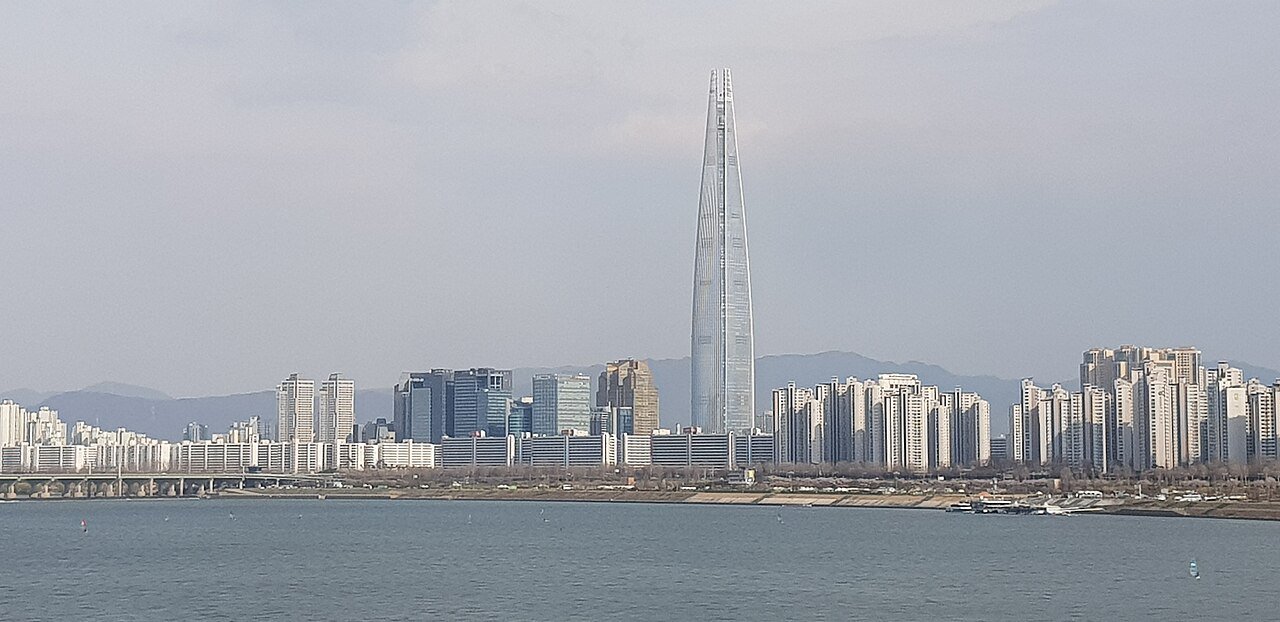
    Lotte World Tower rising above Jamsil, seen across the Han River
    Lotte World Tower in Jamsil, seen from across the Han River. Photo: Ox1997cow, CC BY 3.0, via Wikimedia Commons
    • What to order: Hitsumabushi (₩40,000), or kaisendon, a raw seafood rice bowl (₩38,000). There’s a kids’ eel rice bowl (₩12,000).
    • Price: ₩38,000–59,000 per person (about US$29–44)
    • Naver rating: not shown (11,155 visitor reviews)
    • Getting there: Jamsil Station Exit 10, then up to the 6th-floor restaurant level of Lotte World Mall
    • Hours: Daily 10:30–22:00 (last order 21:00)
    • Wait & booking: No bookings. Join the remote queue on the Tabling app.
    • Parking: Lotte World Mall garage, no discount for the restaurant floor
    • Naver Map: Haemok Lotte World Mall

    4. Jigang Hansikdang, Jamsil (지강한식당 잠실점) — Local Pick

    Why go: Dakgalbi (spicy stir-fried chicken) and nakji-bokkeum (spicy stir-fried octopus) cooked on an iron plate, most of them topped with Imsil cheese. It’s rated 4.86 and sits in the basement of KT Songpa Tower, a short walk from Lotte World.

    • What to order: Imsil cheese dakgalbi (₩19,000) or iron-plate nakji-bokkeum (₩22,000)
    • Price: ₩19,000–25,500 per dish (about US$14–19)
    • Naver rating: 4.86 (11,100 visitor reviews)
    • Getting there: Jamsil Station Exit 10, about 6 minutes. Walk 200 m straight, turn right at Songpa-gu Office, walk about 120 m, and take the escalator down to B1 of KT Songpa Tower.
    • Hours: Daily 11:00–22:00
    • Wait & booking: Bookable on Naver
    • Parking: Free for 2 hours in KT Songpa Tower (B3–B4)
    • Dietary note: Dakgalbi and nakji-bokkeum are spicy.
    • Naver Map: Jigang Hansikdang Jamsil

    5. Imgeum Dwaeji, Jamsil (임금돼지 잠실) — Local Pick

    Why go: Korean pork BBQ near Seokchon Lake, open every day of the year. The cuts are aged, and the set menus make ordering simple if you can’t read the Korean menu.

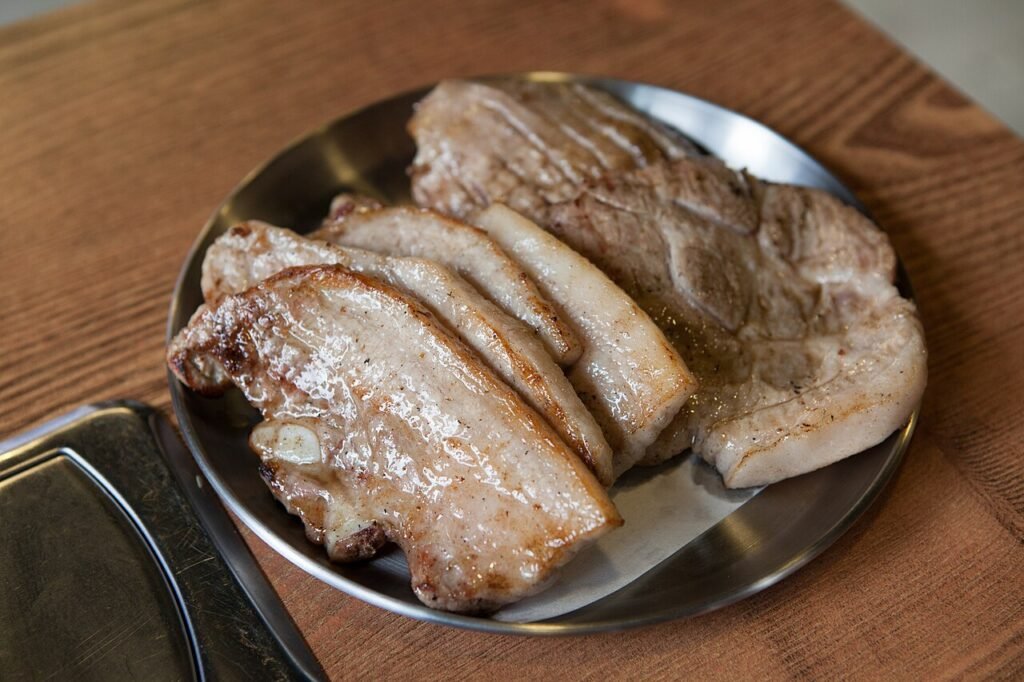
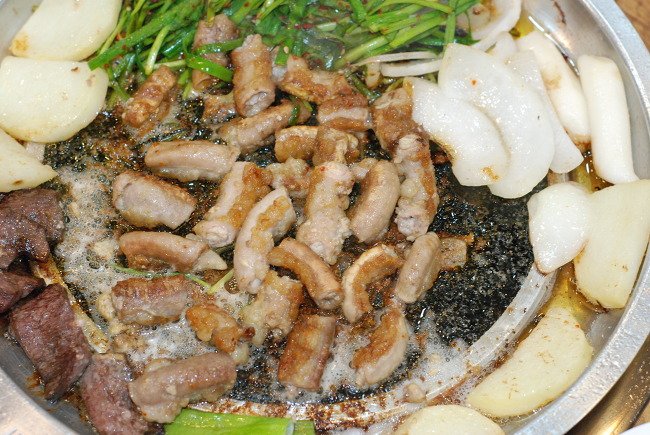
    Thick slices of grilled Korean pork on a metal plate
    Grilled Korean pork. Photo: jinsoo jang, CC0, via Wikimedia Commons
    • What to order: Aged pork neck (moksal) or pork belly (samgyeopsal), ₩17,000 each, or the Imgeumnim bansang set (₩49,000)
    • Price: ₩17,000 per portion (about US$13); sets ₩49,000–89,000 (about US$37–67)
    • Naver rating: not shown (7,703 visitor reviews)
    • Getting there: Seokchon Station (Lines 8 and 9), Exit 8, about 6 minutes
    • Hours: Daily 12:00–23:00 (last order 22:00)
    • Wait & booking: Bookable on Naver and CatchTable
    • Parking: Valet at the Songpa-gu Election Commission building (₩3,000), up to 2 hours free with your receipt
    • Naver Map: Imgeum Dwaeji Jamsil

    6. Daehongjip, Jamsil Saenae (대홍집 잠실새내본점) — Local Pick

    Why go: Jjukkumi is baby octopus stir-fried in a red-hot sauce, and Daehongjip has the highest rating on this list (4.95). It’s in Jamsil Saenae, a busy bar and restaurant area near Jamsil Baseball Stadium.

    • What to order: Daehong jjukkumi (₩17,900 per person), or the cheese iron-plate version (₩19,900). Lunch specials are ₩10,900–12,900.
    • Price: ₩17,900–19,900 per person (about US$13–15)
    • Naver rating: 4.95 (7,497 visitor reviews)
    • Getting there: Jamsil Saenae Station (Line 2), Exit 4, about 7 minutes; or Sports Complex Station (Line 9), Exit 9, about 8 minutes
    • Hours: Mon–Fri 11:30–23:30, Sat–Sun 13:00–23:30
    • Wait & booking: Bookable on Naver
    • Parking: Paid lot across the street, no validation
    • Naver Map: Daehongjip

    7. Ugopjip, Jamsil (우곱집 잠실본점) — Local Pick

    Why go: Hanwoo (Korean beef) gopchang, grilled small intestines, on the same street as Daehongjip. On weekdays it opens at 16:00 and stays open until 1 a.m., so it’s a dinner and late-night place.

    • What to order: Hanwoo gopchang-gui, 250 g (₩27,000), and daechang-gui, large intestine, 180 g (₩18,000)
    • Price: ₩18,000–27,000 per portion (about US$14–20)
    • Naver rating: 4.9 (7,411 visitor reviews)
    • Getting there: Jamsil Saenae Station Exit 4, about 8 minutes. Walk about 200 m straight, turn right at the first intersection after the CU convenience store, and walk 50 m.
    • Hours: Mon–Fri 16:00–01:00 (last order 00:00); Sat–Sun 13:00–24:00 (last order 23:00)
    • Wait & booking: Bookable on Naver
    • Parking: Four spaces beside the shop
    • Naver Map: Ugopjip

    8. Gaenari Agujjim (개나리아구찜 본점) — Local Pick

    Why go: Agujjim is monkfish braised with a mountain of bean sprouts in a spicy red sauce. Gaenari’s signature version adds daechang (large intestine). It’s a dinner place on weekdays, opening at 16:00.

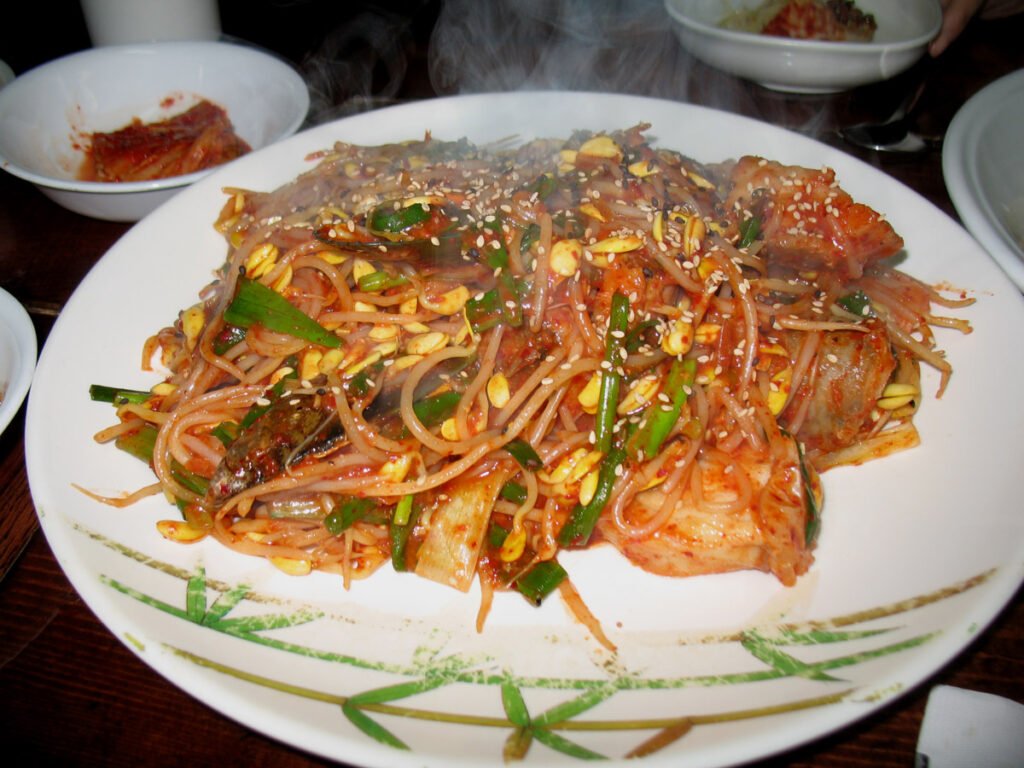
    Agujjim, spicy braised monkfish with bean sprouts and sesame seeds
    Agujjim (spicy braised monkfish). Photo: Jamie, CC BY 2.0, via Wikimedia Commons
    • What to order: Signature daechang agujjim (₩24,000 per person, minimum two). Agu-gangjeong, fried monkfish (₩18,000), is a popular side.
    • Price: ₩24,000 per person (about US$18)
    • Naver rating: not shown (6,938 visitor reviews)
    • Getting there: Songpa Naru Station Exit 2, about 6 minutes; or Seokchon Gobun Station (Line 9), Exit 3, about 5 minutes
    • Hours: Mon–Fri 16:00–23:00, Sat–Sun 12:00–23:00 (last order 22:00)
    • Wait & booking: Bookable on Naver, with a CatchTable waiting list
    • Parking: None. Songpa public parking lot is 3 minutes away.
    • Dietary note: Spicy
    • Naver Map: Gaenari Agujjim

    9. Bondi (본디) — Local Pick

    Why go: Pork BBQ on Songridan-gil where the staff grill the meat for you at no charge, which helps if it’s your first Korean BBQ.

    • What to order: The Bondi hanpan platter for two (₩59,000), or individual cuts like pork neck (₩17,500) and raw pork ribs (₩18,500)
    • Price: ₩17,500–19,000 per portion (about US$13–14); platter for two ₩59,000 (about US$44)
    • Naver rating: 4.88 (6,664 visitor reviews)
    • Getting there: Seokchon Station (Line 8), Exit 2, about 5 minutes
    • Hours: Daily 12:00–22:30 (last order 22:00)
    • Wait & booking: Bookable on Naver, with a CatchTable waiting list
    • Parking: Songpa Women’s Culture Center public lot (₩900 per 30 minutes)
    • Naver Map: Bondi

    10. Bangiok (방이옥 본점) — Local Pick

    Why go: The original branch of a beef and pork BBQ restaurant in the Bangi-dong food alley (방이동먹자골목), a block of restaurants and bars a few minutes past Songpa-gu Office. It’s open until 1 a.m. every day.

    • What to order: Sous-vide udae-galbi, a big beef short rib (₩33,000), or the Bangiok hanpan platter for 2–3 people (₩93,000)
    • Price: ₩16,000–33,000 per portion (about US$12–25); platters ₩69,000–93,000 (about US$52–70)
    • Naver rating: 4.74 (4,689 visitor reviews)
    • Getting there: Jamsil Station Exit 10, about 12 minutes. Walk past Songpa-gu Office and cross, turn right at Twosome Place and walk 3 minutes, then turn left into the food alley.
    • Hours: Daily 11:00–01:00
    • Wait & booking: Phone 02-423-6592
    • Parking: Small lot; paid lots nearby
    • Naver Map: Bangiok

    Tips for Eating in Jamsil

    • Use Naver Map, not Google Maps. Search the Korean names in brackets above. Lotte World Mall is huge, and Naver shows which floor each restaurant is on.
    • Mall or neighborhood. Lotte World Mall is convenient but can get crowded. Songridan-gil, Jamsil Saenae and the Bangi-dong food alley are 5–15 minutes away and have more local restaurants.
    • Plan around dinner-only places. Ugopjip and Gaenari Agujjim open at 16:00 on weekdays.
    • Baseball nights get busy. Jamsil Saenae is near Jamsil Baseball Stadium, so Daehongjip and Ugopjip can fill up on game nights.
    • BBQ for one is hard. Many BBQ and braised-dish menus are priced for two or more. If you’re alone, Dandi and Jigang Hansikdang are the easiest picks.

    Jamsil Restaurants FAQ

    Where should I eat near Lotte World?

    Inside Lotte World Mall, Samsamsam (5th floor) and Haemok (6th floor) are the most-reviewed. Jigang Hansikdang is about 6 minutes on foot from Jamsil Station Exit 10.

    Are there Korean BBQ restaurants in Jamsil?

    Yes. Bondi, Imgeum Dwaeji and Bangiok are pork or beef BBQ, and Ugopjip grills hanwoo gopchang. Prices start around ₩16,000–19,000 (about US$12–14) per portion.

    Which Jamsil restaurants are open late?

    Bangiok and Ugopjip (weekdays) are open until 01:00, and Daehongjip until 23:30.

    Do I need a reservation?

    Most of these take bookings on Naver. Haemok uses a remote queue on the Tabling app instead, and Bangiok takes phone bookings.

  • Things to Do in Jamsil (2026): Lotte World, Seoul Sky, Seokchon Lake and Olympic Park

    Things to Do in Jamsil (2026): Lotte World, Seoul Sky, Seokchon Lake and Olympic Park

    Short answer: in Jamsil, spend a day at Lotte World Adventure or go up Lotte World Tower to Seoul Sky, then walk around Seokchon Lake as the lights come on. If you’d rather skip the ticket prices, Olympic Park and the Seoul Baekje Museum next to it are huge, green and free.

    Jamsil is in Songpa-gu, in southeast Seoul, and almost everything here sits around one subway station. Lotte owns a big piece of it: the theme park, the tower, the aquarium and the mall all connect underground. A short ride east, Olympic Park covers the grounds of the 1988 Games and a fortress built about 1,600 years earlier. Below are the eight places worth your time, with 2026 prices and hours from the official websites.

    Last checked: 2026-10-28. Prices and hours come from each place’s official website (Lotte World Adventure, Seoul Sky, Lotte World Aquarium, Lotte Museum of Art, Olympic Park, Seoul Baekje Museum). US dollar amounts use Naver’s base exchange rate on 2026-10-28 (₩1,332.80 = US$1), rounded. Theme park hours change by date, so check the link before you go.

    Jamsil in three lines

    • Thrills: Lotte World Adventure, an indoor-and-outdoor theme park
    • Views: Seoul Sky, the observatory at the top of Lotte World Tower
    • Free and relaxed: Seokchon Lake, Olympic Park and the Seoul Baekje Museum

    Things to Do in Jamsil at a Glance

    Place What it is Adult price Time needed Nearest station
    Lotte World Adventure Indoor and outdoor theme park ₩67,000 (~US$50), ₩55,000 after 4 p.m. Half to full day Jamsil, Exit 4
    Seoul Sky Observatory at the top of Lotte World Tower ₩33,000 (~US$25) 1–1.5 hours Jamsil, Exit 1 or 2 (Line 2)
    Lotte World Aquarium Aquarium under Lotte World Mall ₩37,000 (~US$28) 1.5–2 hours Jamsil, Exit 1 or 2 (Line 2)
    Seokchon Lake Lake with a walking loop of about 2.5 km Free 40–60 minutes Jamsil
    Olympic Park 1988 Olympic grounds, sculpture park, ancient earthen fortress Free 2–3 hours Mongchontoseong, Exit 1
    Seoul Baekje Museum Museum of Seoul’s Baekje-era past Free 1 hour Hanseong Baekje, Exit 2
    Lotte World Folk Museum Korean history in miniatures and models Included in the park’s combined ticket, or ₩5,000 45 minutes Jamsil, Exit 4
    Lotte World Mall & Lotte Museum of Art Shopping mall and an art museum in the tower Free to browse; exhibition prices vary 1–2 hours Jamsil, Exit 1 or 2 (Line 2)

    1. Lotte World Adventure

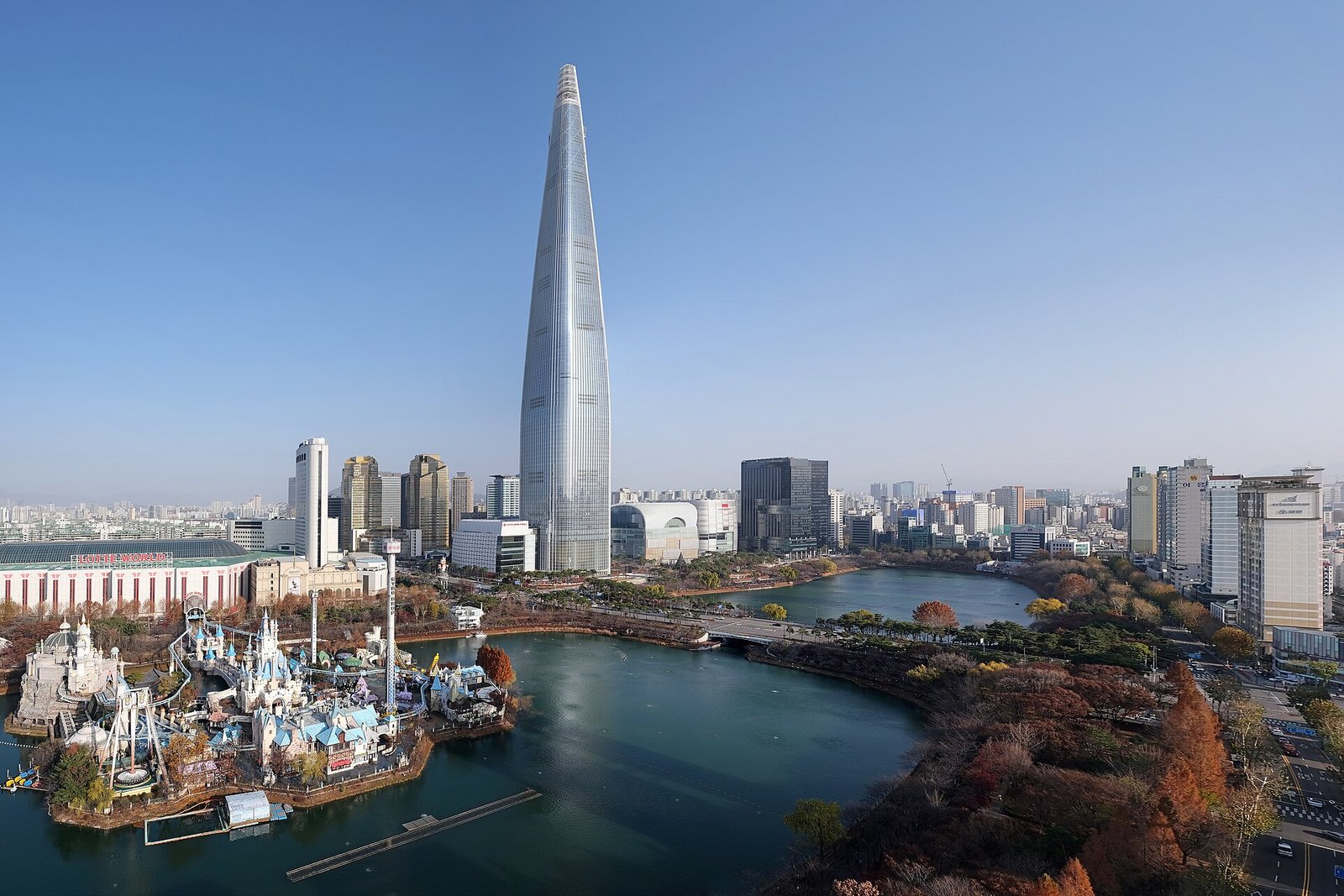
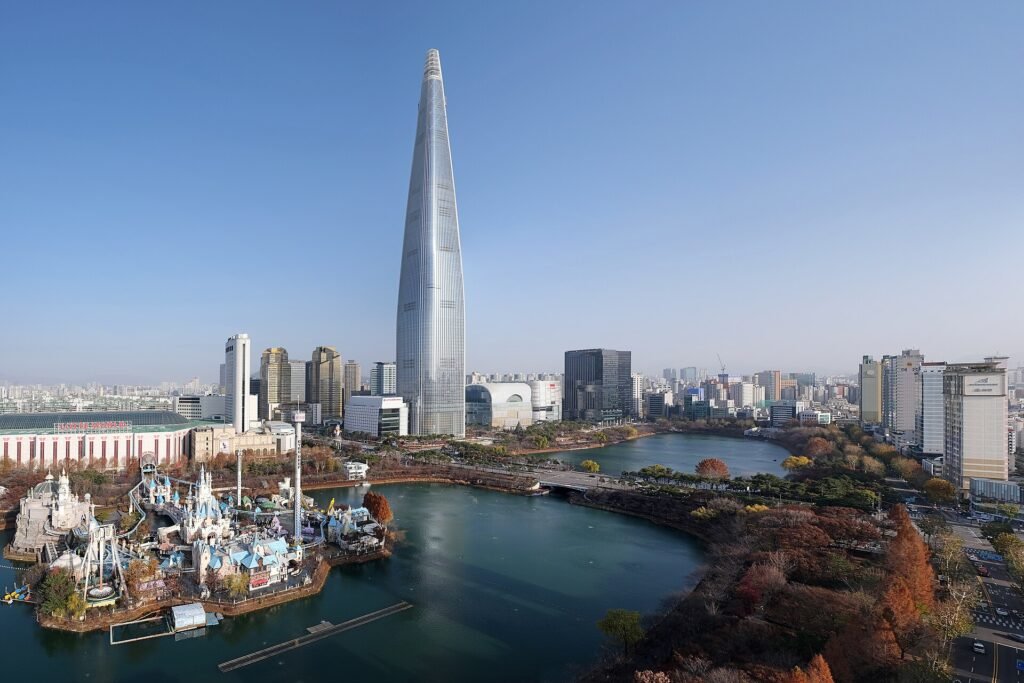
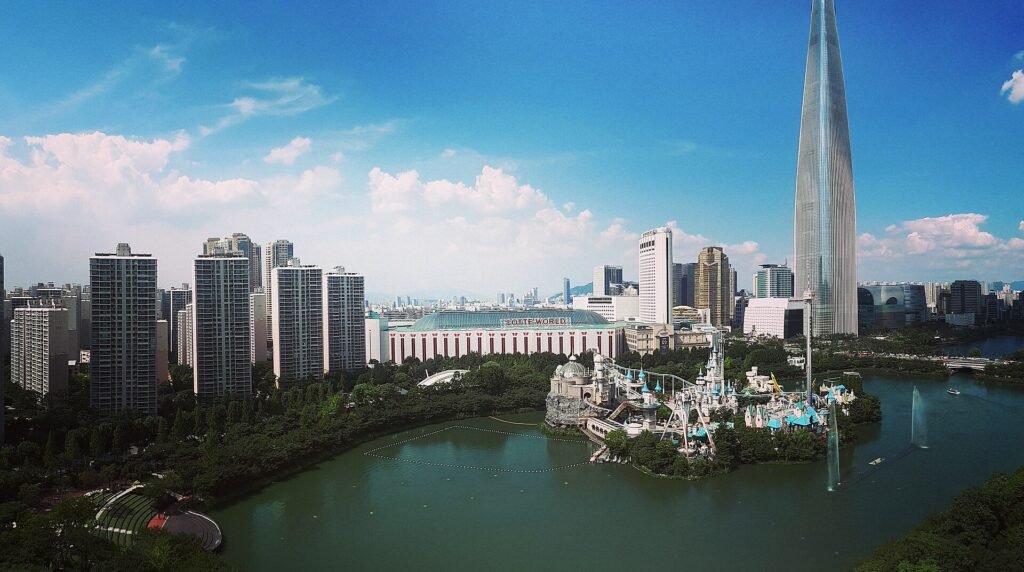
    Lotte World Tower rising above Seokchon Lake and the castle of Lotte World Magic Island in autumn
    Lotte World Tower, Magic Island and Seokchon Lake. Photo: kallerna, CC BY-SA 4.0, via Wikimedia Commons

    Why go: It’s Seoul’s big theme park, and it works in any weather because most of it is indoors. The outdoor half, Magic Island, sits on Seokchon Lake with the castle you see in every Jamsil photo.

    • What to do: Rides and parades indoors, then cross to Magic Island for the outdoor rides and lake views. The combined ticket also gets you into the Folk Museum (see #7).
    • Getting there: Jamsil Station (Lines 2 and 8), Exit 4
    • Hours: Opens at 10:00. Closing time changes by date: in late October it’s 21:00 on weekdays and 22:00 on Fridays and Saturdays. Ticket sales and entry close one hour before closing. Hours for November weren’t posted yet when we checked.
    • Cost: The combined ticket (park plus Folk Museum) is ₩67,000 for adults (about US$50), ₩58,000 for ages 13–18 (about US$44) and ₩50,000 for children aged 36 months to 12 years (about US$38). The After4 ticket, for entry from 4 p.m., is ₩55,000 / ₩47,000 / ₩39,000 (about US$41 / 35 / 29). A park-only ticket is a little cheaper: ₩64,000 for adults, ₩52,000 After4. Visitors aged 65 and over pay the child price.
    • Tip: Games and some extras cost more on top of the ticket. Some Magic Island rides stop in very hot or cold weather, strong wind or heavy rain, so check the park’s “Today’s Park” page on the morning you go.

    2. Seoul Sky (Lotte World Tower)

    Why go: Lotte World Tower is the tallest building in Korea, and Seoul Sky fills its top floors. On a clear day you can see most of the city, the Han River and the mountains around Seoul.

    • What to do: Ride the elevator up, then walk the observation floors and the glass-floor section. Brave visitors can book the Sky Bridge Tour, a guided walk on a bridge outside near the top of the tower.
    • Getting there: Jamsil Station, Line 2 Exits 1 or 2, or Line 8 Exits 10 or 11
    • Hours: Opens daily at 10:30 and closes at 22:00 Sunday to Thursday, 23:00 Friday and Saturday. Entry closes one hour before closing.
    • Cost: ₩33,000 for ages 13 and up (about US$25), ₩29,000 for children aged 36 months to 12 (about US$22). Under 36 months enter free with a guardian. The Seoul Sky + Aquarium package costs ₩62,000 for adults (about US$47) and ₩56,000 for children and seniors 65+ (about US$42).
    • Sky Bridge Tour: ₩130,000 (about US$98) including observatory entry. Tours run at 13:00, 15:00, 17:00 and 19:00 Monday to Thursday, and every hour from 13:00 to 19:00 Friday to Sunday and on holidays. Each tour takes about an hour with up to 12 people. Age and height limits apply. The Sky Bridge closes for winter from November 30, 2026 to February 28, 2027.
    • Tip: Go about an hour before sunset. You’ll see the city in daylight, at dusk and lit up at night on one ticket.

    3. Lotte World Aquarium

    Why go: If you’re traveling with kids or it’s raining, start here. It’s on the lower floors of Lotte World Mall, so you never have to step outside.

    • What to do: Walk the tunnel tank and the themed zones, and catch a feeding session if the timing works.
    • Getting there: Jamsil Station, Line 2 Exits 1 or 2, or Line 8 Exits 10 or 11
    • Hours: Opens daily at 10:00. Closes at 20:00 Monday to Thursday and 22:00 Friday to Sunday. Entry closes one hour before closing.
    • Cost: ₩37,000 for ages 13 and up (about US$28), ₩33,000 for children aged 36 months to 12 (about US$25). Under 36 months enter free.
    • Tip: If you’re going up Seoul Sky too, the combined package (₩62,000 for adults) costs less than buying the two tickets separately.

    4. Seokchon Lake

    Seokchon Lake in Jamsil with Lotte World Magic Island, apartment towers and Lotte World Tower
    Seokchon Lake, Jamsil. Photo: Simon Williams-Im, CC BY 2.0, via Wikimedia Commons

    Why go: Jamsil locals come here for their evening walk. The lake is split in two by a road, and a flat path of about 2.5 km circles both halves, with Lotte World Tower reflected in the water.

    • What to do: Walk or jog the loop, watch Magic Island light up after dark, and look out for art installations. Big inflatable artworks have floated on the lake before.
    • Getting there: A few minutes’ walk from Jamsil Station. The lake is right behind Lotte World Adventure.
    • Cost: Free
    • Tip: In early April the lake is ringed with cherry blossoms. It’s one of Seoul’s most famous blossom walks and gets very crowded on weekends. The east lake (the side away from Lotte World) is usually quieter.

    5. Olympic Park

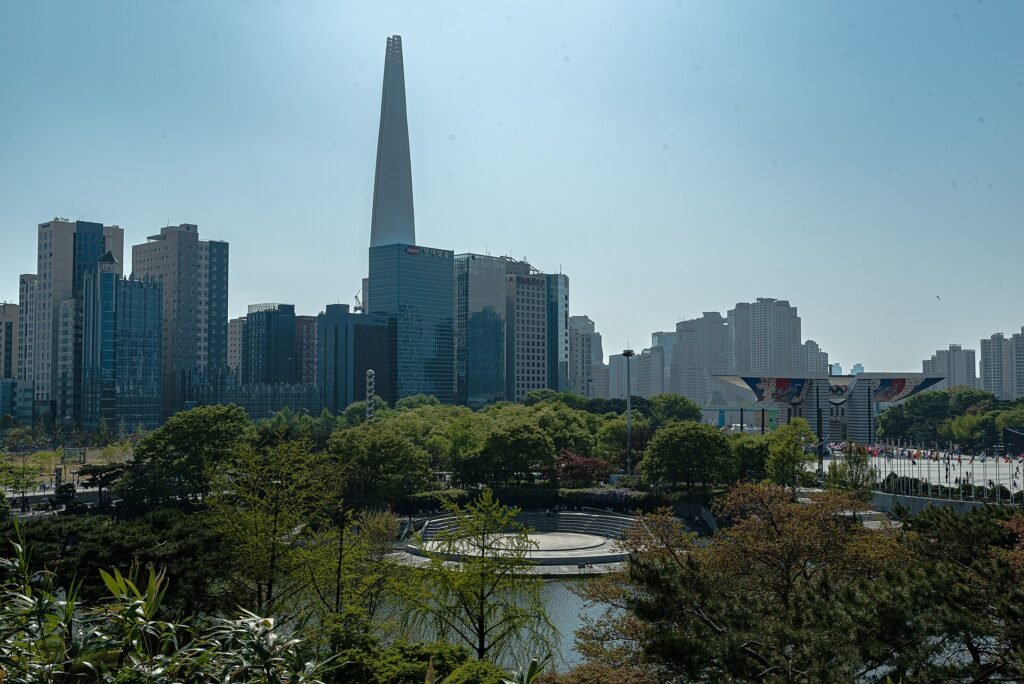
    Seoul Olympic Park with the World Peace Gate on the right and Lotte World Tower in the distance
    Olympic Park with the World Peace Gate. Photo: Woohyun Photos, CC BY-SA 2.0, via Wikimedia Commons

    Why go: Built for the 1986 Asian Games and the 1988 Seoul Olympics, the park is so big that Seoul people come here to picnic, cycle and walk off a whole afternoon. It also holds Mongchontoseong, an earthen fortress from the Baekje kingdom.

    • What to do: Start at the World Peace Gate, walk the grassy walls of Mongchontoseong, and find the “Lone Tree” (나홀로나무), a single tree on a grassy hill that Koreans love to photograph. The park is also full of outdoor sculptures.
    • Getting there: Mongchontoseong Station (Line 8), Exit 1, for the World Peace Gate side. Olympic Park Station (Lines 5 and 9) and Hanseong Baekje Station (Line 9) are also close.
    • Hours: Open all year. On foot or by bike, you can enter 05:00–22:00. The plaza areas stay open until 24:00.
    • Cost: Free
    • Tip: It’s a big park. Pick one side to explore rather than trying to see it all, and wear comfortable shoes. Concerts are often held at the venues inside, so check what’s on if you want a night out.

    6. Seoul Baekje Museum

    Why go: Long before Joseon made Seoul its capital, the Baekje kingdom ruled from this exact spot. This museum on the edge of Olympic Park tells that story clearly, and it costs nothing.

    • What to do: See the cross-section of a Baekje earthen wall, artifacts dug up in Songpa, and the exhibits on Hanseong, Baekje’s first capital.
    • Getting there: Hanseong Baekje Station (Line 9), Exit 2, about 5–6 minutes on foot. From Mongchontoseong Station (Line 8), Exit 1, it’s about 650 m, or a 10–15 minute walk.
    • Hours: 09:00–18:00. Until November 30, 2026, it stays open until 21:00 on Tuesdays, Wednesdays, Fridays, Saturdays and Sundays. Closed Mondays and January 1. When a Monday is a public holiday, it opens as normal.
    • Cost: Free
    • Tip: Visit the museum first, then walk out to Mongchontoseong in the park. The fortress walls make far more sense once you know what they are.

    7. Lotte World Folk Museum

    Why go: It’s inside Lotte World, so most visitors walk right past it. It’s worth stopping for: a quick, visual tour of Korean history through miniature villages, models and reconstructed streets.

    • What to do: Walk the timeline from prehistory to the Joseon dynasty. The miniature village scenes are the highlight.
    • Getting there: Jamsil Station, Exit 4, inside the Lotte World Adventure building
    • Hours: 11:00–19:00 every day
    • Cost: Included in Lotte World Adventure’s combined ticket, but with that ticket you need to enter the museum by 18:00. On its own it costs ₩5,000 for adults (about US$4), ₩3,000 for youth and ₩2,000 for children.
    • Tip: If you’re buying the combined Lotte World ticket anyway, fit this in before 18:00, since entry is already paid for.

    8. Lotte World Mall and Lotte Museum of Art

    Why go: The mall at the foot of Lotte World Tower links the tower, the aquarium and Jamsil Station underground. It’s where you’ll end up eating, shopping or waiting out the rain. The Lotte Museum of Art in the tower brings in large contemporary art shows.

    • What to do: Browse Korean and international brands, eat in the restaurant floors, and check what’s showing at the museum.
    • Getting there: Jamsil Station, Line 2 Exits 1 or 2, or Line 8 Exits 10 or 11
    • Hours: The Lotte Museum of Art is open Monday to Sunday, 10:30–19:00 (last entry 18:30).
    • Cost: Free to browse the mall. Museum tickets depend on the exhibition. The current show, Lee Kang-so, runs until November 1, 2026 and costs ₩20,000 for adults (about US$15).
    • Tip: The museum hadn’t announced its next exhibition when we checked, so look at its website before planning a visit after November 1.

    A One-Day Jamsil Itinerary

    1. 10:00 Seoul Baekje Museum (free), then walk through Olympic Park: Mongchontoseong, the Lone Tree and the World Peace Gate.
    2. 13:00 Lunch, then take the subway back to Jamsil Station (Line 8 from Mongchontoseong).
    3. 14:00 Lotte World Aquarium, or the Folk Museum if you have a Lotte World ticket for later.
    4. 16:30 Go up Seoul Sky about an hour before sunset.
    5. 18:30 Dinner at Lotte World Mall, then walk the Seokchon Lake loop after dark.

    Theme park day instead? Buy the After4 ticket for Lotte World Adventure, spend the morning in Olympic Park, and finish with Seokchon Lake when the park closes.

    Jamsil Tips

    • Check your exit. Jamsil Station is huge. Lotte World Adventure uses Exit 4. Lotte World Tower, Seoul Sky and the aquarium use Exits 1–2 on Line 2, or 10–11 on Line 8.
    • Watch the late nights. Seoul Sky stays open to 23:00 on Fridays and Saturdays, and the aquarium until 22:00 Friday to Sunday.
    • Mondays: The Seoul Baekje Museum is closed. The Lotte attractions stay open.
    • Baseball: Jamsil Baseball Stadium is home to two KBO teams, the LG Twins and the Doosan Bears. If you visit in season, a night game makes a good evening out.
    • Use Naver Map. Search the Korean names (롯데월드, 서울스카이, 석촌호수, 올림픽공원, 한성백제박물관) for accurate walking routes.

    Jamsil FAQ

    How much is Lotte World in 2026?

    A one-day combined ticket (park plus Folk Museum) is ₩67,000 for adults, ₩58,000 for ages 13–18 and ₩50,000 for children. The After4 ticket is ₩55,000 for adults. Prices were checked on the official site on 2026-10-28.

    Is Seoul Sky worth it?

    On a clear day, yes. It’s the highest viewpoint in Seoul. Go around sunset and check the weather first, because haze can hide most of the view.

    Lotte World or Seoul Sky: which should I choose?

    Choose Lotte World if you want a full day of rides. Choose Seoul Sky (₩33,000) if you want the views in an hour or two, then spend the rest of the day at Seokchon Lake and Olympic Park for free.

    What can I do in Jamsil for free?

    Walk Seokchon Lake, explore Olympic Park and Mongchontoseong, and visit the Seoul Baekje Museum. All three are free.

    Is the Seoul Sky Sky Bridge open in winter?

    No. It closes from November 30, 2026 to February 28, 2027. The observatory itself stays open.

  • Best Restaurants in Dongdaemun (2026): 10 Places Near DDP Koreans Actually Review

    Best Restaurants in Dongdaemun (2026): 10 Places Near DDP Koreans Actually Review

    Short answer: the classic Dongdaemun meal is dakhanmari, a whole chicken boiled at your table, and Jinokhwa Halmae is the most-reviewed place for it, open until 1 a.m. For something different, try Nepali curry at Everest or Uzbek plov at Star Samarkand, both a few minutes from the subway. All ten places below come from the most-reviewed restaurants for “Dongdaemun” on Naver Map, the map app Koreans actually use.

    The top of that Naver list is crowded with Starbucks, McDonald’s and other chains, so I removed those along with cafés, bakeries, ads and places whose reviews come mostly from sponsored blog posts. What’s left is spread around four stations: Dongdaemun, Dongdaemun History & Culture Park (the DDP stop), Jongno 5-ga and Sindang. Most are within a 5-minute walk of an exit, and several stay open late for night shoppers.

    Last checked: 2026-10-28. Prices and hours are from each restaurant’s Naver Map page. Menus change, so check the Naver Map link before you go. US dollar amounts use Naver’s base exchange rate on 2026-10-28 (₩1,332.80 = US$1), rounded.

    Best Restaurants in Dongdaemun at a Glance

    Restaurant What to eat Price Naver visitor reviews Open until
    Jinokhwa Halmae Wonjo Dakhanmari Dakhanmari (whole-chicken hot pot) ₩33,000 per pot (~US$25) 8,413 01:00
    Everest Restaurant Nepali and Indian curry About ₩17,000 per person (~US$13) 5,692 22:00
    Changsin-dong Maeun Jokbal Spicy pork trotters ₩14,000–42,000 per dish (~US$11–32) 5,293 21:30
    Uraya Sindang Japanese yakitori, izakaya ₩3,500–24,900 (~US$3–19) 4,062 02:00 (03:00 Fri–Sat)
    Deouri Gopchang Gopchang (grilled intestines) ₩12,000–15,000 (~US$9–11) 2,362 22:00
    Baeksong Sindang Hanwoo beef BBQ ₩34,000–48,000 per portion (~US$26–36) 2,341 24:00
    Jeonju-jip Grilled fish set meal ₩13,000–15,000 (~US$10–11) 2,211 19:30, closed Sun
    Choi Ramen Mazesoba, ramen ₩11,000–13,000 (~US$8–10) 2,131 21:00
    Daehwajeong Jinjja Haejangguk Hangover soup ₩12,000–17,000 (~US$9–13) 2,054 23:50
    Star Samarkand Uzbek plov, lagman ₩4,000–11,500 (~US$3–9) 1,464 22:00

    1. Jinokhwa Halmae Wonjo Dakhanmari (진옥화할매원조닭한마리) — Local Pick

    Why go: Dongdaemun has a whole alley of dakhanmari restaurants, and this is the one with the most reviews. A whole chicken arrives in a pot of light broth and cooks at your table. When the chicken is gone, you add noodles to the soup. Naver’s own summary calls it popular with foreigners.

    • What to order: Dakhanmari (₩33,000), then guksu sari, extra noodles (₩2,000). Potato (₩3,000) and rice cake (₩2,000) add-ons are popular.
    • Price: ₩33,000 per pot (about US$25), plus add-ons
    • Naver rating: 4.22 (8,413 visitor reviews)
    • Getting there: Dongdaemun Station (Lines 1 and 4), Exit 9, about 5 minutes. Walk toward Jongno 5-ga, turn left into the lane between Zen Cafe and Jeongbodang Optical, and follow the alley to the Najoo Sikdang (나주식당) sign.
    • Hours: Daily 10:30–01:00 (last order 23:30)
    • Wait & booking: Walk in; phone 02-2275-9666
    • Naver Map: Jinokhwa Halmae Wonjo Dakhanmari

    2. Everest Restaurant (에베레스트 레스토랑 본점) — Local Pick

    Why go: The streets behind Dongdaemun Station have a small Nepali and South Asian community, and Everest is the most-reviewed restaurant there. This is the original branch. The restaurant’s own description says many foreign customers eat here.

    • What to order: The A set for about two people (₩34,000), with butter or garlic naan (₩3,500) and a lassi (₩4,500)
    • Price: about ₩17,000 per person on a shared set (about US$13)
    • Naver rating: not shown (5,692 visitor reviews)
    • Getting there: Dongdaemun Station Exit 3, about 2 minutes, in the alley by Woori Bank
    • Hours: Daily 11:00–22:00
    • Wait & booking: Bookable on Naver
    • Good to know: Everest Curry World (에베레스트커리월드) nearby is a separate business.
    • Naver Map: Everest Restaurant

    3. Changsin-dong Maeun Jokbal (창신동매운족발) — Local Pick

    Why go: Jokbal is pork trotter braised in soy sauce and spices, then sliced. The specialty here is the spicy kind. You’ll see shops with the same name all over Seoul; this is the one in Changsin-dong itself.

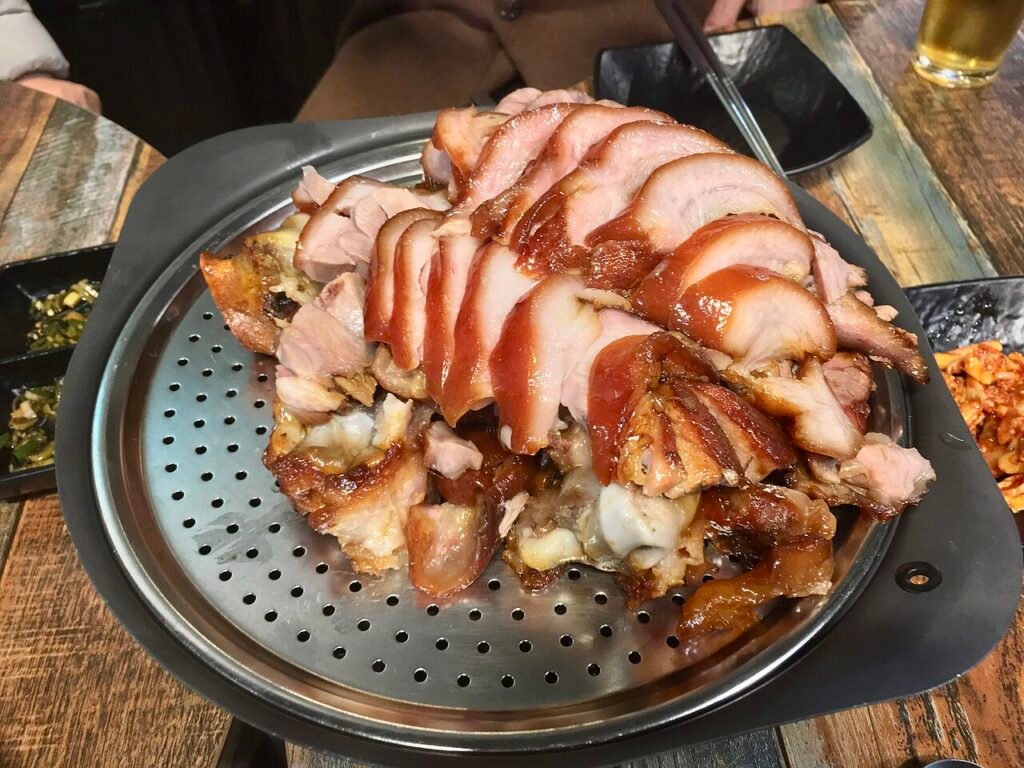
    A platter of sliced jokbal, Korean braised pork trotters
    Jokbal (braised pork trotters). Photo: Bykim2012, CC0, via Wikimedia Commons
    • What to order: Maeun mini jokbal, spicy small trotters, large (₩36,000). If spice isn’t your thing, yeongyang jokbal, the regular braised kind (₩32,000).
    • Price: ₩14,000–42,000 per dish (about US$11–32); main platters are made to share
    • Naver rating: 4.36 (5,293 visitor reviews)
    • Getting there: Dongdaemun Station Exit 3, about 2 minutes. Turn into the Green Pharmacy (그린약국) alley and walk about 80 m.
    • Hours: Tue–Sun 10:30–21:30. Closed Mondays.
    • Wait & booking: Bookable on Naver
    • Dietary note: The “maeun” (spicy) dishes are very hot.
    • Naver Map: Changsin-dong Maeun Jokbal

    4. Uraya Sindang (우라야 신당점) — Local Pick

    Why go: A Japanese izakaya with grilled skewers, about 5 minutes on foot from DDP. It doesn’t open until 17:00 but stays open until 2 or 3 a.m., which suits Dongdaemun’s late shopping hours.

    • What to order: The omakase course (₩24,900 per person), or order skewers one by one: negima, chicken and green onion (₩3,500), and tsukune, chicken meatball (₩4,800)
    • Price: ₩3,500–7,900 per small plate (about US$3–6); course ₩24,900 (about US$19)
    • Naver rating: not shown (4,062 visitor reviews)
    • Getting there: Sindang Station (Lines 2 and 6), Exit 8, about 3 minutes. Go straight, then turn left.
    • Hours: Sun–Thu 17:00–02:00, Fri–Sat 17:00–03:00
    • Wait & booking: Bookable on Naver for groups of up to 10
    • Naver Map: Uraya Sindang

    5. Deouri Gopchang (더우리곱창) — Local Pick

    Why go: Gopchang is grilled or stir-fried intestines, a cheap and very Korean night out with soju. Deouri is rated 4.74, and nothing on the menu costs more than ₩15,000.

    Gopchang, Korean grilled intestines, cooking in a pan with onion and green onion
    Gopchang (grilled intestines). Photo: 뚱표아빠의 세상사는 이야기, CC BY 4.0, via Wikimedia Commons
    • What to order: Yachae gopchang, stir-fried with vegetables (₩12,000), or the mixed grill (₩15,000)
    • Price: ₩12,000–15,000 per portion (about US$9–11)
    • Naver rating: 4.74 (2,362 visitor reviews)
    • Getting there: Jongno 5-ga Station (Line 1), Exit 5, about 4 minutes
    • Hours: Daily 10:00–22:00. Closed on the 2nd, 4th and 5th Sunday of each month.
    • Wait & booking: Bookable on Naver
    • Good to know: There are several gopchang shops with similar names in the same alley. The shop says the ones calling themselves its 2nd and 3rd branches are not related.
    • Naver Map: Deouri Gopchang

    6. Baeksong Sindang (백송 신당) — Local Pick

    Why go: The splurge on this list: Korean hanwoo beef grilled at the table, open until midnight. Its Naver page has a section for foreign guests and says staff give English guidance.

    • What to order: Jjak-galbitsal, boneless short rib (₩34,000), or salchisal, chuck flap (₩48,000). Hanwoo yukhoe, beef tartare, is ₩28,000.
    • Price: ₩34,000–48,000 per portion (about US$26–36). Seodaesal requires at least two portions.
    • Naver rating: 4.59 (2,341 visitor reviews)
    • Getting there: Sindang Station Exit 8, about 4 minutes. Walk 200 m straight; it’s on the left, opposite the 21st Century Meat Department Store. From Dongdaemun History & Culture Park Station Exit 3, cross the road.
    • Hours: Mon–Sat 11:00–24:00, Sun 13:00–24:00 (last order 23:00)
    • Wait & booking: Bookable on Naver and CatchTable
    • Parking: None. The Sindang intersection public lot is a 5–7 minute walk (₩1,500 per 30 minutes).
    • Naver Map: Baeksong Sindang

    7. Jeonju-jip (전주집) — Local Pick

    Why go: The first shop in Dongdaemun’s grilled fish alley, opposite Dongdaemun Market. A grilled fish set comes with rice and side dishes, an easy everyday Korean lunch. Reviews say plenty of foreigners eat here.

    • What to order: Godeungeo baekban, grilled mackerel set (₩13,000), or galchi baekban, hairtail set (₩15,000)
    • Price: ₩13,000–15,000 per person (about US$10–11)
    • Naver rating: 4.42 (2,211 visitor reviews)
    • Getting there: Dongdaemun Station Exit 9, about 4 minutes. It’s in the lane between Jongno 6-ga and Cheonggyecheon, across from Dongdaemun Market.
    • Hours: Mon–Sat 08:30–19:30 (last order 19:10). Closed Sundays.
    • Wait & booking: Walk in; phone 02-2274-6564
    • Naver Map: Jeonju-jip

    8. Choi Ramen (초이라멘) — Local Pick

    Why go: A small ramen shop across from Heunginjimun, the old East Gate, near the start of the Naksan city wall trail. It’s rated 4.8, and the menu is short.

    • What to order: Mazesoba, brothless noodles with toppings (₩13,000), or tonkotsu ramen (₩11,000). Add yaki gyoza (₩5,000).
    • Price: ₩11,000–13,000 per bowl (about US$8–10)
    • Naver rating: 4.8 (2,131 visitor reviews)
    • Getting there: Dongdaemun Station Exit 10, about 1 minute. Turn back into the alley by Tongil Medical (통일의료기); it’s behind the 7-Eleven.
    • Hours: Daily 11:00–21:00 (last order 20:30)
    • Wait & booking: Walk in; phone 0507-1406-7666
    • Good to know: It’s a no-kids zone.
    • Naver Map: Choi Ramen

    9. Daehwajeong Jinjja Haejangguk (대화정 진짜해장국) — Local Pick

    Why go: Haejangguk means “hangover soup,” and this place opens at 5 a.m., so it works after a late night or before an early start. The menu has just three items.

    • What to order: Jinjja haejangguk (₩12,000), or the large “teuk” bowl (₩17,000)
    • Price: ₩12,000–17,000 per person (about US$9–13)
    • Naver rating: 4.35 (2,054 visitor reviews)
    • Getting there: Dongdaemun History & Culture Park Station Exit 14, about 2 minutes. Walk straight and turn left into the alley by the Emart24 next to Olive Young.
    • Hours: Naver lists daily 05:00–23:50 (last order 23:10), but the listing looked partly out of date when I checked, so confirm on Naver Map before you go.
    • Wait & booking: Walk in; phone 0507-1348-8485
    • Parking: None. Use a shopping mall or public lot.
    • Naver Map: Daehwajeong Jinjja Haejangguk

    10. Star Samarkand (스타사마르칸트) — Local Pick

    Why go: The streets near Dongdaemun History & Culture Park Station have a cluster of Central Asian shops and restaurants. Star Samarkand serves Uzbek and Russian dishes, and reviews say most of the customers are foreign. It’s also the cheapest meal on this list.

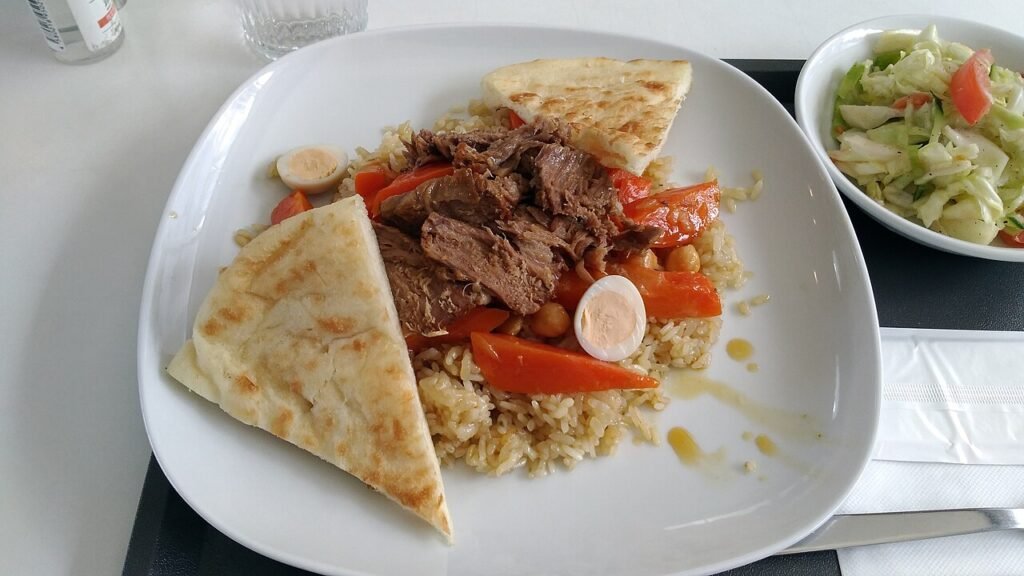
    A plate of Uzbek plov, rice with meat, carrots and chickpeas, served with flatbread
    Uzbek-style plov. Photo: 赤猫法師, CC BY-SA 4.0, via Wikimedia Commons
    • What to order: Plov, rice cooked with meat and carrots (₩11,500), lagman noodle soup (₩9,900) and a samsa pastry (₩4,000)
    • Price: ₩4,000–11,500 per dish (about US$3–9)
    • Naver rating: 4.76 (1,464 visitor reviews)
    • Getting there: Dongdaemun History & Culture Park Station Exit 12, about 3 minutes. Walk 100 m straight, turn left into the alley beside the Jo Tennis shop, and it’s 50 m in on the right.
    • Hours: Daily 10:00–22:00. Closed every other Tuesday.
    • Wait & booking: Walk in; phone 0507-1406-7834
    • Naver Map: Star Samarkand

    Tips for Eating in Dongdaemun

    • Use Naver Map, not Google Maps. Search the Korean names in brackets above. Dongdaemun’s alleys are tight, and Naver’s walking directions are more reliable.
    • Know your station. Dongdaemun Station (Lines 1 and 4) is closest to the dakhanmari, jokbal and grilled fish alleys. Dongdaemun History & Culture Park Station (Lines 2, 4 and 5) is the DDP stop and closest to the Central Asian street. Sindang Station is one stop further.
    • Eating late is easy. Jinokhwa (01:00), Uraya (02:00, or 03:00 on weekends), Baeksong (24:00) and Daehwajeong (23:50) all work after a night of shopping.
    • Check closing days. Changsin-dong Maeun Jokbal is closed Mondays, Jeonju-jip on Sundays, and Deouri Gopchang on some Sundays.

    Dongdaemun Restaurants FAQ

    What food is Dongdaemun famous for?

    Dakhanmari (whole-chicken hot pot), spicy jokbal and grilled fish set meals, each in its own alley near Dongdaemun Station. The area is also known for Nepali and Central Asian restaurants.

    Where can I eat late at night near DDP?

    Uraya Sindang is open until 02:00 (03:00 on Fridays and Saturdays) and Jinokhwa until 01:00. Daehwajeong opens again at 05:00.

    Is there cheap food near Dongdaemun?

    Yes. Star Samarkand’s dishes run ₩4,000–11,500 (about US$3–9), and a gopchang portion at Deouri is ₩12,000–15,000 (about US$9–11).

    Do I need a reservation?

    Usually not. Everest, Changsin-dong Maeun Jokbal, Uraya, Deouri Gopchang and Baeksong take bookings on Naver, which helps for groups.

  • Korea in Winter (December to February): Weather, What to Wear and Things to Do

    Korea in Winter (December to February): Weather, What to Wear and Things to Do

    Short answer: Korea in winter is cold, dry and mostly sunny. In Seoul, January is the coldest month, with an average daily low of −5.5°C (22°F) and a high of just 2.1°C (36°F). Busan and Jeju are several degrees milder. Pack a long padded coat, thermal layers, gloves and shoes with grip. In return you get ski resorts a couple of hours from Seoul, ice fishing festivals, hot street snacks and long evenings at a jjimjilbang.

    Two dates matter if you’re planning a December or January trip. Christmas Day (Friday, December 25, 2026) and New Year’s Day (Friday, January 1, 2027) are public holidays. The Lunar New Year (Seollal) break runs from February 6 to 9, 2027, and that is when trains and highways fill up.

    Last checked: 2026-10-29. Temperatures are the Korea Meteorological Administration (KMA) 1991–2020 climate normals. Holiday dates are from the 2027 calendar announced by the Korea AeroSpace Administration on June 29, 2026. Festival dates are from each festival’s official website. Anything not yet announced is marked as such.

    Korea Winter Weather by Month (Seoul, Busan, Jeju)

    These are 30-year averages, not a forecast. Any given week can be several degrees colder or warmer, and a cold snap in Seoul can push daytime highs well below freezing for a few days.

    Month City Average Average high Average low Precipitation
    December Seoul 0.2°C (32°F) 4.2°C (40°F) −3.4°C (26°F) 22.6 mm
    December Busan 5.8°C (42°F) 10.4°C (51°F) 2.0°C (36°F) 33.8 mm
    December Jeju 8.3°C (47°F) 11.0°C (52°F) 5.6°C (42°F) 55.6 mm
    January Seoul −1.9°C (29°F) 2.1°C (36°F) −5.5°C (22°F) 16.8 mm
    January Busan 3.6°C (38°F) 8.2°C (47°F) −0.1°C (32°F) 34.5 mm
    January Jeju 6.1°C (43°F) 8.6°C (48°F) 3.7°C (39°F) 67.5 mm
    February Seoul 0.7°C (33°F) 5.1°C (41°F) −3.2°C (26°F) 28.2 mm
    February Busan 5.4°C (42°F) 10.2°C (50°F) 1.5°C (35°F) 49.6 mm
    February Jeju 6.8°C (44°F) 9.9°C (50°F) 4.0°C (39°F) 57.2 mm

    Source: KMA climate normals 1991–2020 (data.kma.go.kr), stations Seoul (108), Busan (159) and Jeju (184). Fahrenheit is converted and rounded to the nearest degree.

    What the table means in practice:

    • Seoul drops below freezing most nights from December to February. It is also dry: January averages only 16.8 mm of precipitation, so you get a lot of clear, cold days, and the wind makes it feel colder than the number on the thermometer.
    • Busan is about 5°C warmer than Seoul in January, with lows hovering around freezing. A good coat is still needed, but it’s a gentler winter.
    • Jeju rarely freezes at sea level (January low 3.7°C), but it is the wettest and windiest of the three. Hallasan, the mountain in the middle of the island, is a different story and gets proper snow.
    • Gangwon Province, where most ski resorts are, is colder than Seoul and much snowier, especially in the mountains.
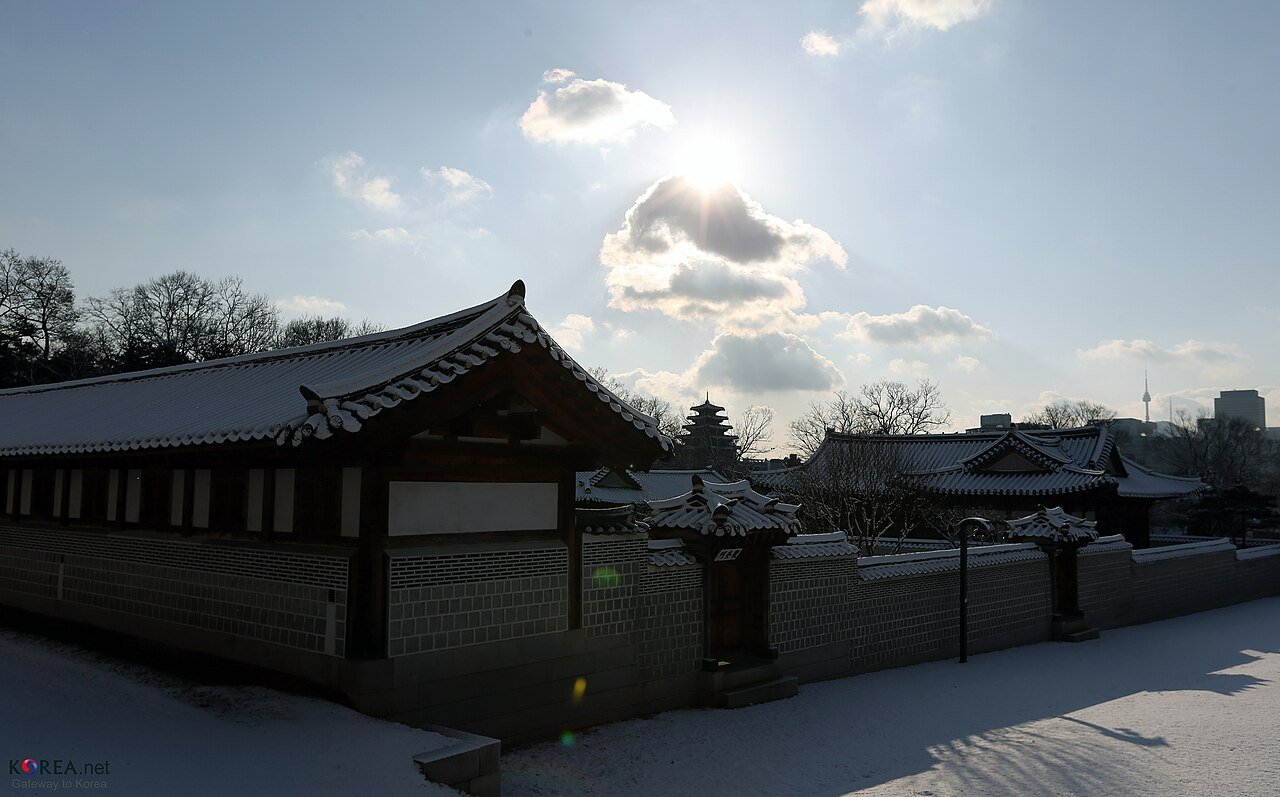
    Snow-covered roofs and walls of Gyeongbokgung Palace in Seoul on a sunny winter morning
    Gyeongbokgung Palace after a December snowfall. Photo: Korea.net / Korean Culture and Information Service (Jeon Han), CC BY-SA 2.0, via Wikimedia Commons

    What to Wear in Korea in Winter

    In a Korean winter you go back and forth between freezing streets and very warm rooms all day. Subway cars, cafes, shops and restaurants with heated floors (ondol) can all feel hot. Wear a warm coat you can take off easily, with thinner layers underneath.

    Packing list for December to February

    • A long padded coat. A knee-length down or synthetic puffer is what most people in Seoul wear, and it keeps your legs warm in the wind. A short ski jacket is fine for Busan or Jeju.
    • Thermal base layers. A thin thermal top and leggings under normal clothes do more than a thick sweater, and they don’t make you overheat indoors.
    • Hat, scarf and gloves. Touchscreen gloves help, since you’ll be checking Naver Map a lot.
    • Shoes with grip. Sidewalks, stairs and palace courtyards get icy after snow. Waterproof boots or sneakers with a good sole are better than smooth-soled fashion boots.
    • Warm socks. Bring an extra pair if you’re going to an ice festival or a ski resort.
    • Hand warmers. Disposable heat packs are sold at convenience stores across Korea, so you don’t need to pack many.
    • Lip balm and moisturizer. The air outside is dry, and indoor heating dries it out further.

    December vs. January vs. February

    December starts cool and gets colder. Early in the month a warm jacket and layers are often enough in Seoul. By late December and through January you’ll want the full setup above. February is still cold, especially in the first half, but averages a few degrees higher than January.

    Things to Do in Korea in Winter

    Ski and snowboard near Seoul

    Korea has a compact ski scene, and several resorts are close enough to Seoul for a day trip:

    • Konjiam Resort (Gwangju, Gyeonggi) and Jisan Forest Resort (Icheon, Gyeonggi), the closest options to Seoul
    • Elysian Gangchon (Chuncheon, Gangwon) and Vivaldi Park (Hongcheon, Gangwon), further east, with bigger mountains
    • Yongpyong Resort and Phoenix Pyeongchang (Pyeongchang, Gangwon), both venues of the 2018 Winter Olympics, best done as an overnight trip

    As of October 29, 2026, the resorts had not posted their 2026–27 opening dates. Several run seasonal shuttle buses from Seoul. Schedules and booking appear on each resort’s own website once the season is confirmed, so check there rather than relying on last year’s timetable. Gear and clothing rental are available on site.

    Ice fishing festivals

    Ice fishing festivals are a big part of winter in Gangwon Province. You sit over a hole in a frozen river and try to catch trout, and many festivals will grill your catch for you on the spot.

    • Hwacheon Sancheoneo Ice Festival (Hwacheon, Gangwon) is the biggest. Its official website lists the 2027 festival for January 9–31, 2027 (23 days). Besides ice fishing, there are snow and ice activities, ice sculptures and lantern-lit streets. Ticket prices for 2027 hadn’t been published when we checked, so look at the official site before you go.
    • Pyeongchang Trout Festival (Pyeongchang, Gangwon) is a smaller alternative that also offers ice fishing and sledding on a frozen river. Check its official channels for dates.

    All of these depend on the ice being thick enough, so schedules can change in a mild winter.

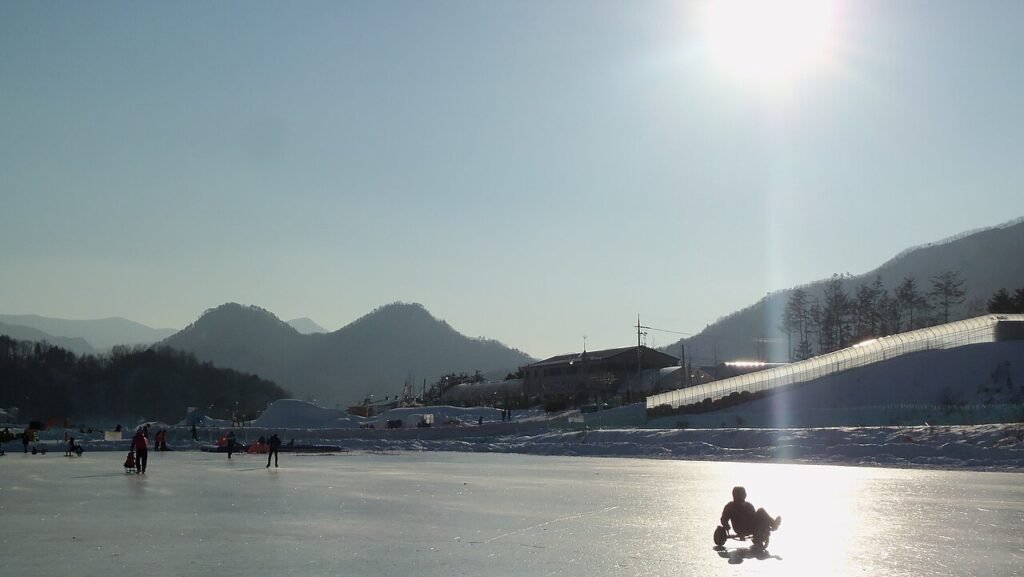
    People sledding and walking on a frozen river under winter sun at a trout festival in Pyeongchang, Korea
    A frozen river at the Pyeongchang Trout Festival. Photo: Christian Bolz, CC BY-SA 4.0, via Wikimedia Commons

    Christmas and New Year in Seoul

    Seoul decorates heavily for the holidays, with light displays and markets around the city center, especially near Gwanghwamun and Cheonggyecheon. As of October 29, 2026, the city had not announced dates for this year’s events. Check Visit Seoul (english.visitseoul.net) from late November for the confirmed schedule. If you want to see in the New Year, expect big crowds in central Seoul on December 31.

    Winter street food

    A lot of Korean snacks mostly appear once it gets cold. Look for small street carts and market stalls:

    • Hotteok: a griddle-fried pancake filled with brown sugar, cinnamon and nuts. Bite carefully, because the syrup inside is very hot.
    • Bungeoppang: a fish-shaped waffle filled with sweet red bean paste, and sometimes custard.
    • Gyeran-ppang: a small sweet bread with a whole egg baked on top.
    • Eomuk: fish cake skewers simmered in broth. You can usually sip the broth from a paper cup while you eat.
    • Roasted sweet potatoes and chestnuts from barrel roasters on the street.
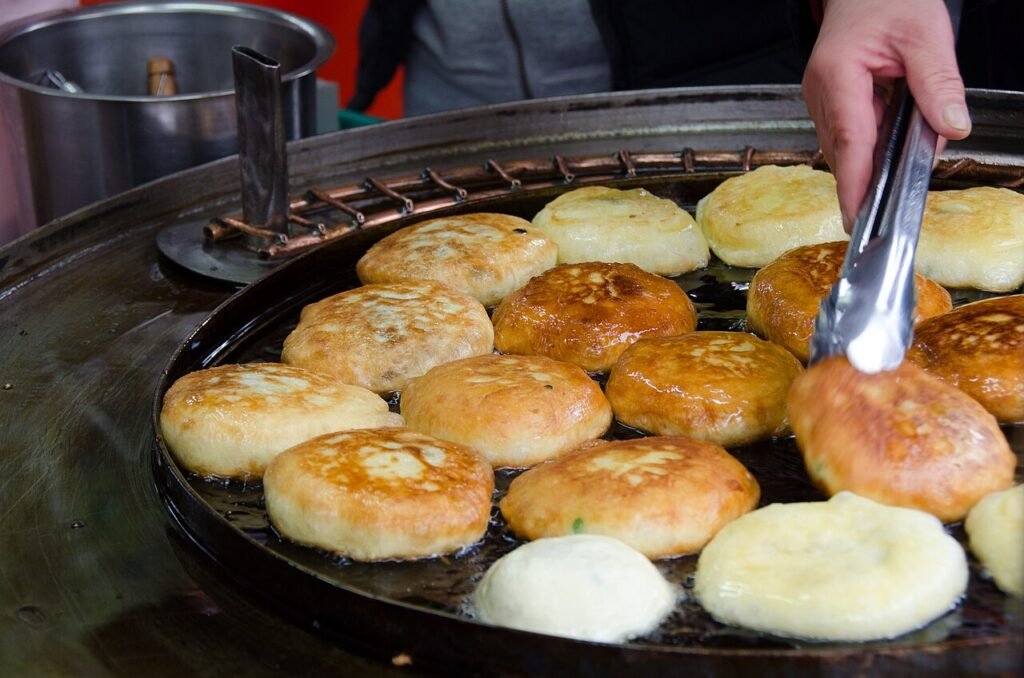
    Hotteok, Korean sweet pancakes, frying on a round griddle at a street stall
    Hotteok on the griddle. Photo: Sandra Vallaure, CC BY 2.0, via Wikimedia Commons

    Warm up at a jjimjilbang

    A jjimjilbang is a Korean bathhouse with gender-separated baths, plus shared heated rooms where everyone wears the provided T-shirt and shorts. After a cold day of walking, it’s a cheap and easy way to warm up. Bathing areas are nude, so leave your swimsuit at home. Prices and opening hours vary by place, so check before you go.

    Indoor backups for the coldest days

    On days when the wind makes walking miserable, plan around indoor places: museums, underground shopping streets near subway stations, covered markets, and cafes. Seoul’s palaces are still worth a visit after snow, but keep it to an hour or two.

    Holidays and Crowds: Dates to Watch

    Date Holiday What it means for travelers
    Fri, Dec 25, 2026 Christmas Day (public holiday) Busy evening in shopping and nightlife areas. It’s more of a date night than a family holiday in Korea.
    Thu, Dec 31, 2026 New Year’s Eve (not a public holiday) Big crowds in central Seoul around midnight.
    Fri, Jan 1, 2027 New Year’s Day (public holiday) Some people head out early to watch the first sunrise of the year.
    Sat, Feb 6 to Tue, Feb 9, 2027 Seollal (Lunar New Year), with Feb 9 as a substitute holiday The biggest travel period of the winter. Trains and intercity buses sell out, and many small family-run restaurants and shops close for a day or more.

    Source: 2027 calendar announced by the Korea AeroSpace Administration (June 29, 2026). Seollal itself falls on Sunday, February 7, 2027.

    If your trip overlaps Seollal, book KTX trains and long-distance buses as early as you can, and avoid moving between cities on the first and last day of the break. In Seoul, the days of Seollal are actually fairly quiet, as many residents go to their hometowns, but check opening days for any specific restaurant or attraction you plan to visit.

    Tips for a Winter Trip to Korea

    • Check the weather every evening. Cold snaps come and go in Korea. The KMA app or Naver Weather shows the “feels like” temperature, which is the more useful number.
    • Look at the air quality too. Some winter days have high fine dust (misemeonji) levels. Naver Weather shows it next to the forecast. If it’s bad, a KF94 mask from any convenience store helps.
    • Days are short. It gets dark in the late afternoon in December and January, so start early if you’re doing a day trip.
    • Use Naver Map for transit. It’s more accurate than Google Maps for buses and walking routes in Korea.
    • Keep phone batteries warm. Cold drains them fast at ski resorts and ice festivals. Carry a power bank in an inside pocket.

    Korea in Winter FAQ

    How cold is Korea in winter?

    In Seoul, the coldest month is January, averaging −1.9°C (29°F), with average lows of −5.5°C (22°F), according to the KMA’s 1991–2020 normals. Busan averages 3.6°C (38°F) in January and Jeju 6.1°C (43°F).

    Is December or January better for visiting Korea?

    December is a little milder and has the holiday lights and Christmas atmosphere. January is colder but is the main season for ice festivals like Hwacheon (January 9–31, 2027) and for skiing. Both avoid the Seollal rush in February 2027.

    Does it snow in Seoul in winter?

    Yes, but not often heavily, and it rarely stays on the ground for long. Seoul’s winter is mostly dry, with only 16.8 mm of average precipitation in January. For reliable snow, head to the ski resorts in Gangwon.

    What should I wear in Seoul in January?

    A long padded coat, thermal base layers, a hat, gloves, a scarf and shoes with good grip. Dress in layers you can take off, because buildings and subways are well heated.

    When is Seollal in 2027?

    Seollal falls on Sunday, February 7, 2027. The public holiday runs from February 6 to 9, including a substitute holiday on Tuesday, February 9.

  • Things to Do in Dongdaemun (2026): DDP, the City Wall and Late-Night Shopping

    Things to Do in Dongdaemun (2026): DDP, the City Wall and Late-Night Shopping

    Short answer: the best things to do in Dongdaemun are walking around and through Dongdaemun Design Plaza (DDP), climbing the Seoul City Wall from Heunginjimun Gate up to Naksan Park for the view, and coming back after dark for the light show at DDP and the late-night fashion malls. Most of it is free. The one paid extra worth booking this autumn is the DDP Rooftop Tour, which has an English session at 11:00.

    Dongdaemun is two neighborhoods stacked on top of each other. One is a 600-year-old city gate and the wall that runs up the hill behind it. The other is a wholesale fashion district that stays busy until midnight, with a silver building in the middle that looks like it landed from somewhere else. This guide covers both, with hours and prices checked on the official sites.

    Last checked: 2026-10-28. Hours and prices come from each place’s official website (DDP, Seoul Museum of History, Doota Mall) and the Seoul city government. US dollar amounts use Naver’s base exchange rate on 2026-10-28 (₩1,332.80 = US$1), rounded. Event schedules change, so check the links before you go.

    If you only have half a day in Dongdaemun

    • See DDP inside and out, then the free museums in the park next to it
    • Walk the city wall from Heunginjimun Gate up to Naksan Park
    • Come back after dark for the DDP light show and late-night shopping at Doota Mall

    Things to Do in Dongdaemun at a Glance

    Place What it is Cost Time needed Nearest station
    Dongdaemun Design Plaza (DDP) Landmark building, exhibitions, design shops Free to enter; exhibitions vary 1–2 hours Dongdaemun History & Culture Park, Exit 1 or 2
    DDP Rooftop Tour Guided walk on the DDP roof ₩26,000 (~US$20) 1 hour Dongdaemun History & Culture Park
    DDP 365 Light Short outdoor light show every evening Outdoor show in the plaza 15–30 minutes Dongdaemun History & Culture Park
    Dongdaemun History & Culture Park Joseon-era ruins and two small museums Free 30–60 minutes Dongdaemun History & Culture Park, Exit 1 or 2
    Heunginjimun Gate & Seoul City Wall Museum The “Great East Gate” and a museum about the wall Free 45–60 minutes Dongdaemun, Exit 1 or 10
    Naksan Park Hilltop park on the city wall with city views Free 1 hour Hyehwa, Exit 2
    Ihwa Mural Village Hillside neighborhood with murals and stairs Free 30–60 minutes Hyehwa, Exit 2
    Doota Mall & the night fashion malls Fashion shopping open until midnight Free to browse 1–2 hours Dongdaemun History & Culture Park
    Central Asian Street Uzbek, Russian and Mongolian shops and restaurants Free to walk 1 hour with a meal Dongdaemun History & Culture Park
    Cheonggyecheon Stream Walking path along a restored stream Free 30 minutes or more Dongdaemun

    1. Dongdaemun Design Plaza (DDP)

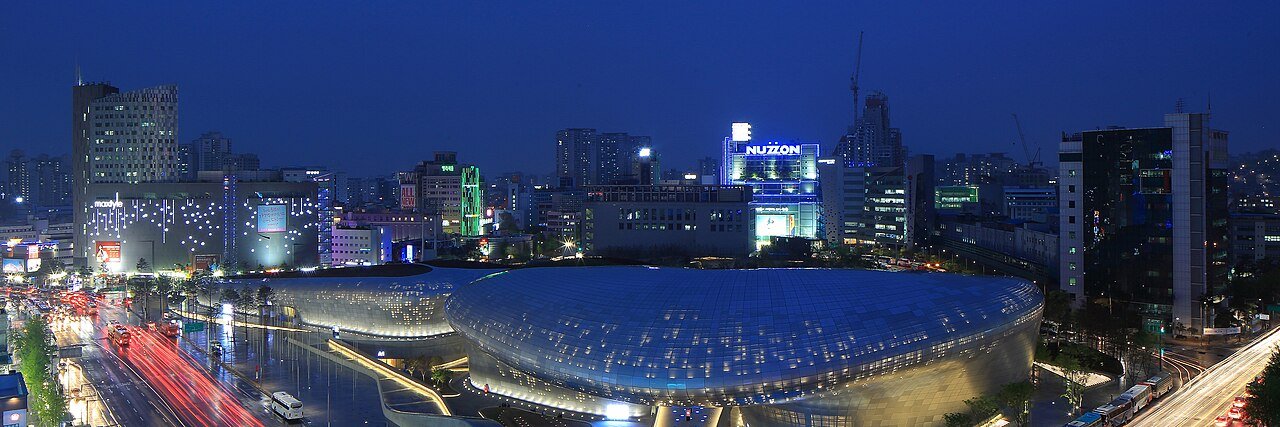
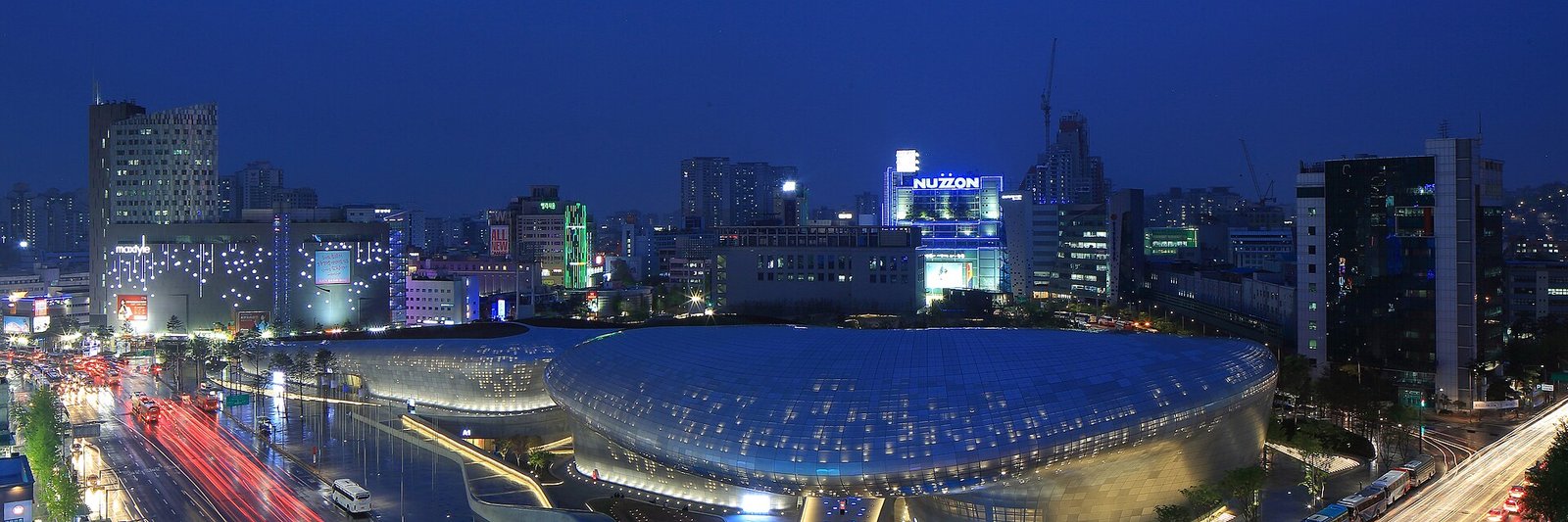
    Dongdaemun Design Plaza lit up at night, with its curved silver panels and the Dongdaemun skyline
    Dongdaemun Design Plaza (DDP) at night. Photo: Eugene Lim, CC BY 2.0, via Wikimedia Commons

    Why go: DDP was designed by Zaha Hadid, and it doesn’t have a single straight wall you’ll notice. You can walk over it, under it and through it without a ticket. It’s also where Seoul holds its fashion week, design fairs and big pop-up events.

    • What to do: Walk the ramps that wrap around the building, check what’s on in the Museum and Art Hall, and browse the DDP Design Store. With no exhibition on, the building alone still fills an hour.
    • Getting there: Dongdaemun History & Culture Park Station (Lines 2, 4 and 5), Exit 1 or 2. Exit 1 opens onto Oullim Plaza on the lower level.
    • Hours: 10:00–20:00. Some spaces keep different hours depending on the program. Closed January 1 and on Seollal and Chuseok days.
    • Cost: Free to enter. Exhibitions and programs set their own prices, and some are free.
    • Tip: The visitor center on B2 (Oullim Plaza, 10:00–20:00) lends wheelchairs and strollers for free if you leave an ID. Paid lockers are near Exit 1 and on the first floor of Design Lab.

    2. DDP Rooftop Tour

    Why go: The rooftop route has been extended to 652 m, and the guided tour walks all of it, with 360-degree views over Dongdaemun. It’s the one part of DDP you can’t see on your own.

    • What to do: You change into a tour outfit, go through a safety briefing, then walk the roof with a guide.
    • Getting there: Meet at the DDP Lounge tour desk, Art Hall 1st floor (entrances A3 and A4).
    • Hours: Runs until November 29, 2026, except Mondays and rainy days. The English tour is at 11:00. Korean tours run at 16:00, plus 13:00 on Fridays to Sundays. Each tour lasts 60 minutes, including changing and the safety briefing.
    • Cost: ₩26,000 (about US$20). If you pay on site, it’s card only.
    • Tip: Only adults aged 18 to 70 can join, and you need ID. Wear sneakers and clothes you can move in. Skirts and dress shoes aren’t allowed. Each tour takes 15 people. Book by phone (02-2153-0310) or email (ddptour@seouldesign.or.kr). Leftover spots open at the desk 10 minutes before the start, and you should be there 20 minutes early.

    3. DDP 365 Light (Evening Light Show)

    Why go: In 2026 Seoul turned DDP’s light shows into a permanent nightly program. Lasers, lighting, video and sound play on the plaza in short bursts all evening.

    • What to do: Find a spot on Oullim Plaza near the excavated ruins and wait for the next show. Each one lasts about 5 minutes.
    • Getting there: Dongdaemun History & Culture Park Station, Exit 1
    • Hours: Every day, on the hour and half-hour in the evening. Start times shift by season. From November to February the first show is at 18:00. The city says times can change.
    • Cost: It’s an outdoor show in the plaza.
    • Tip: DDP also runs bigger festival editions. Seoul Light DDP Autumn ran September 3–13 this year, and a winter season usually follows. Check the DDP site for dates.

    4. Dongdaemun History & Culture Park

    Why go: DDP stands where Dongdaemun Stadium used to be. When the stadium was demolished, archaeologists found Joseon-era military sites and a section of the city wall underneath. The ruins are now laid out right next to DDP.

    • What to do: See the excavated foundations, then pop into the two small museums. The Dongdaemun History Museum covers what was dug up here, and the Dongdaemun Stadium Memorial shows the stadium years. The Igansumun exhibition hall looks at an old floodgate in the city wall.
    • Getting there: Dongdaemun History & Culture Park Station, Exit 1 or 2, or Dongdaemun Station (Line 4), Exit 7
    • Hours: The History Museum and Stadium Memorial are open 10:00–18:00 and close for an hour at 12:00. They’re closed Mondays (holiday Mondays too), January 1, and on Seollal and Chuseok days. Igansumun is open 10:00–20:00.
    • Cost: Free
    • Tip: This makes a good 30-minute stop between DDP and the city wall walk. Don’t plan it for a Monday.

    5. Heunginjimun Gate and the Seoul City Wall Museum

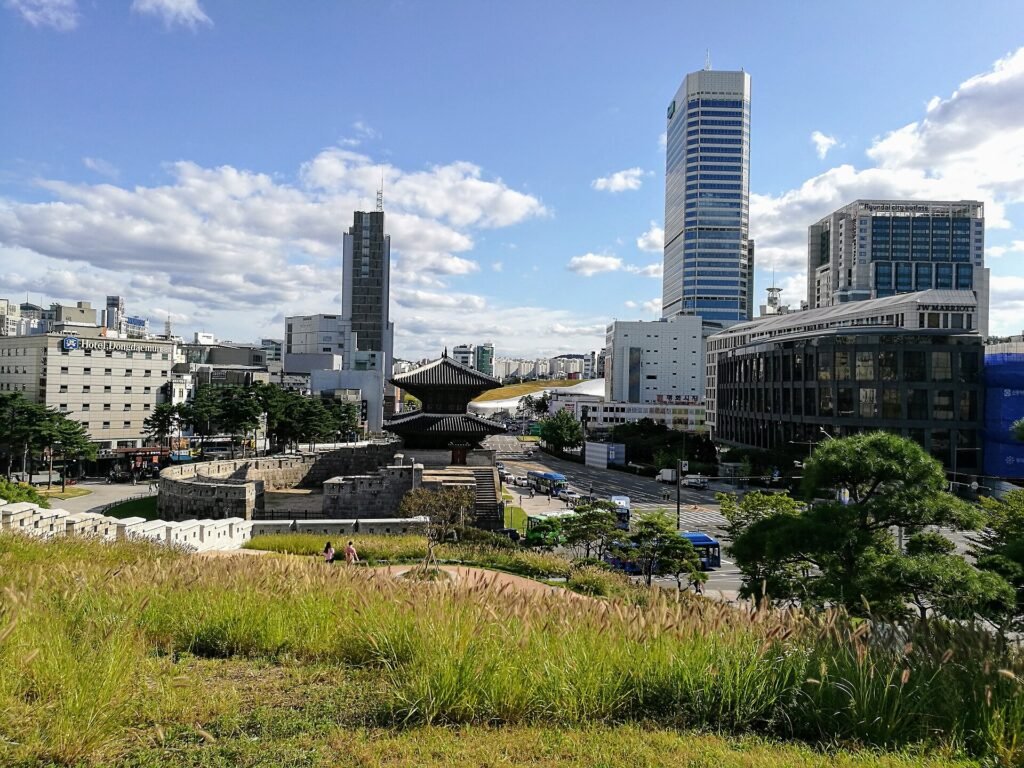
    Heunginjimun Gate and its half-moon outer wall seen from the Seoul City Wall, with DDP and Dongdaemun towers behind
    Heunginjimun Gate seen from the Seoul City Wall. Photo: Teemeah, CC BY-SA 4.0, via Wikimedia Commons

    Why go: Heunginjimun is the “Great East Gate” (Dongdaemun) that gave the whole area its name. It’s the only gate of old Seoul with a half-moon outer wall built in front of it. The museum next door explains how the city wall was built, damaged and restored.

    • What to do: See the gate from the traffic island, then climb the steps behind the museum. The low hill there is the best place to photograph the gate, with DDP behind it.
    • Getting there: Dongdaemun Station (Lines 1 and 4), Exit 1 or 10, about 5 minutes on foot to the museum
    • Hours: The Seoul City Wall Museum is open Tuesday to Sunday, 09:00–18:00 (last entry 17:30). Closed Mondays and January 1.
    • Cost: Free
    • Tip: This is where the Naksan section of the city wall trail starts. If you have the legs for it, follow the wall uphill to Naksan Park.

    6. Naksan Park and the City Wall Trail

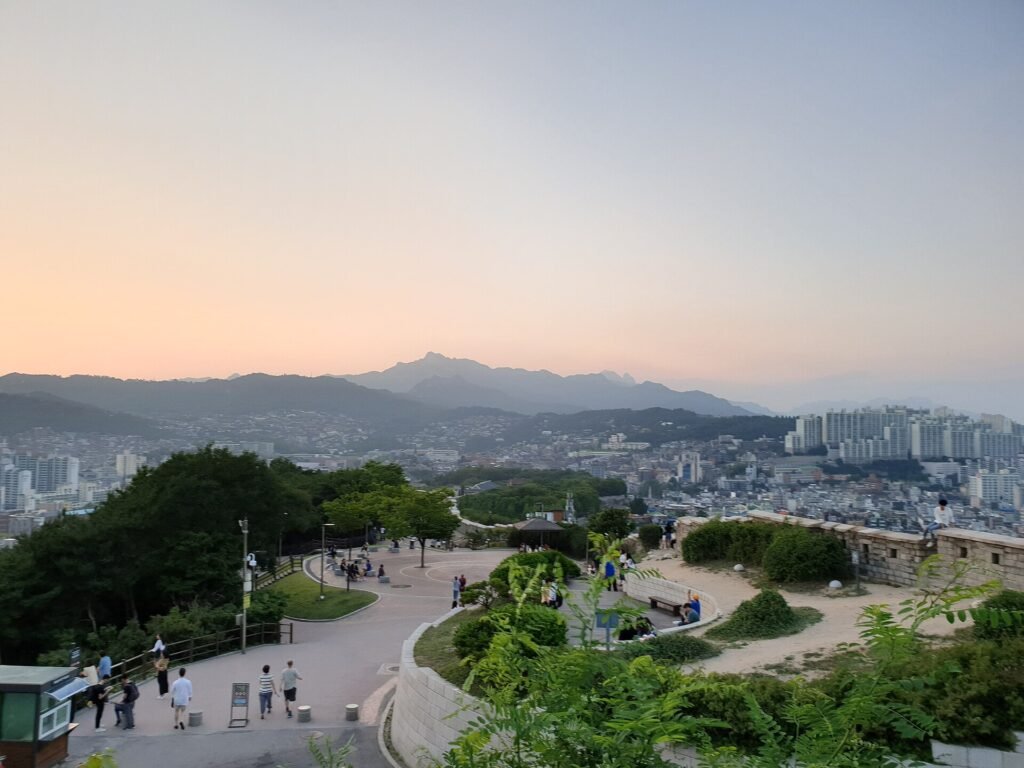
    Evening view over northern Seoul from Naksan Park along the Seoul City Wall
    Naksan Park and the Seoul City Wall at sunset. Photo: Choism97, CC BY-SA 4.0, via Wikimedia Commons

    Why go: It’s one of the easiest viewpoints in central Seoul. The old stone wall runs along the ridge, and from the top you look out over the rooftops of Jongno toward the mountains to the north. At sunset Seoul students and couples sit along the wall.

    • What to do: Walk the path that follows the wall, either outside it or along the top, then sit at the summit plaza and watch the city lights come on.
    • Getting there: Hyehwa Station (Line 4), Exit 2, about a 10-minute walk uphill. You can also walk up along the wall from Heunginjimun.
    • Cost: Free
    • Tip: The climb from Heunginjimun is steady but short. Coming down, take the Hyehwa side so you end up near the cafés and theaters of Daehak-ro.

    7. Ihwa Mural Village

    Why go: Ihwa-dong is the hillside neighborhood just below Naksan Park, known for murals and painted stairways. It’s a real residential area, which is part of why it feels different from the rest of Dongdaemun.

    • What to do: Wander the lanes and stairs between Naksan Park and Ihwa-dong, look for the murals, and stop at a small café on the way down.
    • Getting there: Hyehwa Station, Exit 2, or downhill from Naksan Park
    • Cost: Free
    • Tip: People live in these houses. Keep your voice down, don’t go into private yards or stairways, and skip the early morning and late evening visits.

    8. Doota Mall and the Night Fashion Malls

    Why go: Dongdaemun is Seoul’s fashion wholesale district, and the shopping goes on long after the rest of the city’s stores have closed. Doota Mall is the easiest of the big malls for visitors: one building of brand stores, with a food court downstairs.

    • What to do: Browse Korean fashion brands floor by floor, and grab a meal or skincare basics on B2, where you’ll find the food court and an Olive Young.
    • Getting there: Dongdaemun History & Culture Park Station. Doota is across the road from DDP.
    • Hours: Doota Mall is open Monday to Sunday, 10:30–00:00.
    • Cost: Free to browse
    • Tip: The wholesale buildings around Doota mostly serve shop owners who buy in bulk. Many stalls may not sell single items or let you try things on, so stick to the retail malls if you just want one jacket.

    9. Central Asian Street

    Why go: A few blocks from DDP, the signs switch to Cyrillic. This small area of Gwanghui-dong is home to Uzbek, Russian, Kazakh and Mongolian shops, bakeries and restaurants. It feels nothing like the malls across the road.

    • What to do: Sit down for Uzbek plov, grab samsa from a clay oven, or buy fresh flatbread from one of the bakeries.
    • Getting there: A short walk from Dongdaemun History & Culture Park Station
    • Cost: Free to walk around
    • Tip: It’s a good dinner stop after DDP, before the light show.

    10. Cheonggyecheon Stream

    Why go: Cheonggyecheon is a stream that was once covered by a road and an elevated highway. It was opened up again in 2005, and its walking path runs below street level right through Dongdaemun.

    • What to do: Walk west along the water toward Gwangjang Market or all the way into central Seoul. The path is flat and much quieter than the streets above.
    • Getting there: Dongdaemun Station. The stream runs just north of the fabric market buildings.
    • Cost: Free
    • Tip: The path makes an easy walking link between Dongdaemun and Euljiro if you’re doing both areas in one day.

    A Half-Day Dongdaemun Itinerary

    1. 14:00 Start at the Seoul City Wall Museum and Heunginjimun Gate (Dongdaemun Station, Exit 1).
    2. 15:00 Walk the wall up to Naksan Park, then drop down through the lanes of Ihwa Mural Village.
    3. 16:30 Head back to DDP by subway or taxi. See the building and the ruins in Dongdaemun History & Culture Park before the museums close at 18:00.
    4. 18:00 Dinner on Central Asian Street.
    5. 19:30 Watch DDP 365 Light on Oullim Plaza, then shop Doota Mall until it closes at midnight.

    Got a free morning? Swap in the 11:00 English DDP Rooftop Tour (until November 29, 2026) and do the wall walk after lunch.

    Dongdaemun Tips

    • Two stations, two names. Dongdaemun Station (Lines 1 and 4) is next to the gate and the city wall. Dongdaemun History & Culture Park Station (Lines 2, 4 and 5) is next to DDP. They’re one stop apart on Line 4, and you can walk between them in about 10 minutes.
    • Mondays are tricky. The city wall museum and the two museums in the park all close on Mondays. DDP itself stays open.
    • Come in the evening. DDP looks best lit up, the light show runs every evening, and the malls stay open late. Dongdaemun is one of the few parts of Seoul where 10 p.m. is still a reasonable time to shop.
    • Use Naver Map. Search the Korean names (동대문디자인플라자, 흥인지문, 낙산공원, 두타몰) for accurate walking routes.

    Dongdaemun FAQ

    Is DDP free?

    Yes. Walking around and through Dongdaemun Design Plaza is free. Some exhibitions and programs charge, and the Rooftop Tour costs ₩26,000.

    What is Dongdaemun famous for?

    Fashion shopping that runs late into the night, the Zaha Hadid-designed DDP, and Heunginjimun, the old east gate of Seoul’s city wall.

    Is Dongdaemun worth visiting at night?

    Yes. DDP is lit up, DDP 365 Light runs on the plaza every evening, and Doota Mall stays open until midnight.

    Is the DDP Rooftop Tour in English?

    Yes, one session a day is. The 11:00 tour is in English and runs Tuesday to Sunday until November 29, 2026 (not on rainy days). It’s for adults aged 18 to 70 only.

    How long do I need in Dongdaemun?

    Half a day covers DDP, the city wall walk and an evening of shopping. Add a morning if you want the Rooftop Tour.

  • Best Restaurants in Euljiro & Gwangjang Market (2026): 10 Places Koreans Actually Review

    Best Restaurants in Euljiro & Gwangjang Market (2026): 10 Places Koreans Actually Review

    Short answer: start at Gwangjang Market with a mung bean pancake at Soonhee-ne Bindaetteok and a plate of yukhoe (Korean beef tartare) at Buchon Yukhoe. Then walk west into Euljiro for Pyongyang cold noodles at Woo Lae Oak. All ten places below are among the most-reviewed restaurants for “Euljiro” and “Gwangjang Market” on Naver Map, the map app Koreans actually use.

    Gwangjang Market and Euljiro sit side by side, about 15 minutes apart on foot, so I’ve put them in one list. I sorted Naver Map by number of reviews for both searches, then took out ads, cafés and bakeries, national chains, and places whose reviews come mostly from sponsored blog posts. Gwangjang Market has a lot of near-identical bindaetteok and yukhoe shops, so I kept the most-reviewed ones and skipped the repeats.
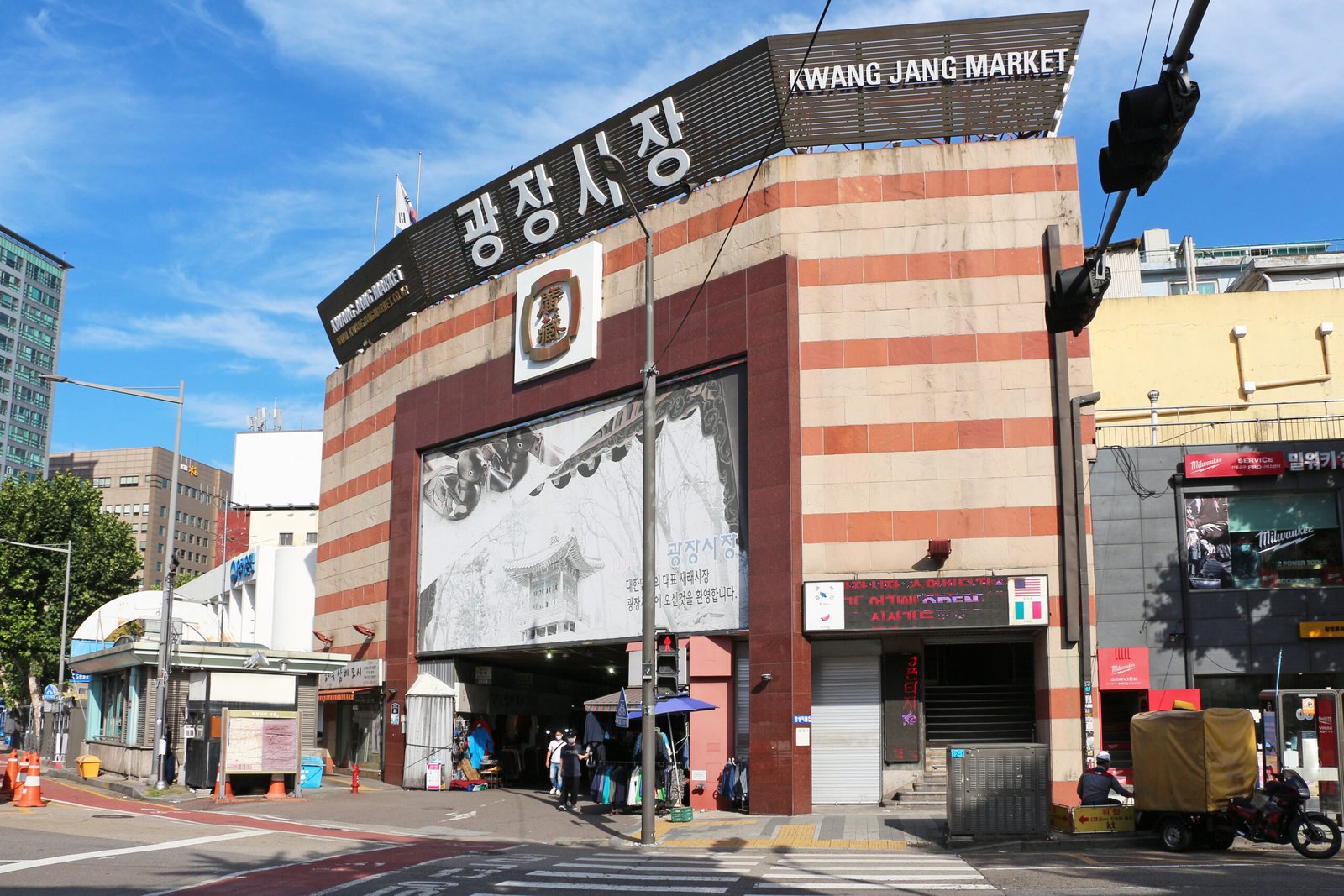
    Last checked: 2026-10-28. Prices and hours are from each restaurant’s Naver Map page. Menus change, so check the Naver Map link before you go. US dollar amounts use Naver’s base exchange rate on 2026-10-28 (₩1,332.80 = US$1), rounded.
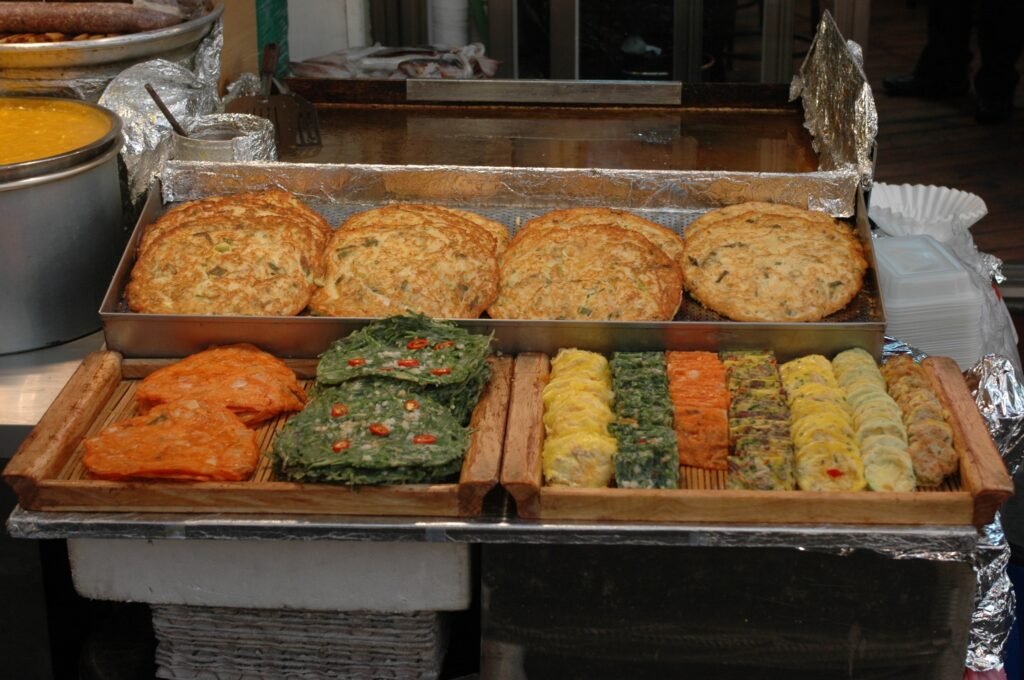
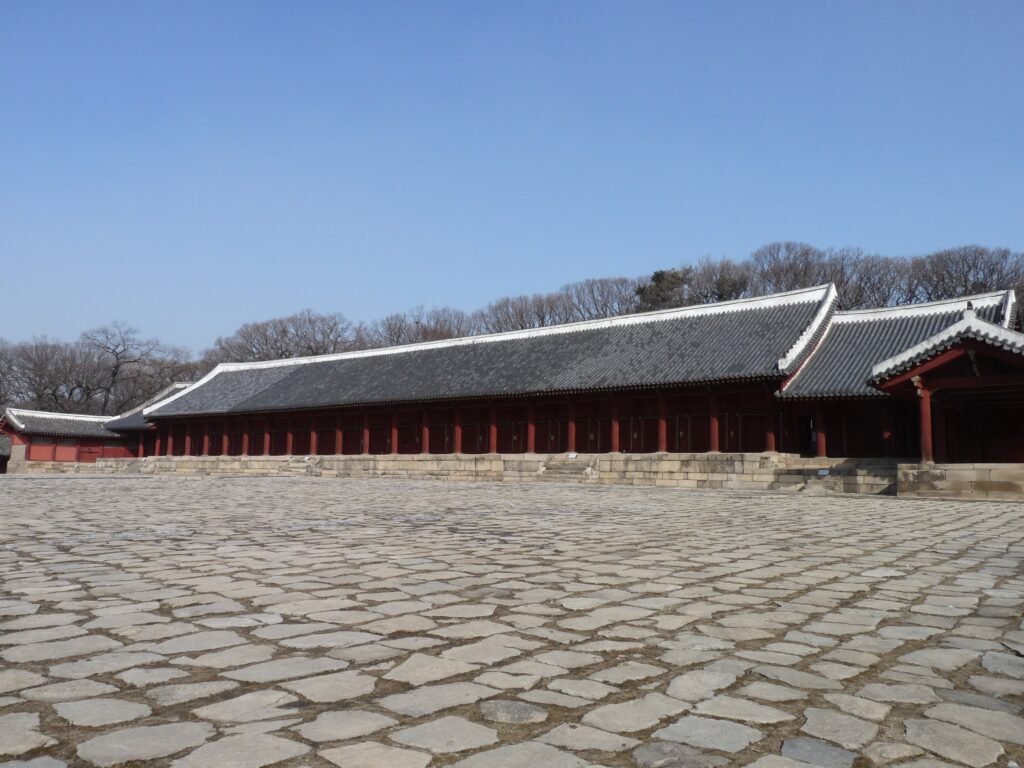
    Best Restaurants in Euljiro & Gwangjang Market at a Glance

    Restaurant Area What to eat Price Naver visitor reviews Booking
    Soonhee-ne Bindaetteok Gwangjang Market Mung bean pancake ₩6,000–16,000 (~US$5–12) 14,139 Walk in
    Monyeo Gimbap Gwangjang Market Mayak gimbap ₩4,000–11,000 (~US$3–8) 10,528 Walk in
    Woo Lae Oak Euljiro 4-ga Pyongyang naengmyeon ₩18,000 (~US$14) 10,314 Phone
    Tercero Costes Euljiro 3-ga Spanish tapas, paella ₩18,000–34,000 per dish (~US$14–26) 9,297 Naver booking
    Bakga-ne Bindaetteok Gwangjang Market Mung bean pancake, jeon ₩6,000–25,000 (~US$5–19) 7,442 Walk in
    Buchon Yukhoe Gwangjang Market Yukhoe (beef tartare) ₩11,000–23,000 (~US$8–17) 5,828 Walk in
    Sancheong Sutbul Garden Euljiro 3-ga Charcoal-grilled pork ₩19,000–59,000 (~US$14–44) 5,052 CatchTable
    Yukhoe Jamaejip Gwangjang Market Yukhoe, yukhoe bibimbap ₩11,000–26,000 (~US$8–20) 5,048 Walk in
    Jinjak Euljiro 3-ga Japanese rice bowls, futomaki ₩13,900–20,900 (~US$10–16) 4,767 Naver booking
    Eunseong Hoetjip Gwangjang Market Spicy cod stew ₩30,000 for two (~US$23) 4,384 Walk in

    1. Soonhee-ne Bindaetteok (순희네빈대떡) — Local Pick

    Why go: It has more Naver visitor reviews than any other place on this list. The pancakes are made from ground mung beans and fried thick and crispy in a pool of oil.

    Bindaetteok, Korean mung bean pancakes, frying in oil at Gwangjang Market
    Bindaetteok (mung bean pancakes) frying at Gwangjang Market. Photo: Korea.net / Korean Culture and Information Service, CC BY-SA 2.0, via Wikimedia Commons
    • What to order: Nokdu bindaetteok, the mung bean pancake (₩6,000), plus gogi wanja, fried pork patties (₩4,000). Groups often get the mixed platter (₩16,000).
    • Price: ₩6,000–16,000 per person (about US$5–12)
    • Naver rating: not shown (14,139 visitor reviews)
    • Getting there: Jongno 5-ga Station (Line 1), Exit 8, about 2 minutes on foot
    • Hours: Daily 10:00–21:00 (last order 20:30)
    • Wait & booking: Walk in; phone only for other requests
    • Good to know: Naver lists this shop twice, as 순희네빈대떡 and 원조순희네빈대떡, with the same address. Both pages point to the same place.
    • Naver Map: Soonhee-ne Bindaetteok

    2. Monyeo Gimbap (모녀김밥) — Local Pick

    Why go: Mayak gimbap are small, finger-sized rice rolls served with a mustard dipping sauce. “Mayak” means “drug,” a joke about how hard they are to stop eating. Monyeo means “mother and daughter,” and this shop has the most reviews for them.

    • What to order: Mayak gimbap (₩4,000). For a full meal, yukhoe bibimbap (₩11,000).
    • Price: ₩4,000–11,000 per person (about US$3–8)
    • Naver rating: 4.26 (10,528 visitor reviews)
    • Getting there: Jongno 5-ga Station Exit 7, about 2 minutes on foot
    • Hours: Daily 09:00–21:00
    • Wait & booking: Walk in
    • How to order: One visitor review mentions English and Japanese descriptions on the menu.
    • Naver Map: Monyeo Gimbap

    3. Woo Lae Oak (우래옥) — Local Pick

    Why go: The menu is almost all Pyongyang naengmyeon: cold buckwheat noodles in a clear, lightly beefy broth. The flavor is mild, so don’t expect the punch of the spicy version.

    A bowl of Pyongyang naengmyeon, cold buckwheat noodles in clear beef broth
    Pyongyang naengmyeon (cold buckwheat noodles). Photo: Mobius6, CC BY-SA 4.0, via Wikimedia Commons
    • What to order: Pyongyang naengmyeon (₩18,000). Bibim naengmyeon, the spicy version without broth, is the same price.
    • Price: ₩18,000 per person (about US$14)
    • Naver rating: not shown (10,314 visitor reviews)
    • Getting there: Euljiro 4-ga Station (Lines 2 and 5), Exit 4, about 1 minute on foot
    • Hours: Tue–Sun 11:30–21:00 (last order 20:20). Closed Mondays.
    • Wait & booking: Phone only (02-2265-0151)
    • Parking: Parking and valet are listed
    • Naver Map: Woo Lae Oak

    4. Tercero Costes (떼르세로 코스테스) — Local Pick

    Why go: A second-floor Spanish restaurant in Euljiro’s old printing district, rated 4.89 on Naver. The menu marks which dishes are vegan, lacto or pescatarian.

    • What to order: Seafood paella (₩26,000), gambas al ajillo (₩22,000) and truffle cream gnocchi (₩22,000)
    • Price: ₩18,000–34,000 per dish (about US$14–26); plan on sharing
    • Naver rating: 4.89 (9,297 visitor reviews)
    • Getting there: Euljiro 3-ga Station Exit 9, about 4 minutes on foot. Cross at the Myeongbo intersection, go into the alley past Paper Crane, and look for the second floor.
    • Hours: Daily 11:00–21:30 (last order 20:20)
    • Wait & booking: Bookable on Naver; guests with a booking are seated first
    • Parking: None. Use public street parking or a paid lot nearby.
    • Naver Map: Tercero Costes

    5. Bakga-ne Bindaetteok (박가네 빈대떡) — Local Pick

    Why go: The other big bindaetteok name in Gwangjang Market, with a much longer menu of jeon (Korean pan-fried dishes). It’s right inside the north gate, so it’s easy to find.

    • What to order: Maetdol bindaetteok, the millstone mung bean pancake (₩6,000), and yukjeon, pan-fried beef slices (₩25,000), to share
    • Price: ₩6,000–25,000 per dish (about US$5–19)
    • Naver rating: 4.33 (7,442 visitor reviews)
    • Getting there: Jongno 5-ga Station Exit 8, about 2 minutes. Enter Gwangjang Market through North Gate 2 (북2문); it’s on the left.
    • Hours: Daily 09:00–22:00
    • Wait & booking: Walk in. Call ahead for groups (02-2264-0847).
    • Naver Map: Bakga-ne Bindaetteok

    6. Buchon Yukhoe (부촌육회 본점) — Local Pick

    Why go: Gwangjang Market has a whole alley of yukhoe shops, and Buchon has the most Naver visitor reviews of them. Yukhoe is raw beef seasoned with sesame oil and pear, usually topped with an egg yolk.

    Yukhoe, Korean raw beef tartare topped with an egg yolk and sesame seeds
    Yukhoe (Korean beef tartare) at Gwangjang Market. Photo: Choi2451, CC BY-SA 3.0, via Wikimedia Commons
    • What to order: Yukhoe, 200 g (₩23,000), or yukhoe bibimbap (₩11,000) if you’re eating alone. Yukhoe nakji tangtangi, beef tartare with chopped live octopus (₩38,000), is for the adventurous.
    • Price: ₩11,000–23,000 per person (about US$8–17)
    • Naver rating: 4.5 (5,828 visitor reviews)
    • Getting there: Jongno 5-ga Station Exit 8, about 3 minutes. From underground Exit 10, turn left at Ujeong Pharmacy (우정약국) into the yukhoe alley.
    • Hours: Daily 10:00–21:30 (last order 21:00)
    • Wait & booking: Walk in; phone 02-2267-1831
    • Good to know: There’s an annex (부촌육회 별관) nearby if the main shop is full.
    • Naver Map: Buchon Yukhoe

    7. Sancheong Sutbul Garden (산청숯불가든 을지로) — Local Pick

    Why go: Pork grilled over charcoal in a busy Euljiro alley, a minute from the subway. It’s open until 23:00, so it works for a late dinner.

    • What to order: Gochujang yangnyeom-gui, pork in a spicy red pepper marinade (₩19,000), or hangjeongsal, pork jowl (₩22,000). Finish with jaecheop doenjang sulbap, rice in soybean paste stew with tiny clams (₩10,000).
    • Price: ₩19,000–22,000 per portion (about US$14–17); the large salt-grilled platter is ₩59,000 (about US$44)
    • Naver rating: not shown (5,052 visitor reviews)
    • Getting there: Euljiro 3-ga Station (Line 2), Exit 11, about 1 minute. Walk straight and turn into the alley beside Obongjip (오봉집).
    • Hours: Daily 11:30–23:00 (last order 22:00)
    • Wait & booking: Bookings and waiting list through CatchTable
    • Parking: None. Use a public or paid lot.
    • Good to know: A second branch is a minute away (을지로14길 12, 2nd floor) if the first is full.
    • Naver Map: Sancheong Sutbul Garden

    8. Yukhoe Jamaejip (육회자매집) — Local Pick

    Why go: The name means “yukhoe sisters’ house.” Its menu has Japanese translations, which helps if you read some Japanese.

    • What to order: Yukhoe (₩23,000), or yukhoe bibimbap with perilla oil and aged kimchi (₩13,000)
    • Price: ₩11,000–26,000 per person (about US$8–20)
    • Naver rating: 4.42 (5,048 visitor reviews)
    • Getting there: Jongno 5-ga Station Exit 8, about 3 minutes. The shop says branches 1 and 2 are closest to Exit 10, and branch 3 to Exit 9.
    • Hours: Tue–Sat 09:30–21:20, Sun 09:30–21:00. Closed Mondays.
    • Wait & booking: Walk in; phone 02-2272-3069
    • Naver Map: Yukhoe Jamaejip

    9. Jinjak (진작) — Local Pick

    Why go: A Japanese rice-bowl and futomaki shop behind a hotel in Euljiro, for when you want a break from Korean food. It takes bookings.

    • What to order: Futomaki, the thick sushi roll (₩17,900), sake-don salmon bowl (₩18,900) or hormone-don, a grilled beef offal bowl (₩16,900)
    • Price: ₩13,900–20,900 per person (about US$10–16)
    • Naver rating: 4.53 (4,767 visitor reviews)
    • Getting there: Euljiro 3-ga Station, Exit 9 (Line 3) or Exit 11 (Line 2), about 5 minutes. It’s behind the Nine Tree Premier Hotel Myeongdong 2.
    • Hours: Daily 11:00–20:50 (last order 20:00)
    • Wait & booking: Bookable on Naver, with a CatchTable waiting list
    • Parking: Paid hotel lot next door (₩4,500 per 30 minutes)
    • Naver Map: Jinjak

    10. Eunseong Hoetjip (은성횟집) — Local Pick

    Why go: The name means “raw fish house,” but the dish to order is daegu maeuntang, a spicy cod stew that bubbles at the table. Go on a cold day.

    • What to order: Daegu maeuntang, spicy cod stew for two (₩30,000), with a bowl of rice (₩1,000)
    • Price: about ₩15,000 per person (about US$11)
    • Naver rating: 4.28 (4,384 visitor reviews)
    • Getting there: Jongno 5-ga Station Exit 7, about 3 minutes. From Exit 11, walk down the alley next to Ujeong Pharmacy; it’s on the left.
    • Hours: Daily 10:00–22:00
    • Wait & booking: Walk in; phone 02-2267-6813
    • Naver Map: Eunseong Hoetjip

    Tips for Eating in Euljiro & Gwangjang Market

    • Use Naver Map, not Google Maps. Search the Korean names in brackets above. Gwangjang Market shops are packed close together, and Naver’s pins are more accurate.
    • Two stations, one walk. Gwangjang Market is closest to Jongno 5-ga Station (Line 1). The Euljiro places are around Euljiro 3-ga and 4-ga (Line 2). You can walk between them in about 15 minutes.
    • Watch for Monday closures. Woo Lae Oak and Yukhoe Jamaejip are both closed on Mondays.
    • Share at the market. Portions are made for sharing. Two or three people can try a pancake, gimbap and yukhoe across a couple of stalls without overeating.
    • Same name, different shop. Many Gwangjang stalls have several branches or look-alike names. Check the Korean name before you sit down.

    Euljiro & Gwangjang Market Restaurants FAQ

    What should I eat at Gwangjang Market?

    Bindaetteok (mung bean pancake), mayak gimbap and yukhoe (beef tartare) are the three classics. Soonhee-ne, Monyeo Gimbap and Buchon Yukhoe are the most-reviewed places for each.

    Is Gwangjang Market food expensive?

    Not really. A mung bean pancake is ₩6,000 (about US$5) and mayak gimbap is ₩4,000 (about US$3). Yukhoe is the priciest classic at around ₩23,000 (about US$17) a plate.

    Which of these restaurants are open late?

    Sancheong Sutbul Garden stays open until 23:00, and Bakga-ne Bindaetteok and Eunseong Hoetjip until 22:00. Check the last-order times above.

    Do I need a reservation?

    Not for the market stalls. In Euljiro, Tercero Costes and Jinjak take bookings on Naver, and Sancheong Sutbul Garden uses CatchTable.

    Is Euljiro worth visiting for food?

    Yes, especially in the evening. Many old print shops and workshops are now restaurants and bars, and within a few blocks you can go from Pyongyang cold noodles at Woo Lae Oak to Spanish tapas at Tercero Costes.

  • Incheon Airport to Seoul (2026): Every Way to Get There, With Current Fares

    Incheon Airport to Seoul (2026): Every Way to Get There, With Current Fares

    Short answer: for most first-time visitors, the cheapest easy way from Incheon Airport to Seoul is the AREX All-Stop train (₩4,750 from Terminal 1 to Seoul Station, about US$4). If you’re staying near Myeongdong, Gangnam or Jamsil and have big suitcases, the airport limousine bus (₩17,000–18,000, about US$13–14) drops you near your hotel with no stairs or transfers. Landing after 11 p.m.? Night buses run until about 5 a.m., or take a taxi from the official stand.

    I’m a Seoul local, and I took every fare, first and last departure and boarding spot below from the operators’ own websites. Several popular English guides still quote old AREX Express prices, and the adult fare has gone up since.

    Last checked: 2026-10-29. Fares and times are from AREX (airportrailroad.com), Incheon Airport (airport.kr), Airport Limousine (airportlimousine.co.kr), K-Limousine (klimousine.com) and International Taxi (intltaxi.co.kr). Schedules change, so check the operators’ sites before you go. US dollar amounts use Naver’s base exchange rate on 2026-10-28 (₩1,332.80 = US$1), rounded.

    Travelers with suitcases inside Incheon International Airport Terminal 2
    Incheon International Airport Terminal 2. Photo: Jimmy

    Incheon Airport to Seoul: All Options Compared

    Option Adult fare Time Runs (from the airport) Best for
    AREX Express train ₩13,000 (~US$10) 43 min (T1) / 51 min (T2) to Seoul Station 05:16 (T2) – 22:48 (T1) Fast, guaranteed seat, hotels near Seoul Station
    AREX All-Stop train ₩4,750 (T1) / ₩5,350 (T2) to Seoul Station (~US$4) 59 min (T1) / 66 min (T2) to Seoul Station 05:08 (T2) – 23:56 (T1) Budget, Hongdae, light luggage
    Airport limousine bus ₩17,000–18,000 (~US$13–14) Depends on traffic About 5 a.m. to 11 p.m., by route Heavy luggage, hotels on the route
    Night bus Varies by route Depends on traffic About 11:20 p.m. to 5 a.m. Late-night arrivals on a budget
    Regular taxi Meter, from ₩4,800 base (~US$4) plus tolls Depends on traffic 24 hours Groups, door to door
    International Taxi (pre-booked) Flat ₩70,000–95,000 by Seoul zone (~US$53–71) Depends on traffic Book ahead No Korean needed, fixed price

    T1 and T2 are Terminal 1 and Terminal 2. Your boarding pass or airline website tells you which one you land at. Both have the train station and the bus stops, but the buses and trains leave from different places in each one.

    Before You Leave the Airport: Get a T-money Card

    T-money is Korea’s rechargeable transit card. You tap it on the subway, the AREX All-Stop train, city buses and many taxis. AREX says prepaid cards are sold at transit card outlets such as convenience stores, so pick one up at a convenience store in the arrivals area or near the train station, then load it at a ticket machine. Bring some won in cash for loading it.

    Two exceptions: the AREX Express train needs its own ticket, and some limousine buses want a ticket bought before you board (details below).

    1. AREX Express Train (Fastest to Seoul Station)

    The Express is a nonstop train between the airport and Seoul Station with assigned seats, free Wi-Fi and staff on board. It stops nowhere else, so it only makes sense if Seoul Station is where you’re going or where you’ll change trains.

    AREX Express Train ticket area and gates at Incheon International Airport Terminal 1 Station
    The Express Train concourse at Incheon Airport Terminal 1 Station. Photo: MNXANL, CC BY-SA 4.0, via Wikimedia Commons
    • Fare: ₩13,000 for adults (about US$10) and ₩9,500 for children aged 6–12 (about US$7). AREX lists ₩18,500–19,100 as the “regular” fare, but ₩13,000 is what adults pay right now.
    • Time: 43 minutes from Terminal 1, 51 minutes from Terminal 2 to Seoul Station.
    • First and last trains: 05:16 from T2 and 05:24 from T1; the last ones leave at 22:40 from T2 and 22:48 from T1. Same times on weekends.
    • Where to board: the Transportation Center, basement level 1 (B1), at both terminals. Follow the orange “Express Train” signs.
    • How to pay: buy a ticket online at airportrailroad.com, at the ticket machines, or at the Express Train customer center on B1. Foreign Visa, Mastercard, JCB, Diners, Amex and UnionPay cards are accepted. You can’t just tap T-money.
    • Luggage tip: T1 station runs an electric cart service. At Seoul Station you’ll need to transfer to the subway for most hotels, which means escalators and long walks with your bags.

    2. AREX All-Stop Train (Cheapest, and Direct to Hongdae)

    The All-Stop is a normal commuter train on the same line. It’s slower but costs about a third of the Express, and it stops at Hongik University Station (Hongdae), Gongdeok and Gimpo Airport on the way to Seoul Station.

    • Fare with T-money: ₩4,750 from T1 and ₩5,350 from T2 to Seoul Station; ₩4,650 from T1 and ₩5,250 from T2 to Hongik University (about US$3–4).
    • Single-journey card: if you don’t have T-money, buy a one-time card at the station machine. It costs ₩100 more per trip plus a ₩500 deposit you get back at your destination.
    • Time: 59 minutes from T1 and 66 minutes from T2 to Seoul Station (some trains take 2–6 minutes longer).
    • First and last trains: first at 05:08 from T2 and 05:14 from T1. The last trains that reach Seoul Station leave at 23:32 from T2 and 23:38 from T1. After that, one more train (23:50 from T2, 23:56 from T1) goes only as far as Digital Media City and does not reach Hongdae.
    • Where to board: the same B1 Transportation Center, but the All-Stop has its own gates. Tap in like the subway.
    • Luggage tip: it’s a commuter train, so closer to Seoul it can fill up at rush hour. Keep your suitcase beside you, out of the doorway.

    AREX Express vs All-Stop: which one?

    Take the Express if you’re going to Seoul Station itself, want a guaranteed seat after a long flight, or are traveling at rush hour. Take the All-Stop if you’re on a budget, heading to Hongdae or Gongdeok, or carrying only a carry-on. The time difference to Seoul Station is about 15 minutes.

    3. Airport Limousine Bus (Easiest With Big Luggage)

    Limousine buses are comfortable coaches that run from the airport to hotels and stations all over Seoul. The driver loads your bags underneath, and there are no stairs or transfers. Traffic decides how long the ride takes, so allow extra time at rush hour.

    Gold Airport Limousine bus bound for Incheon Airport at a stop in Seoul
    An Airport Limousine bus in Seoul. Photo: hyolee2, CC BY-SA 3.0, via Wikimedia Commons

    Two companies run the main routes, and they work differently:

    • Airport Limousine (6001, 6002, 6015): ₩17,000 adults, ₩12,000 children (about US$13 / US$9). At Terminal 1 it’s first come, first served, and you can pay with cash, T-money or a ticket. At Terminal 2 you must buy a ticket first at the ticket booth or a kiosk.
    • K-Limousine (6703, 6705A): ₩18,000 adults, ₩12,000 children aged 6–12 (about US$14 / US$9). From the airport, buy your ticket in advance at the ticket booth or kiosk.

    Main routes from the airport

    Route Goes to T1 stop / times T2 stop / times
    6015 Mapo, Gongdeok, Namdaemun Market, Euljiro hotels, Myeongdong Station 5B-2 · 05:39–23:19 (weekdays) B1 No. 28 · 05:19–22:59 (weekdays)
    6001 Seoul Station, Hoehyeon (Namdaemun Market), Myeongdong Station, Dongdaemun DDP 5B-4 · 05:29–23:09 B1 No. 29 · 05:39–22:49
    6002 Hapjeong, Hongik Univ. (Hongdae), Sinchon, Gwanghwamun, Jongno, Dongdaemun 6A-1 · 05:34–23:29 (weekdays) B1 No. 30 · 05:14–23:09 (weekdays)
    6703 Sinnonhyeon, Seonjeongneung, COEX, Samseong Station, Seolleung (Gangnam) 3B · 06:15–22:55 B1 No. 18/19 · 05:55–22:35
    6705A Jamsil Lotte World, Dong Seoul Terminal (Gangbyeon), Gwangnaru, Walkerhill 4A · 05:20–23:15 B1 No. 18/19 · 05:00–22:55
    • Where to buy tickets: at Terminal 1, ticket booths are inside the arrivals hall near exits 4 and 9, with more just outside near exits 4, 6, 7, 8, 11 and 13. At Terminal 2, the ticket booth and kiosks are on B1 in the Transportation Center. Kiosks run 24 hours.
    • Check your stop on Naver Map: type your hotel into Naver Map and look at the bus options. If a 60xx or 67xx bus stops within a few minutes’ walk, that’s usually your easiest ride.
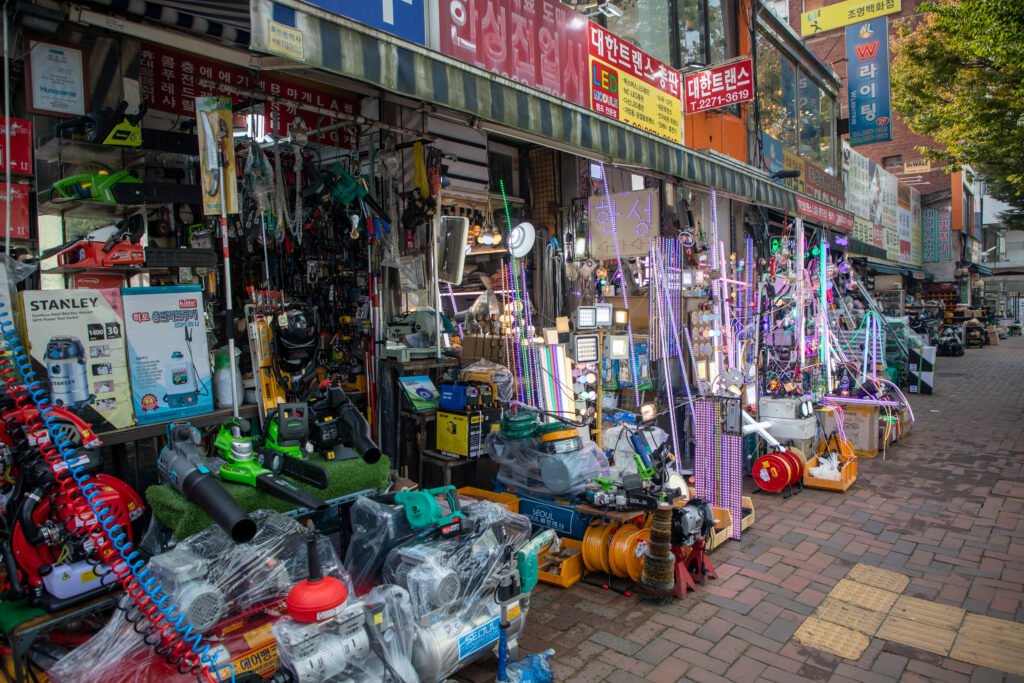
    • November 1 detours: both bus companies have posted notices about detours and skipped stops on Sunday, November 1, 2026, the day of the JTBC Seoul Marathon. If you land that day, ask at the ticket booth.

    4. Taxi (Regular, Deluxe and International Taxi)

    Use only the official taxi stands outside arrivals. The airport warns that people posing as taxis inside the terminal often overcharge. Taxis from Incheon Airport to Seoul don’t charge a city-boundary surcharge, but you pay the expressway tolls on top of the meter.

    • Regular (standard) taxi: base fare ₩4,800 (about US$4), then metered. Seoul-bound stands are 5C, 6C and 6D at T1 and 7C at T2. Night surcharge: 20% from 22:00–23:00, 40% from 23:00–02:00, and 20% from 02:00–04:00.
    • Deluxe (black) and jumbo 9-seat taxis: base fare ₩7,000 (about US$5), 20% night surcharge from 22:00–04:00. Stands: 7C/8C at T1, 7D at T2. Jumbo taxis are the easy pick for a family with four or more big suitcases.
    • International Taxi: an official taxi service for foreign visitors, with drivers who speak English and other languages. Stands are 4C at T1 and 3C at T2, or book online at intltaxi.co.kr. Rides from the airport to Seoul use a flat zone fare that includes tolls, and you can pay in cash or by Visa, Mastercard or Amex.

    International Taxi flat fares (airport to Seoul)

    Zone Seoul districts (examples) Standard Deluxe / Large
    A Gangseo ₩70,000 (~US$53) ₩100,000 (~US$75)
    B Mapo (Hongdae), Seodaemun, Yeongdeungpo ₩75,000 (~US$56) ₩110,000 (~US$83)
    C Jung-gu (Myeongdong), Jongno, Yongsan ₩85,000 (~US$64) ₩120,000 (~US$90)
    D Gangnam, Seocho, Seongdong, Dongdaemun ₩90,000 (~US$68) ₩130,000 (~US$98)
    E Songpa (Jamsil), Gwangjin, Gangdong ₩95,000 (~US$71) ₩140,000 (~US$105)

    5. Private Transfer or Car

    If you want someone waiting with your name on a sign, the simplest official option is to pre-book the International Taxi online. You choose a standard, deluxe or large van, the fare to Seoul is fixed by zone (table above), and a meet-and-greet sign service is available for an extra fee. Many Seoul hotels also arrange pickups, so check with yours. Kakao T, Korea’s main taxi app, works too, but set it up and test it before you fly.

    Which One Should I Take? By Neighborhood

    • Myeongdong: bus 6015 or 6001 stops right at Myeongdong Station, the easiest ride with luggage. By train, take AREX to Seoul Station, then Line 4 two stops to Myeongdong. International Taxi: Zone C, ₩85,000.
    • Hongdae: the AREX All-Stop goes straight to Hongik University Station with no transfer. At ₩4,650 from T1, it’s the cheapest ride in this guide. Bus 6002 also stops at Hongik Univ. near the Mercure and L7 hotels. International Taxi: Zone B, ₩75,000.
    • Gangnam: bus 6703 covers Sinnonhyeon, COEX and Samseong. The trains don’t go there directly, so with luggage the bus or a taxi is less hassle. International Taxi: Zone D, ₩90,000.
    • Jamsil: bus 6705A runs direct to Jamsil Lotte World. No train goes there without transfers, so with luggage the bus or a taxi is simpler. International Taxi: Zone E, ₩95,000.
    • Near Seoul Station: take the AREX Express and you’re there in 43–51 minutes.

    Arriving Late at Night

    The last AREX Express leaves at 22:48 (T1) and the last All-Stop that reaches Seoul Station at 23:38 (T1). If immigration and baggage take an hour, a flight landing after about 10 p.m. will probably miss the Express. These still run after the trains stop:

    • N6701 (Mapo Station, Seoul Station, Euljiro 1-ga for Myeongdong, DDP): T1 23:50–04:40, T2 23:30–04:20, ₩18,000. T1 stop 6A-2.
    • N6703 (Seorae Village, COEX/Samseong, Jamsil Lotte Hotel World, Dong Seoul Terminal, Gwangnaru): T1 23:40–04:50, T2 23:20–04:30, ₩18,000. T1 stop 3B-4.
    • N6002 (Hongik Univ., Gwanghwamun, Dongdaemun, Cheongnyangni): from T1 stop 6A at 00:00, 00:30, 01:00, 01:40, 04:00 and 04:40; from T2 B1 No. 30 at 23:40, 00:10, 00:40, 01:20, 03:40 and 04:20. Buy a ticket first.
    • N6000 (Songjeong, Yeomchang, Express Bus Terminal): from T1 stop 6A at 00:10, 00:50, 01:30, 02:10, 03:40 and 04:20; from T2 B1 No. 28 at 23:50, 00:30, 01:10, 01:50, 03:20 and 04:00. Buy a ticket first.
    • Taxi: available all night from the official stands. Expect the 20–40% night surcharge on regular taxis.

    Night buses leave less often, sometimes with gaps of over two hours. Check the next departure on a kiosk screen or Naver Map before you decide.

    Using Naver Map From the Airport

    Naver Map is the map app Koreans use, and it handles transit far better than Google Maps here. Search your hotel, tap directions, and it compares the AREX, limousine buses and taxis with live times. Turn on English in the app settings. Download it before you fly and save your hotel so you can find it again with patchy Wi-Fi.

    Incheon Airport to Seoul FAQ

    How much is the AREX Express train in 2026?

    ₩13,000 for adults and ₩9,500 for children (about US$10 and US$7). Older guides that say ₩9,500 or ₩11,000 for adults are out of date.

    Is AREX or the limousine bus better?

    AREX is cheaper and isn’t affected by traffic. The limousine bus costs more but stops near many hotels, so it’s better with heavy luggage or if your hotel is on a bus route and far from a station.

    Can I pay for the airport bus with T-money?

    On Airport Limousine routes 6001, 6002 and 6015 at Terminal 1, yes, and cash also works. At Terminal 2, and on K-Limousine routes from the airport, buy a ticket at the booth or kiosk before boarding.

    How much is a taxi from Incheon Airport to Myeongdong?

    The International Taxi charges a flat ₩85,000 (about US$64) for a standard taxi to Jung-gu, which includes Myeongdong, tolls included. A regular taxi runs on the meter, plus tolls and any night surcharge.

    What if my flight lands after midnight?

    Take a night bus (N6701, N6703, N6002 or N6000) or a taxi from the official stand. AREX trains don’t run between about midnight and 5 a.m.

  • Things to Do in Euljiro and Gwangjang Market: 8 Stops in Old Seoul (2026)

    Things to Do in Euljiro and Gwangjang Market: 8 Stops in Old Seoul (2026)

    Short answer: eat your way through the food alley at Gwangjang Market, walk through Jongmyo Shrine (free from October 29 to November 15, 2026), and finish the evening with cheap beer and dried pollack at Euljiro’s Nogari Street. Add the Sewoon rooftop at sunset and you’ve seen the best of the area, an older Seoul that most of the city has built over.

    Euljiro is where Seoul still makes things. By day its alleys are full of print shops, metalworkers, lighting stores and wholesale markets. At night, bars open in the same buildings, and young Seoulites call the area “Hipjiro.” Gwangjang Market sits at its northeastern edge, and Jongmyo, a UNESCO World Heritage site, is a short walk away. This guide puts them together into one walkable day.

    Last checked: 2026-10-28. Hours and fees come from official sources (Gwangjang Market’s website, the Royal Palaces and Tombs Center for Jongmyo, and Visit Seoul). Where no official number exists, I’ve left it out. Check before you go.

    Euljiro and Gwangjang Market at a Glance

    Place What it is Cost Time needed Nearest station
    Gwangjang Market food alley Korea’s best-known market food stalls Free to enter; pay per dish 1–1.5 hours Jongno 5-ga (Line 1), Exit 8
    Gwangjang Market vintage shops Second-hand clothing on the upper floor Free to browse 30–60 min Jongno 5-ga (Line 1), Exit 8
    Jongmyo Shrine Royal ancestral shrine, UNESCO World Heritage Free Oct 29–Nov 15, 2026 1–1.5 hours Jongno 3-ga (Lines 1, 3, 5)
    Sewoon Plaza and rooftop 1968 electronics arcade with a city view Free to walk 45–60 min Jongno 3-ga, Exit 12
    Cheonggyecheon Stream Walking path along a restored urban stream Free 30–60 min Jongno 3-ga or Euljiro 4-ga
    Euljiro Nogari Street Outdoor beer tables and dried pollack Pay as you drink 1–2 hours (evening) Euljiro 3-ga (Lines 2, 3), Exit 4
    Lighting district and Hipjiro alleys Lighting shops, workshops, hidden bars and cafés Free to walk 1 hour Euljiro 3-ga, Exit 2
    Bangsan Market Baking, candle-making and packaging supplies Free to browse 30–60 min Euljiro 4-ga (Lines 2, 5)

    1. Gwangjang Market Food Alley (광장시장 먹자골목)

    Trays of bindaetteok mung bean pancakes and other jeon at a Gwangjang Market stall
    Bindaetteok and other jeon at Gwangjang Market. Photo: Pfc. Bo Park, 2ID PAO, US Army, public domain, via Wikimedia Commons

    Why go: The market calls itself Korea’s first permanent market, with more than 100 years of history. The food alley in the middle is where most visitors end up. Rows of stalls fry mung bean pancakes, roll small gimbap and slice raw beef while you sit on a bench at the counter.

    • What to eat: Bindaetteok (mung bean pancake), mayak gimbap (small “addictive” rice rolls with mustard dipping sauce), yukhoe (Korean beef tartare), tteokbokki and eomuk (fish cakes). Visit Seoul lists all of these as the market’s signature foods.
    • Getting there: Jongno 5-ga Station (Line 1), Exit 8. The market is about 60 m away.
    • Hours: The food alley is open until 23:00, every day of the year. The rest of the market runs 09:00–18:00 and closes on Sundays.
    • Cost: Free to enter. You pay per dish.
    • Tip: Ask the price before you order, and check the portion size too. Keep your bag zipped, too. Visit Seoul’s own page notes that some visitors have complained about pickpocketing in the crowds.

    2. Gwangjang Market Vintage Shops (광장시장 구제상가)

    Why go: Upstairs from the food stalls is one of Seoul’s biggest clusters of second-hand clothing shops. Korean students and stylists come here to dig for jackets, knitwear and denim, and there are hanbok shops on the same floor.

    • What to do: Take the stairs to the second floor and work through the stalls. Prices are per piece, so take your time.
    • Getting there: Inside Gwangjang Market, second floor. Jongno 5-ga Station (Line 1), Exit 8.
    • Hours: 10:00–19:00. Closed Sundays, but open on public holidays.
    • Cost: Free to browse
    • Tip: Carry some cash. Small stalls are quicker to pay with it.

    3. Jongmyo Shrine (종묘)

    Jeongjeon, the long main hall of Jongmyo Shrine, behind its stone courtyard
    Jeongjeon, the main hall of Jongmyo Shrine. Photo: João Trindade, CC BY 2.0, via Wikimedia Commons

    Why go: Jongmyo is where the Joseon kings and queens were enshrined, and it’s on the UNESCO World Heritage list. The main hall, Jeongjeon, is one of the longest wooden buildings in Korea. The wide stone courtyard in front of it is very quiet for the middle of the city.

    • What to do: Walk the stone paths to Jeongjeon and the smaller hall, Yeongnyeongjeon. Join an English-language tour if the timing works. The guides explain the rituals that are still performed here.
    • Getting there: Jongno 3-ga Station, Exit 11 (Line 1) or Exit 8 (Lines 3 and 5)
    • Hours: Closed Tuesdays. On most days you enter by timed guided tour. Saturdays, the last Wednesday of the month and public holidays are free-viewing days, when you can walk around on your own. Groups of fewer than 10 don’t need to book ahead.
    • Cost: Free from October 29 to November 15, 2026, during the Korea Grand Festival. No booking is needed then, and you can walk around freely. Outside that period, check the official site for the current fee.
    • Tip: During the free period, English tours run at 10:00 and 14:00 on Mondays, Wednesdays, Thursdays, Fridays and Sundays (Korean only on Saturdays). On Saturday, November 7, 2026, Jongmyo holds its autumn ancestral rite, Chuhyang Daeje: 10:00–12:00 at Yeongnyeongjeon and 14:00–16:30 at Jeongjeon. It’s free to watch and doesn’t need a booking. Details are on the Royal Palaces and Tombs Center site.

    4. Sewoon Plaza and the Sewoon Rooftop (세운상가)

    Why go: Completed in 1968, Sewoon was Korea’s first electronics market. It’s still full of small shops selling audio gear, parts, lighting and repair services, and the rooftop has a view down onto Jongmyo with the towers of central Seoul behind it.

    • What to do: Ride up to the Sewoon Rooftop on the 9th floor for the view, then walk the elevated pedestrian bridge that links Sewoon to the neighboring Cheonggye and Daelim arcades. Poke into the old electronics shops on the way down.
    • Getting there: Jongno 3-ga Station (Lines 1, 3 and 5), Exit 12, about 280 m
    • Hours: Shops are generally open Monday–Saturday 09:00–19:00, and hours vary by store. Closed Sundays and public holidays. Visit Seoul lists the rooftop as open on weekdays 10:00–20:00.
    • Cost: Free
    • Tip: Parts of the Sewoon district are slated for redevelopment, so access to walkways and buildings may change. Go on a weekday if you want to see the shops working.

    5. Cheonggyecheon Stream (청계천)

    Why go: This restored stream runs below street level right through the area, passing between Sewoon and Gwangjang Market. It’s the easiest way to walk between the two, and quieter than the roads above.

    • What to do: Take the stairs down from any bridge and follow the water. Heading west takes you toward Gwanghwamun, and heading east takes you toward Dongdaemun.
    • Getting there: Stairs lead down from the bridges along Cheonggyecheon-ro, near Jongno 3-ga and Euljiro 4-ga stations.
    • Hours: An open-air public path with no gate
    • Cost: Free
    • Tip: Come back after dark. The lights under the bridges make it a pleasant walk to Nogari Street.

    6. Euljiro Nogari Street (을지로 노가리골목)

    Why go: On warm evenings, the alleys behind Euljiro 3-ga fill with plastic tables. Office workers sit outside with cheap draft beer and nogari (small dried pollack, grilled and dipped in spicy mayo-soy sauce). It’s a very Seoul way to spend an evening.

    • What to do: Grab a table outside, order a beer and a plate of nogari, and stay as long as you like. Visit Seoul calls Manseon Hof the center of the scene. It’s open daily 12:00–03:00 and has red and blue outdoor tables.
    • Getting there: Euljiro 3-ga Station (Lines 2 and 3), Exit 4
    • Hours: Each bar sets its own. Things get busy after office hours.
    • Cost: Pay as you drink
    • Tip: In cold or rainy weather the outdoor tables thin out, and it’s more fun on a dry evening.

    7. The Lighting District and Hipjiro Alleys (을지로 조명거리·힙지로)

    Lighting and tool shops lining a street in Euljiro, Seoul, with LED strips on display
    Lighting and tool shops in Euljiro. Photo: Aaaatu, CC BY-SA 4.0, via Wikimedia Commons

    Why go: Between Euljiro 3-ga and Euljiro 4-ga stations, the street is lined with shops selling chandeliers, LED strips and every kind of lamp. Behind them are narrow alleys of steel workshops and print shops, and that’s where the hidden bars and cafés of “Hipjiro” are.

    • What to do: Walk the lighting shops along the main road, then turn into the side alleys. Many of the bars and cafés have no sign at street level, and some are up a staircase above a workshop. Look for the graffiti and the benches that Visit Seoul mentions.
    • Getting there: Euljiro 3-ga Station, Exit 2, then walk east toward Euljiro 4-ga
    • Hours: Shops keep weekday business hours. Bars open in the evening.
    • Cost: Free to walk
    • Tip: The workshops are real businesses. Step aside for delivery carts and forklifts, and ask before you photograph people at work.

    8. Bangsan Market (방산시장)

    Why go: Visit Seoul calls it the best place in Seoul for baking supplies, candle- and fragrance-making supplies, and packaging and wrapping. If you bake or make crafts, you’ll find Korean-style boxes, ribbons, molds and tools at wholesale prices.

    • What to do: Browse the baking tools and packaging shops. The Korean gift boxes and bags make cheap, light souvenirs.
    • Getting there: Near the Euljiro lighting district, a short walk from Euljiro 4-ga Station (Lines 2 and 5)
    • Hours: Each shop sets its own, so check Naver Map before you go
    • Cost: Free to browse
    • Tip: Some shops sell mainly in bulk, so ask if you only want a few pieces.

    Half-Day Euljiro and Gwangjang Route

    1. 10:00 Jongmyo Shrine (Jongno 3-ga Station). Join the 10:00 English tour during the free period, or walk around on your own.
    2. 11:30 Walk south to Sewoon Plaza and go up to the rooftop.
    3. 12:30 Head down to Cheonggyecheon and walk east to Gwangjang Market.
    4. 13:00 Lunch in the food alley, then the vintage shops upstairs.
    5. 15:00 Bangsan Market and the lighting district on the way west.
    6. 18:00 Beer and nogari at Euljiro Nogari Street (Euljiro 3-ga Station, Exit 4).

    Avoid Tuesdays (Jongmyo is closed) and Sundays (most of Gwangjang Market, Sewoon’s shops and the vintage floor are closed).

    Tips for Visiting Euljiro

    • Weekdays are best. Euljiro is a working neighborhood. Many shops close on Sundays.
    • Carry some cash. Cards work almost everywhere, but market stalls and small shops are faster with cash.
    • Everything is walkable. Jongmyo, Sewoon, Gwangjang Market and Nogari Street are all within about 20 minutes on foot of each other.
    • Use Naver Map. Many Euljiro bars are hidden upstairs with no English sign. Naver Map shows which floor to go to and today’s hours.

    Euljiro and Gwangjang Market FAQ

    What time does Gwangjang Market open?

    The market runs 09:00–18:00 and is closed on Sundays. The food alley stays open until 23:00 every day of the year, and the vintage shops are open 10:00–19:00 (closed Sundays).

    Is Gwangjang Market open on Sunday?

    The food alley is. Most of the clothing and fabric shops and the vintage floor are closed.

    What should I eat at Gwangjang Market?

    Bindaetteok (mung bean pancake), mayak gimbap and yukhoe (beef tartare) are the three most visitors try. Tteokbokki and fish cakes are easy add-ons.

    Do I need to book Jongmyo Shrine?

    Not from October 29 to November 15, 2026, when entry is free and open. Outside that period, most days are timed guided tours, but groups of fewer than 10 can buy on-site. Saturdays are free-viewing days.

    Why is Euljiro called Hipjiro?

    It’s a play on “hip” and “Euljiro.” Young Seoulites started opening bars and cafés inside the old print shops and workshops, and the nickname stuck.