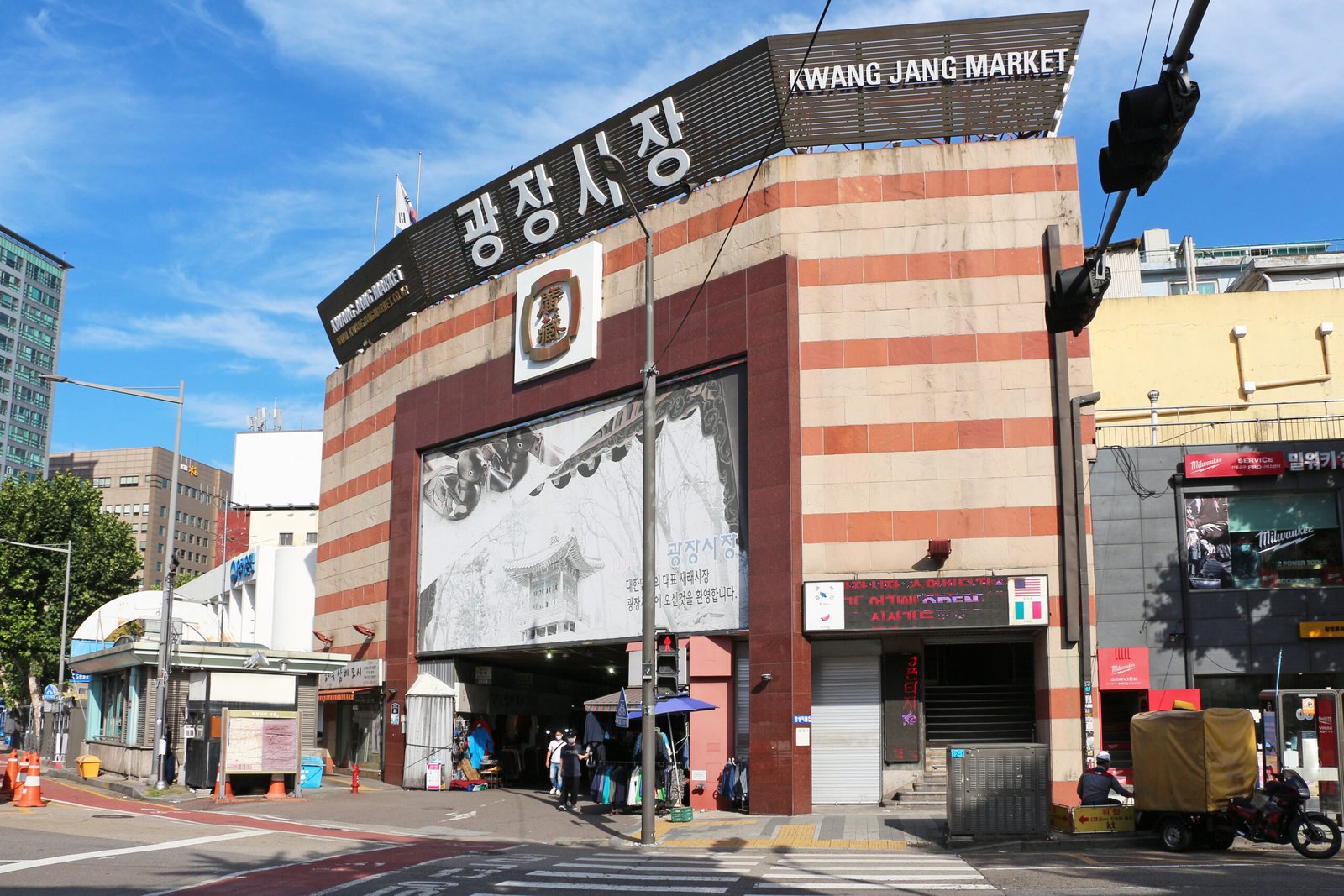
Short answer: eat your way through the food alley at Gwangjang Market, walk through Jongmyo Shrine (free from October 29 to November 15, 2026), and finish the evening with cheap beer and dried pollack at Euljiro’s Nogari Street. Add the Sewoon rooftop at sunset and you’ve seen the best of the area, an older Seoul that most of the city has built over.
Euljiro is where Seoul still makes things. By day its alleys are full of print shops, metalworkers, lighting stores and wholesale markets. At night, bars open in the same buildings, and young Seoulites call the area “Hipjiro.” Gwangjang Market sits at its northeastern edge, and Jongmyo, a UNESCO World Heritage site, is a short walk away. This guide puts them together into one walkable day.
Last checked: 2026-10-28. Hours and fees come from official sources (Gwangjang Market’s website, the Royal Palaces and Tombs Center for Jongmyo, and Visit Seoul). Where no official number exists, I’ve left it out. Check before you go.
Euljiro and Gwangjang Market at a Glance
| Place | What it is | Cost | Time needed | Nearest station |
|---|---|---|---|---|
| Gwangjang Market food alley | Korea’s best-known market food stalls | Free to enter; pay per dish | 1–1.5 hours | Jongno 5-ga (Line 1), Exit 8 |
| Gwangjang Market vintage shops | Second-hand clothing on the upper floor | Free to browse | 30–60 min | Jongno 5-ga (Line 1), Exit 8 |
| Jongmyo Shrine | Royal ancestral shrine, UNESCO World Heritage | Free Oct 29–Nov 15, 2026 | 1–1.5 hours | Jongno 3-ga (Lines 1, 3, 5) |
| Sewoon Plaza and rooftop | 1968 electronics arcade with a city view | Free to walk | 45–60 min | Jongno 3-ga, Exit 12 |
| Cheonggyecheon Stream | Walking path along a restored urban stream | Free | 30–60 min | Jongno 3-ga or Euljiro 4-ga |
| Euljiro Nogari Street | Outdoor beer tables and dried pollack | Pay as you drink | 1–2 hours (evening) | Euljiro 3-ga (Lines 2, 3), Exit 4 |
| Lighting district and Hipjiro alleys | Lighting shops, workshops, hidden bars and cafés | Free to walk | 1 hour | Euljiro 3-ga, Exit 2 |
| Bangsan Market | Baking, candle-making and packaging supplies | Free to browse | 30–60 min | Euljiro 4-ga (Lines 2, 5) |
1. Gwangjang Market Food Alley (광장시장 먹자골목)
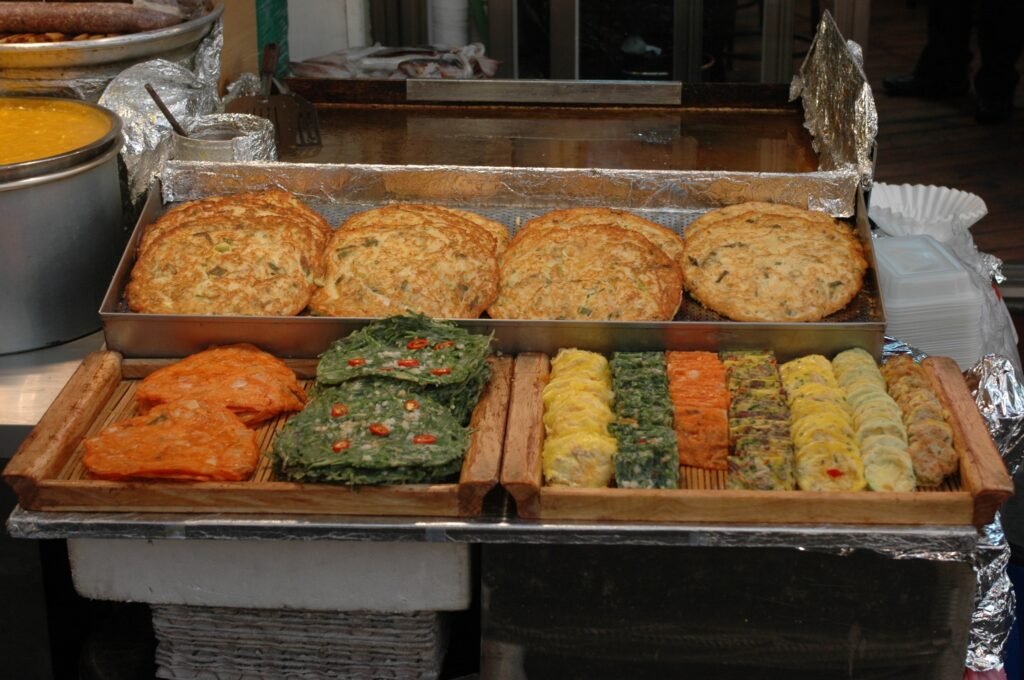
Why go: The market calls itself Korea’s first permanent market, with more than 100 years of history. The food alley in the middle is where most visitors end up. Rows of stalls fry mung bean pancakes, roll small gimbap and slice raw beef while you sit on a bench at the counter.
- What to eat: Bindaetteok (mung bean pancake), mayak gimbap (small “addictive” rice rolls with mustard dipping sauce), yukhoe (Korean beef tartare), tteokbokki and eomuk (fish cakes). Visit Seoul lists all of these as the market’s signature foods.
- Getting there: Jongno 5-ga Station (Line 1), Exit 8. The market is about 60 m away.
- Hours: The food alley is open until 23:00, every day of the year. The rest of the market runs 09:00–18:00 and closes on Sundays.
- Cost: Free to enter. You pay per dish.
- Tip: Ask the price before you order, and check the portion size too. Keep your bag zipped, too. Visit Seoul’s own page notes that some visitors have complained about pickpocketing in the crowds.
2. Gwangjang Market Vintage Shops (광장시장 구제상가)
Why go: Upstairs from the food stalls is one of Seoul’s biggest clusters of second-hand clothing shops. Korean students and stylists come here to dig for jackets, knitwear and denim, and there are hanbok shops on the same floor.
- What to do: Take the stairs to the second floor and work through the stalls. Prices are per piece, so take your time.
- Getting there: Inside Gwangjang Market, second floor. Jongno 5-ga Station (Line 1), Exit 8.
- Hours: 10:00–19:00. Closed Sundays, but open on public holidays.
- Cost: Free to browse
- Tip: Carry some cash. Small stalls are quicker to pay with it.
3. Jongmyo Shrine (종묘)
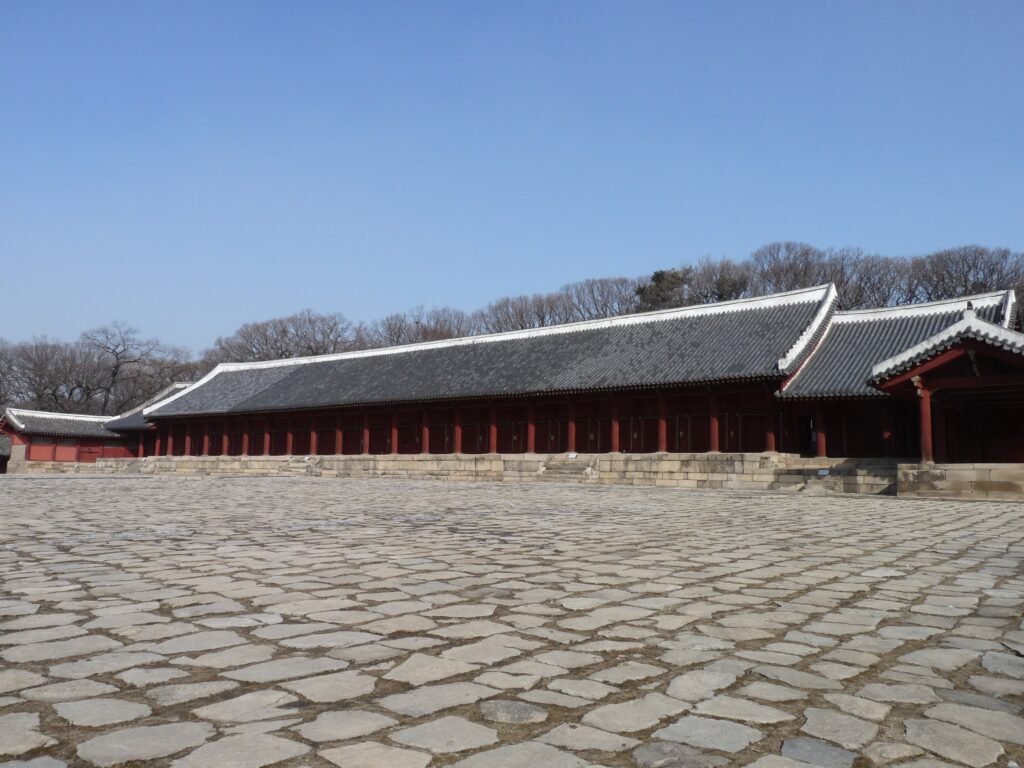
Why go: Jongmyo is where the Joseon kings and queens were enshrined, and it’s on the UNESCO World Heritage list. The main hall, Jeongjeon, is one of the longest wooden buildings in Korea. The wide stone courtyard in front of it is very quiet for the middle of the city.
- What to do: Walk the stone paths to Jeongjeon and the smaller hall, Yeongnyeongjeon. Join an English-language tour if the timing works. The guides explain the rituals that are still performed here.
- Getting there: Jongno 3-ga Station, Exit 11 (Line 1) or Exit 8 (Lines 3 and 5)
- Hours: Closed Tuesdays. On most days you enter by timed guided tour. Saturdays, the last Wednesday of the month and public holidays are free-viewing days, when you can walk around on your own. Groups of fewer than 10 don’t need to book ahead.
- Cost: Free from October 29 to November 15, 2026, during the Korea Grand Festival. No booking is needed then, and you can walk around freely. Outside that period, check the official site for the current fee.
- Tip: During the free period, English tours run at 10:00 and 14:00 on Mondays, Wednesdays, Thursdays, Fridays and Sundays (Korean only on Saturdays). On Saturday, November 7, 2026, Jongmyo holds its autumn ancestral rite, Chuhyang Daeje: 10:00–12:00 at Yeongnyeongjeon and 14:00–16:30 at Jeongjeon. It’s free to watch and doesn’t need a booking. Details are on the Royal Palaces and Tombs Center site.
4. Sewoon Plaza and the Sewoon Rooftop (세운상가)
Why go: Completed in 1968, Sewoon was Korea’s first electronics market. It’s still full of small shops selling audio gear, parts, lighting and repair services, and the rooftop has a view down onto Jongmyo with the towers of central Seoul behind it.
- What to do: Ride up to the Sewoon Rooftop on the 9th floor for the view, then walk the elevated pedestrian bridge that links Sewoon to the neighboring Cheonggye and Daelim arcades. Poke into the old electronics shops on the way down.
- Getting there: Jongno 3-ga Station (Lines 1, 3 and 5), Exit 12, about 280 m
- Hours: Shops are generally open Monday–Saturday 09:00–19:00, and hours vary by store. Closed Sundays and public holidays. Visit Seoul lists the rooftop as open on weekdays 10:00–20:00.
- Cost: Free
- Tip: Parts of the Sewoon district are slated for redevelopment, so access to walkways and buildings may change. Go on a weekday if you want to see the shops working.
5. Cheonggyecheon Stream (청계천)
Why go: This restored stream runs below street level right through the area, passing between Sewoon and Gwangjang Market. It’s the easiest way to walk between the two, and quieter than the roads above.
- What to do: Take the stairs down from any bridge and follow the water. Heading west takes you toward Gwanghwamun, and heading east takes you toward Dongdaemun.
- Getting there: Stairs lead down from the bridges along Cheonggyecheon-ro, near Jongno 3-ga and Euljiro 4-ga stations.
- Hours: An open-air public path with no gate
- Cost: Free
- Tip: Come back after dark. The lights under the bridges make it a pleasant walk to Nogari Street.
6. Euljiro Nogari Street (을지로 노가리골목)
Why go: On warm evenings, the alleys behind Euljiro 3-ga fill with plastic tables. Office workers sit outside with cheap draft beer and nogari (small dried pollack, grilled and dipped in spicy mayo-soy sauce). It’s a very Seoul way to spend an evening.
- What to do: Grab a table outside, order a beer and a plate of nogari, and stay as long as you like. Visit Seoul calls Manseon Hof the center of the scene. It’s open daily 12:00–03:00 and has red and blue outdoor tables.
- Getting there: Euljiro 3-ga Station (Lines 2 and 3), Exit 4
- Hours: Each bar sets its own. Things get busy after office hours.
- Cost: Pay as you drink
- Tip: In cold or rainy weather the outdoor tables thin out, and it’s more fun on a dry evening.
7. The Lighting District and Hipjiro Alleys (을지로 조명거리·힙지로)
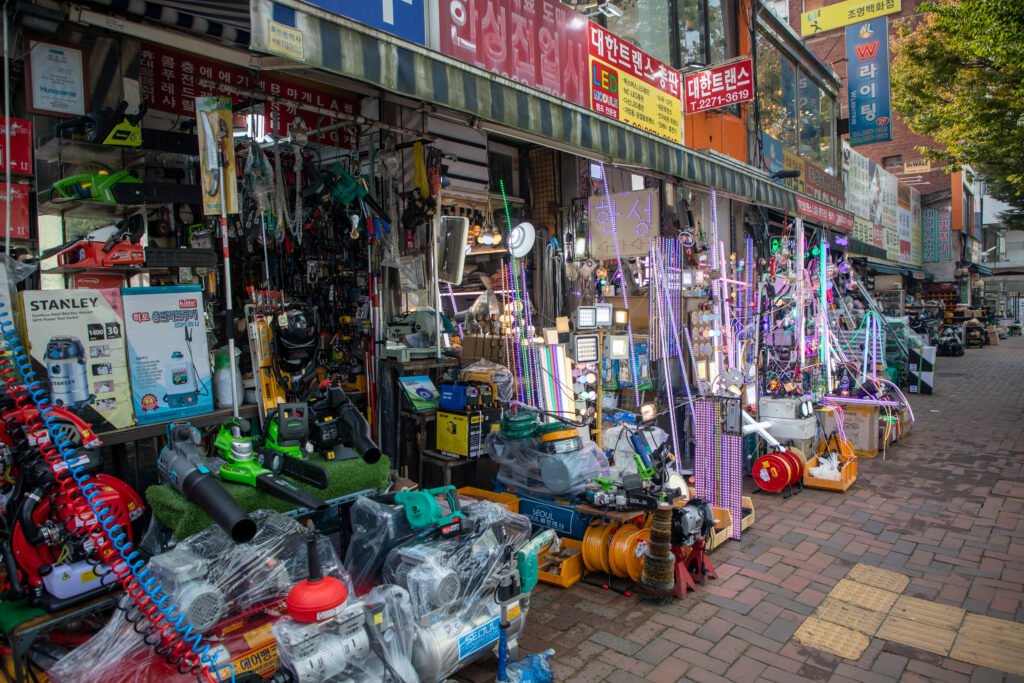
Why go: Between Euljiro 3-ga and Euljiro 4-ga stations, the street is lined with shops selling chandeliers, LED strips and every kind of lamp. Behind them are narrow alleys of steel workshops and print shops, and that’s where the hidden bars and cafés of “Hipjiro” are.
- What to do: Walk the lighting shops along the main road, then turn into the side alleys. Many of the bars and cafés have no sign at street level, and some are up a staircase above a workshop. Look for the graffiti and the benches that Visit Seoul mentions.
- Getting there: Euljiro 3-ga Station, Exit 2, then walk east toward Euljiro 4-ga
- Hours: Shops keep weekday business hours. Bars open in the evening.
- Cost: Free to walk
- Tip: The workshops are real businesses. Step aside for delivery carts and forklifts, and ask before you photograph people at work.
8. Bangsan Market (방산시장)
Why go: Visit Seoul calls it the best place in Seoul for baking supplies, candle- and fragrance-making supplies, and packaging and wrapping. If you bake or make crafts, you’ll find Korean-style boxes, ribbons, molds and tools at wholesale prices.
- What to do: Browse the baking tools and packaging shops. The Korean gift boxes and bags make cheap, light souvenirs.
- Getting there: Near the Euljiro lighting district, a short walk from Euljiro 4-ga Station (Lines 2 and 5)
- Hours: Each shop sets its own, so check Naver Map before you go
- Cost: Free to browse
- Tip: Some shops sell mainly in bulk, so ask if you only want a few pieces.
Half-Day Euljiro and Gwangjang Route
- 10:00 Jongmyo Shrine (Jongno 3-ga Station). Join the 10:00 English tour during the free period, or walk around on your own.
- 11:30 Walk south to Sewoon Plaza and go up to the rooftop.
- 12:30 Head down to Cheonggyecheon and walk east to Gwangjang Market.
- 13:00 Lunch in the food alley, then the vintage shops upstairs.
- 15:00 Bangsan Market and the lighting district on the way west.
- 18:00 Beer and nogari at Euljiro Nogari Street (Euljiro 3-ga Station, Exit 4).
Avoid Tuesdays (Jongmyo is closed) and Sundays (most of Gwangjang Market, Sewoon’s shops and the vintage floor are closed).
Tips for Visiting Euljiro
- Weekdays are best. Euljiro is a working neighborhood. Many shops close on Sundays.
- Carry some cash. Cards work almost everywhere, but market stalls and small shops are faster with cash.
- Everything is walkable. Jongmyo, Sewoon, Gwangjang Market and Nogari Street are all within about 20 minutes on foot of each other.
- Use Naver Map. Many Euljiro bars are hidden upstairs with no English sign. Naver Map shows which floor to go to and today’s hours.
Euljiro and Gwangjang Market FAQ
What time does Gwangjang Market open?
The market runs 09:00–18:00 and is closed on Sundays. The food alley stays open until 23:00 every day of the year, and the vintage shops are open 10:00–19:00 (closed Sundays).
Is Gwangjang Market open on Sunday?
The food alley is. Most of the clothing and fabric shops and the vintage floor are closed.
What should I eat at Gwangjang Market?
Bindaetteok (mung bean pancake), mayak gimbap and yukhoe (beef tartare) are the three most visitors try. Tteokbokki and fish cakes are easy add-ons.
Do I need to book Jongmyo Shrine?
Not from October 29 to November 15, 2026, when entry is free and open. Outside that period, most days are timed guided tours, but groups of fewer than 10 can buy on-site. Saturdays are free-viewing days.
Why is Euljiro called Hipjiro?
It’s a play on “hip” and “Euljiro.” Young Seoulites started opening bars and cafés inside the old print shops and workshops, and the nickname stuck.
Leave a Reply