Your local guide to Korea, written in Seoul

Eat, travel and live like a local in Korea

Author: Jimmyjung

  • Korea Festivals in November 2026: Dates, Fees and How to Get There

    Korea Festivals in November 2026: Dates, Fees and How to Get There

    Short answer: the biggest event in Korea in November 2026 is the Busan Fireworks Festival over Gwangalli Beach on Saturday, November 7. In Seoul, the four main palaces, Jongmyo Shrine and the Joseon royal tombs are free to enter until November 15. If you want to get out into the countryside, the first week and a half of November has an apple festival in Cheongsong, a kimchi-making festival in Goesan and a chrysanthemum festival on the Masan waterfront.

    A lot of “Korea in November” lists still carry last year’s dates. Every date, venue and fee below comes from the organizer, the Korea Tourism Organization or a government office, and events with no confirmed 2026 dates yet are in a box near the end.

    Last checked: 2026-10-29. Sources: the Royal Palaces and Tombs Center notice of September 22, 2026; the official Busan Fireworks Festival website; the Korea Tourism Organization’s festival pages (Korea Grand Festival, Cheongsong Apple Festival, Masan Gagopa Chrysanthemum Festival); the Ministry of Culture, Sports and Tourism festival listing and gimjang.kr (Goesan Kimjang Festival). Organizers can change programs, so check the official site the day before you go.

    Korea Festivals in November 2026 at a Glance

    Event City Dates (2026) Fee How to get there
    Free entry to palaces, Jongmyo and royal tombs Seoul (tombs nationwide) Oct 29–Nov 15 Free (regular closing days still apply) Subway: Gyeongbokgung, Anguk, City Hall, Jongno 3-ga stations
    Busan Fireworks Festival Busan Sat Nov 7 (fireworks 19:00–20:00) Free to watch; paid seats sold separately KTX to Busan, then subway Line 2 to Gwangan or Geumnyeonsan Station
    Cheongsong Apple Festival Cheongsong, Gyeongbuk Nov 4–8 Free (some activities paid) Intercity bus to Cheongsong
    Goesan Kimjang Festival Goesan, Chungbuk Nov 5–8 (10:00–20:00) Free (some activities ₩5,000) Intercity bus to Goesan
    Masan Gagopa Chrysanthemum Festival Changwon, Gyeongnam Oct 31–Nov 8 Free KTX to Masan Station, then taxi or bus

    The free palace entry is part of the Korea Grand Festival, a nationwide shopping and discount event running October 29–November 15.

    Free Entry to Seoul’s Palaces, Jongmyo and the Royal Tombs (Oct 29–Nov 15)

    You’re probably visiting the palaces anyway, so this one costs you nothing to fit in. According to the Royal Palaces and Tombs Center (part of the Korea Heritage Service), Gyeongbokgung, Changdeokgung, Changgyeonggung, Deoksugung, Jongmyo Shrine and the Joseon royal tombs are free from Thursday, October 29 to Sunday, November 15, 2026, for the Korea Grand Festival.

    • Dates: October 29–November 15, 2026
    • What’s free: regular admission to the four palaces, Jongmyo and the royal tombs
    • What’s not: the Changdeokgung Secret Garden (Huwon) special tour, and regular closing days. Gyeongbokgung and Jongmyo close on Tuesdays; the other palaces and the royal tombs close on Mondays.
    • Jongmyo: is usually seen on timed guided tours, but during this period it switches to general admission and you can walk in on your own.
    • Getting there: Gyeongbokgung Station (Line 3) for Gyeongbokgung, Anguk Station (Line 3) for Changdeokgung, City Hall Station (Lines 1 and 2) for Deoksugung, Jongno 3-ga Station for Jongmyo
    • Tip: the free period lines up with peak autumn color in Seoul. Our Korea fall foliage 2026 guide has where the leaves are best inside the palaces and how to book the Secret Garden tour.

    Busan Fireworks Festival 2026 (Saturday, November 7)

    The 21st Busan Fireworks Festival is set off in front of Gwangan Bridge, the lit-up suspension bridge across Gwangalli Bay, and the official viewing area covers Gwangalli Beach, Igidae and Dongbaekseom Island.
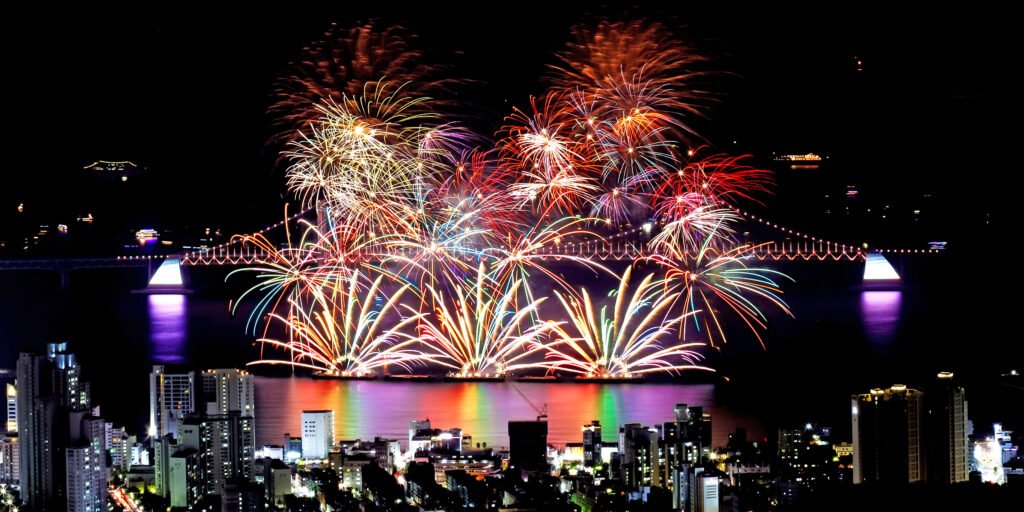
    Fireworks bursting over Gwangan Bridge and Gwangalli Bay in Busan at night, with city towers in the foreground
    Busan Fireworks Festival over Gwangan Bridge. Photo: Busan Metropolitan City, CC BY-SA 4.0, via Wikimedia Commons
    • Date: Saturday, November 7, 2026
    • Schedule (official): street events, busking and booths from 13:00 to 16:00; a Black Eagles air show (the Korean Air Force display team) at 16:00; a fireworks prologue from 18:00; the opening ceremony at 18:50; an invited overseas fireworks show from 19:00; and the main Busan Multi Fireworks Show from 19:25 to 19:55, followed by a five-minute curtain call. The organizer says times may change.
    • Venue: Gwangalli Beach, Igidae and Dongbaekseom area
    • Cost: free to watch from the public areas. Paid reserved seats are sold on NOL Ticket until November 6 at 17:00, and through BNK Busan Bank. The festival website doesn’t list seat prices, so check them on the ticket page.
    • Getting there: KTX from Seoul Station to Busan Station, then Busan subway Line 2 to Gwangan Station or Geumnyeonsan Station for Gwangalli Beach
    • Tips: people claim spots on the sand in the afternoon, so if you want a free spot facing the bridge, arrive early with a mat and warm layers. Book your Busan room for festival night early. After the show, the stations near the beach get very crowded, so plan to walk a stop or two or wait it out over dinner.

    Cheongsong Apple Festival (Nov 4–8)

    Cheongsong, in the mountains of North Gyeongsang Province, is one of Korea’s best-known apple regions, and the 20th Cheongsong Apple Festival falls right at harvest time. It’s an easy excuse to spend a day in a small Korean county town.

    • Dates: November 4–8, 2026
    • Venue: along the Yongjeoncheon stream in Cheongsong-eup, the county town
    • Cost: free; some hands-on programs charge a fee
    • Organizer: Cheongsong County and the Cheongsong County Festival Committee (+82-54-873-3686)
    • Getting there: intercity bus from Seoul to Cheongsong. Check times on Naver Map or a bus booking app before you go.
    • Tip: Cheongsong is also home to Juwangsan National Park. If you go, pair the festival with a day in the park.

    Goesan Kimjang Festival (Nov 5–8)

    Gimjang (also written kimjang) is the late-autumn tradition of families making a winter’s worth of kimchi together. It’s on UNESCO’s intangible cultural heritage list, and November is the season for it. Goesan, a farming county in North Chungcheong Province, turns it into a four-day festival.
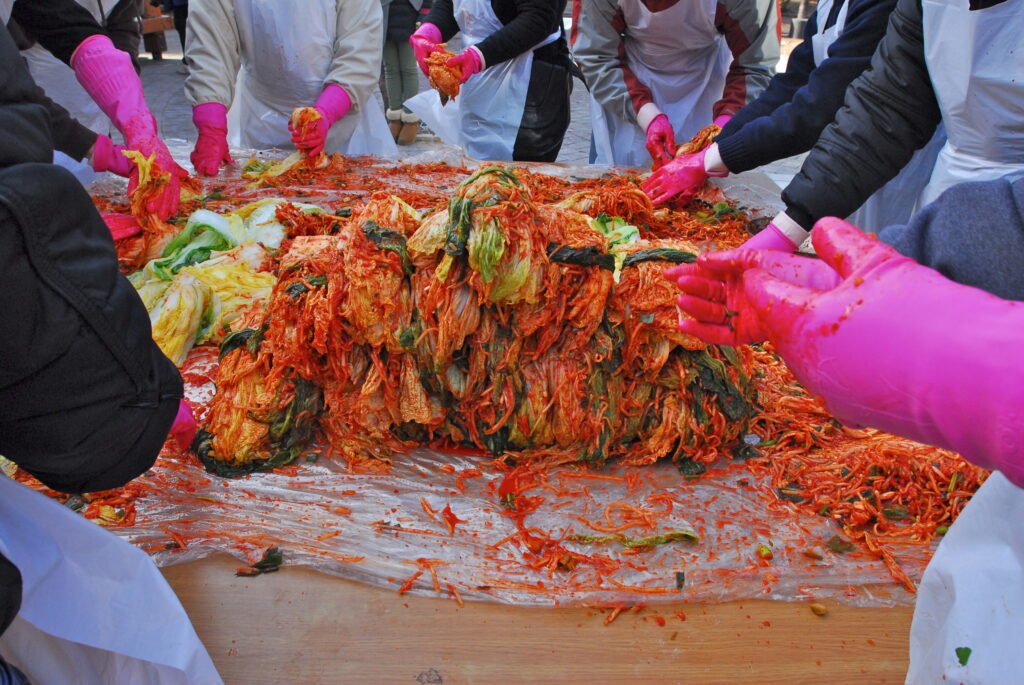
    People in pink rubber gloves mixing red chili filling into salted cabbage on a long table during gimjang
    Gimjang, making kimchi together for winter. Photo: USAG-Humphreys, CC BY 2.0, via Wikimedia Commons
    • Dates and hours: November 5–8, 2026, 10:00–20:00
    • Venue: Goesan Organic Expo Plaza and Goesan Stadium area
    • Cost: free entry; some activities cost ₩5,000
    • What happens: the main program is “one-stop gimjang,” where people mix pre-ordered salted cabbage and filling at the Expo Plaza and take the kimchi home. There’s also a drive-through gimjang at the stadium, kimchi-making for kids and teens, a tasting of kimchi from around the world, a food street and a national kimchi contest.
    • Village kimjang: separate from the festival grounds, Goesan runs village gimjang experiences throughout November.
    • Getting there: intercity bus from Seoul to Goesan, then a short taxi ride to the festival site
    • Tip: the cabbage pre-orders and booking pages are in Korean. As a visitor, you can still walk around, taste and watch for free, and the kids’ and ₩5,000 programs are the easiest way to get your hands in the bowl.

    Masan Gagopa Chrysanthemum Festival (Oct 31–Nov 8)

    Chrysanthemums are Korea’s late-autumn flower, and Masan, now part of the city of Changwon, holds one of the biggest chrysanthemum shows in the country. The displays, including flower sculptures, are laid out along the harbor.
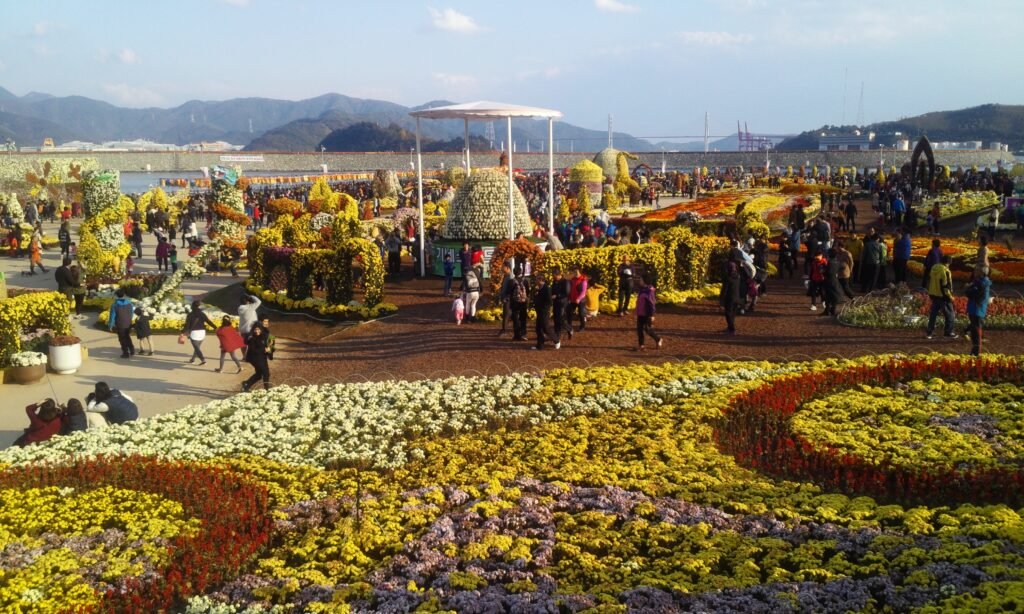
    Visitors walking among chrysanthemum displays and flower sculptures on the Masan waterfront in Changwon
    Masan Gagopa Chrysanthemum Festival on the waterfront (2014). Photo: Choi2451, CC BY-SA 3.0, via Wikimedia Commons
    • Dates: October 31–November 8, 2026
    • Venue: 3.15 Maritime Park, Hapo Waterfront Park and the Haeyang New Town area in Masanhappo-gu, Changwon
    • Cost: free
    • Organizer: Changwon Special City and the Masan Chrysanthemum Festival Committee
    • Getting there: KTX from Seoul Station to Masan Station, then a taxi or city bus to the waterfront
    • Tip: Masan is close to Busan, so if you’re there for the fireworks on November 7, you can catch the chrysanthemums on Sunday the 8th, the last day.

    Autumn Leaves in November

    November isn’t too late for fall color. Seoul’s palaces are at their best around the start of the free-entry period, and further south, Naejangsan’s forecast peak falls in the first week of November. Jirisan and the south follow. Dates, transport and booking rules are in our Korea fall foliage 2026 forecast.

    Not confirmed yet (as of October 29, 2026)

    • Seoul Lantern Festival (Cheonggyecheon): the 2026 dates haven’t been announced. The official website still shows the 2025 edition, which ran from December 12, 2025 to January 18, 2026. Some travel sites list November 2026 dates; we couldn’t find an official source for them.
    • Seoul Design Festival: COEX lists it for November 26–29, 2026 in Hall A, but the ticket price on the COEX page is still “to be decided.”
    • Jinju Namgang Yudeung (Lantern) Festival: not a November event this year. It ran October 3–18, 2026.

    Tips for Traveling in Korea in November

    • Dress in layers. Korea moves from autumn into winter during November. Evenings get cold, and at the fireworks you’ll be sitting still by the sea for hours. Bring a warm jacket, and a hat and gloves for the second half of the month.
    • Watch the weekends. November 7–8 is the busiest weekend of the month: the Busan fireworks, plus the last days of the Masan and Goesan festivals. Book trains and rooms early.
    • Book KTX tickets ahead. Seats on Seoul–Busan trains around festival weekends can sell out, so buy them as soon as your plans are fixed.
    • Exam day, November 19. Korea’s national college entrance exam (Suneung) is on Thursday, November 19, 2026. Avoid planning tight morning connections that day.
    • Use Naver Map. It’s more reliable than Google Maps for buses in Korea, especially for rural festivals like Cheongsong and Goesan.

    November 2026 Korea Festivals FAQ

    What festivals are in Korea in November 2026?

    The confirmed ones in this guide are the Busan Fireworks Festival (November 7), the Cheongsong Apple Festival (November 4–8), the Goesan Kimjang Festival (November 5–8) and the Masan Gagopa Chrysanthemum Festival (October 31–November 8). In Seoul, the palaces, Jongmyo and the royal tombs are free to enter from October 29 to November 15.

    Is the Seoul Lantern Festival in November 2026?

    As of October 29, 2026, no official dates have been announced. The last edition ran from December 12, 2025 to January 18, 2026 along Cheonggyecheon. Check the official site before you plan around it.

    Is the Busan Fireworks Festival free?

    Yes, watching from Gwangalli Beach and the other public areas is free. Paid reserved seats are sold on NOL Ticket until November 6 at 17:00.

    Can foreigners join gimjang (kimchi making) in Korea?

    Yes. At the Goesan Kimjang Festival (November 5–8), entry is free and some hands-on activities cost ₩5,000. Goesan also runs village gimjang experiences throughout November.

    Are Seoul’s palaces really free in November 2026?

    Yes, from October 29 to November 15, 2026, for regular admission. The Changdeokgung Secret Garden tour isn’t included, and each palace still closes on its regular closing day.
  • Korea Fall Foliage 2026: Where to See Autumn Leaves Now (Forecast + Seoul Spots)

    Korea Fall Foliage 2026: Where to See Autumn Leaves Now (Forecast + Seoul Spots)

    Short answer: as of October 29, 2026, Korea fall foliage is peaking in and around Seoul. The Korea Forest Service forecasts the national peak for ginkgo on October 30 and for maples and oaks on October 31, so this weekend is a good time for Seoul’s palaces, Namsan, and day trips to Nami Island or Hwadam Forest. Over the next two weeks the color moves south. Naejangsan peaks in early November, with Jirisan and the rest of the south after it. Seoraksan, in the northeast, is already past its forecast peak.

    Most English guides to Korea’s autumn leaves were written before the season started, and few say where their dates come from. Below, every date is tagged with its source, and each place comes with how to get there from Seoul, what it costs, and whether you need to book.

    Last checked: 2026-10-29. Forecast dates are from the Korea Forest Service’s 2026 Fall Foliage Peak Prediction Map (released September 22, 2026), Weatheri’s 2026 foliage forecast (September 4, 2026) and the 2026 Autumn Leaves Map from the Korea Tourism Organization and Korea National Arboretum (October 8, 2026). Fees and hours are from each place’s official website. Rain or a cold snap can shift any of these by a few days.

    Korea Fall Foliage 2026 Forecast: Where It Peaks and When

    Korean sources don’t agree on what “peak” means. The Korea Forest Service calls it when about 50% of the forest has turned, while the Korea Meteorological Administration (KMA) waits for about 80%, so the two can put the same mountain’s peak several days apart.

    Place Region Expected peak (source) Getting there from Seoul
    Seoul palaces, Namsan, city streets Seoul Ginkgo Oct 30, maples and oaks Oct 31 (Korea Forest Service, nationwide by tree type) Subway
    Korea National Arboretum Pocheon, Gyeonggi (capital area) Maples Oct 29, ginkgo Oct 31, oaks Nov 2 (KTO / National Arboretum map) Car or tour (north of Seoul)
    Hwadam Forest Gwangju, Gyeonggi No site-specific forecast. Capital-area reference: Oct 29–Nov 2 (National Arboretum figures above) Gyeonggang Line to Gonjiam Station, then taxi or bus
    Nami Island Chuncheon, Gangwon No site-specific forecast. Nearby Gangwon Provincial Arboretum in Chuncheon: ginkgo Oct 27, maples Oct 28, oaks Oct 31 (KTO / National Arboretum map) ITX-Cheongchun train to Gapyeong Station, then bus, taxi or a 20-minute walk to the ferry
    Seoraksan Gangwon (northeast) Oct 20 (Korea Forest Service); Oct 25 (Weatheri) Express bus to Sokcho, then local bus or taxi
    Songnisan Chungbuk Oct 28 (Korea Forest Service) Intercity bus; check routes on Naver Map
    Naejangsan Jeongeup, Jeonbuk Nov 1 (Weatheri); Nov 4 (Korea Forest Service); around Nov 7–8 (Jeongeup City) Train to Jeongeup, then city bus 171 or 171-1
    Jirisan and the south Southern region Nov 5–13 (Weatheri, regional range) Long day; better as an overnight trip
    Hallasan Jeju Nov 6 (Korea Forest Service) Flight to Jeju

    As for what has actually been observed this season, the Korea Forest Service logged the first color of 2026 on September 14 at the Jeombongsan reserve in Inje, Gangwon. According to the KMA, as reported by Korea JoongAng Daily, Odaesan reached peak on October 14, and the first color showed up on Bukhansan, Seoul’s big mountain, the same day.

    Where to See Autumn Leaves in Seoul Right Now

    The timing also works in your favor this year: the four main palaces, Jongmyo Shrine and the Joseon royal tombs are free to enter from October 29 to November 15, 2026 for the Korea Grand Festival, according to the Royal Palaces and Tombs Center. Regular closing days still apply, and the free entry doesn’t cover the Changdeokgung Secret Garden special tour.

    Deoksugung Palace and the stone-wall road

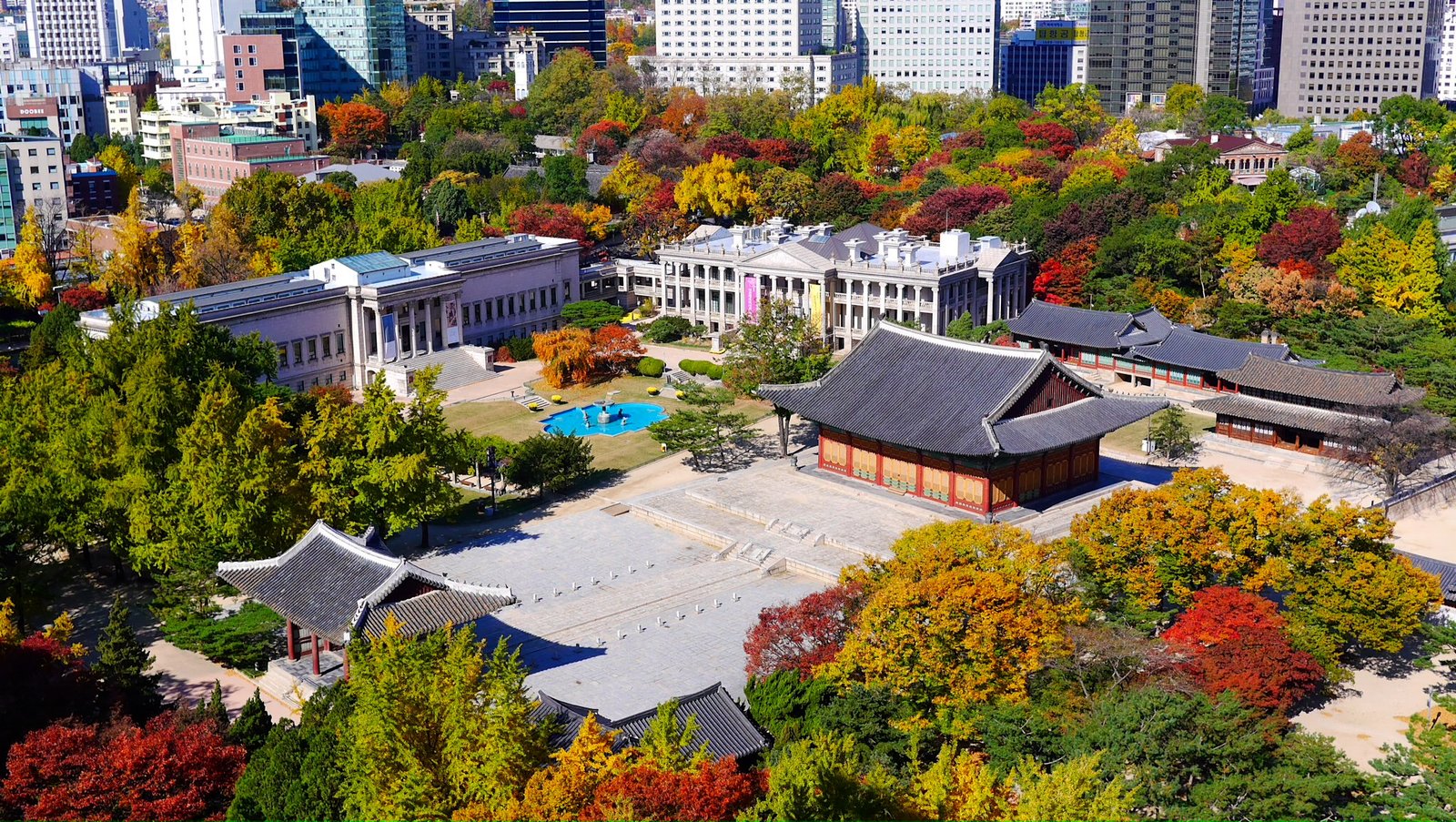
    Deoksugung is a small palace across from Seoul City Hall, and its ginkgo and maple trees turn the whole compound red and yellow. The stone-wall road (Deoksugung-gil) along its outer wall is a popular autumn walk.

    Deoksugung Palace in Seoul surrounded by red and yellow autumn trees, with office towers behind
    Deoksugung Palace in autumn. Photo: travel oriented, CC BY-SA 2.0, via Wikimedia Commons
    • Getting there: City Hall Station (Lines 1 and 2)
    • Hours: 09:00–21:00 (last entry 20:00). Closed Mondays.
    • Cost: Free until November 15. Normally ₩1,000 for foreign adults aged 19–64.
    • Good to know: The palace has posted a notice about construction on its outer wall from September 21 to November 19, 2026. Parts of the stone-wall road may not look like the usual photos this year.

    Gyeongbokgung and Changdeokgung

    Gyeongbokgung is the biggest palace and draws the biggest crowds. Look for ginkgo trees leaning over the walls around the edges of the grounds. Changdeokgung is quieter. Its rear garden, Huwon (the Secret Garden), is a wooded valley of ponds and pavilions that you enter with a timed ticket, and autumn tickets go fast.

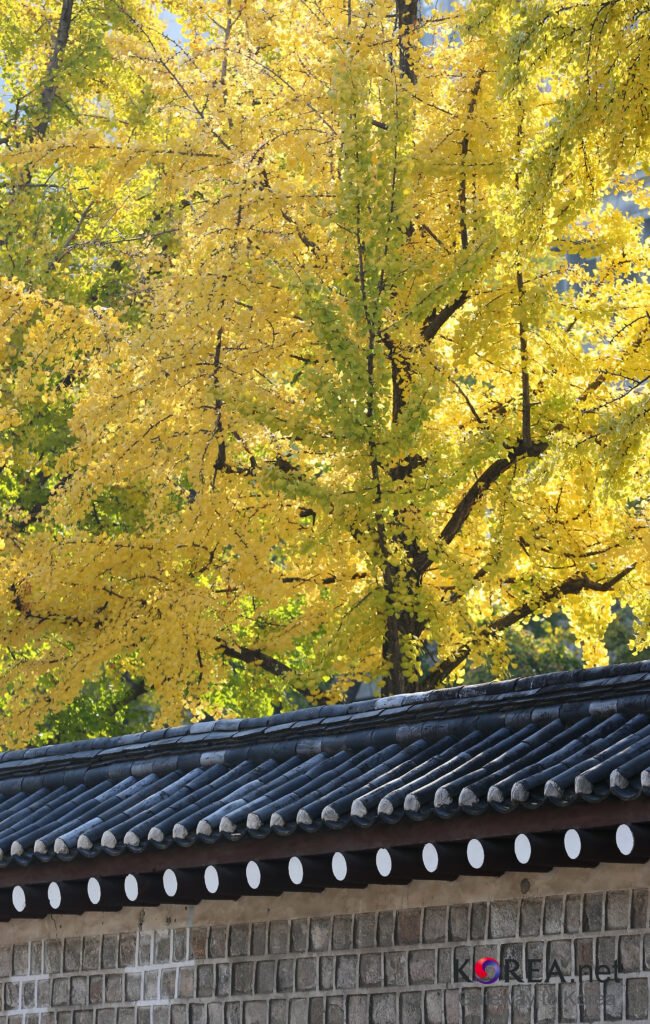
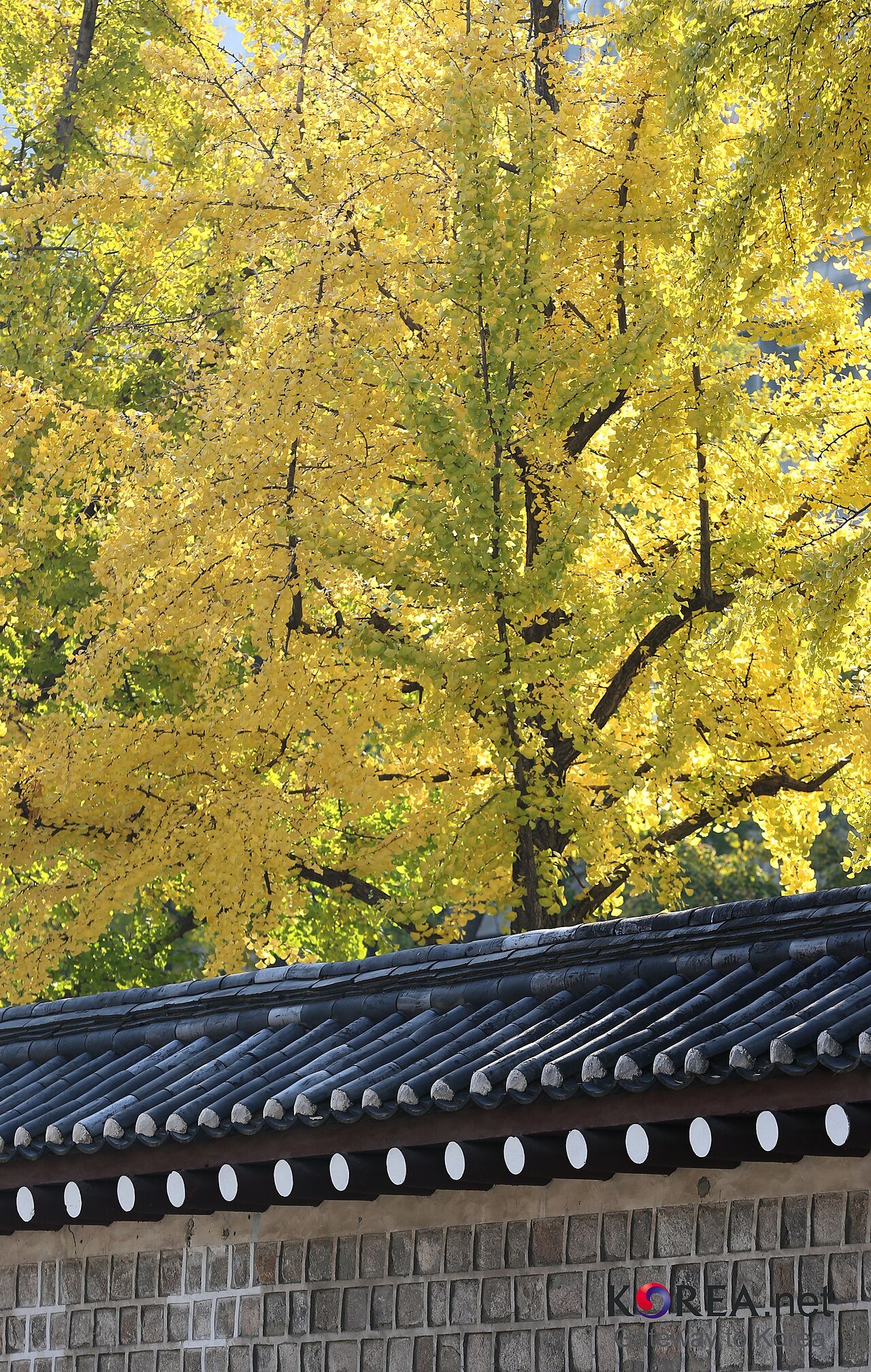
    Yellow ginkgo tree above a tiled palace wall at Gyeongbokgung in Seoul
    Ginkgo over the wall of Gyeongbokgung. Photo: Korea.net / Korean Culture and Information Service (Jeon Han), CC BY-SA 2.0, via Wikimedia Commons
    • Getting there: Gyeongbokgung Station (Line 3) for Gyeongbokgung; Anguk Station (Line 3) for Changdeokgung
    • Secret Garden cost: Normally ₩5,000 for the garden plus ₩3,000 for the palace ticket (adults 19–64). The free-entry period doesn’t include the special garden tour.
    • English tours of the Secret Garden: 10:30, 11:30, 14:30 and 15:30 (March–November), 100 people per tour: 50 tickets online, 50 on site
    • Booking: Online from 10 a.m. six days before your visit until the day before, or on site from 9 a.m. on the day. The palace warns that October–November tickets sell out very fast.
    • Closed: Changdeokgung closes on Mondays

    Namsan

    Namsan is the hill under N Seoul Tower, and its tree-lined walking roads are free. You can climb on foot from Myeongdong and eat there before or after.

    Seoul Forest

    Seoul Forest is a large, flat park by the Han River near Seongsu, good for an easy walk under the trees with no climbing. Get off at Seoul Forest Station on the Suin-Bundang Line.

    Haneul Park

    Haneul Park is about silver grass rather than red leaves. This year’s Seoul Silver Grass Festival ran October 17–23 and is over, but the park is still open. From World Cup Stadium Station or Mapo-gu Office Station (Line 6), it’s about a 40-minute walk, or you can take the small electric shuttle from the Nanjicheon Park parking lot.

    Day Trips from Seoul for Fall Foliage

    Nami Island

    Nami Island is a small river island crossed by long avenues of trees, including rows of ginkgo and maple.

    • Getting there: ITX-Cheongchun train from Yongsan (about 60 minutes) or Cheongnyangni (about 42 minutes) to Gapyeong Station. From the station it’s 1.5 km to the ferry wharf: about 20 minutes on foot, or 5 minutes by bus No. 10-4 or taxi.
    • Cost: ₩19,000 for adults, including the round-trip ferry. Early-bird tickets, bought and boarded before 8:00, are ₩13,000.
    • Ferry: The ferry ride takes about 5 minutes. In the autumn season (September 18–November 22), the first ferry leaves at 07:30 every day, and the last ferry runs until 21:30 on Fridays, weekends and holidays.
    • Tip: Catch an early ferry before 8:00 and you pay the early-bird price and get a head start on the day.

    Hwadam Forest (Hwadam Botanic Garden)

    Hwadam Forest is a landscaped forest garden southeast of Seoul, with maple valleys and wooden walking decks. Unlike everywhere else in this guide, you can’t just turn up.

    • Booking: Entry is by advance reservation only, through the NOL (Nol Universe) app or website, and you need a NOL account. Kiosk tickets on site are sold only if any are left.
    • Hours: October 23–November 1: daily 08:00–18:00 (last entry 17:00). November 2–15: daily 08:00–17:00 (last entry 16:00).
    • Cost: ₩11,000 for adults (19–64). The monorail costs extra: ₩5,000, ₩7,000 or ₩9,000 for adults, depending on the section.
    • Getting there: Gyeonggang Line to Gonjiam Station, then a taxi or Gwangju bus 9 (about 30 minutes). Express buses 1113-1 and 500-2 from Gangbyeon Station, or 500-1 from Jamsil Station, go to Gonjiam Terminal.

    Seoraksan National Park

    Seoraksan is the first big mountain to turn every year, and in 2026 both forecasts put its peak in the past (October 20 per the Korea Forest Service, October 25 per Weatheri). The high ridges will be past their best by now. If you’re already heading to the east coast, check current photos before you commit to the trip.

    • Getting there: Express bus from Seoul to Sokcho, then a local bus or taxi to the park
    • Cost: No entrance fee. The Seorak cable car costs ₩16,000 round trip for adults (middle-school age and up), sold on site only, on the day, with no reservations and no one-way tickets.

    Naejangsan National Park

    If you have time for one more trip this season, make it Naejangsan. It’s known for its maple tunnels and a pavilion on a pond, and its peak is still ahead: November 1 per Weatheri, November 4 per the Korea Forest Service, and around November 7–8 per Jeongeup City, which expected the color to start around October 29.

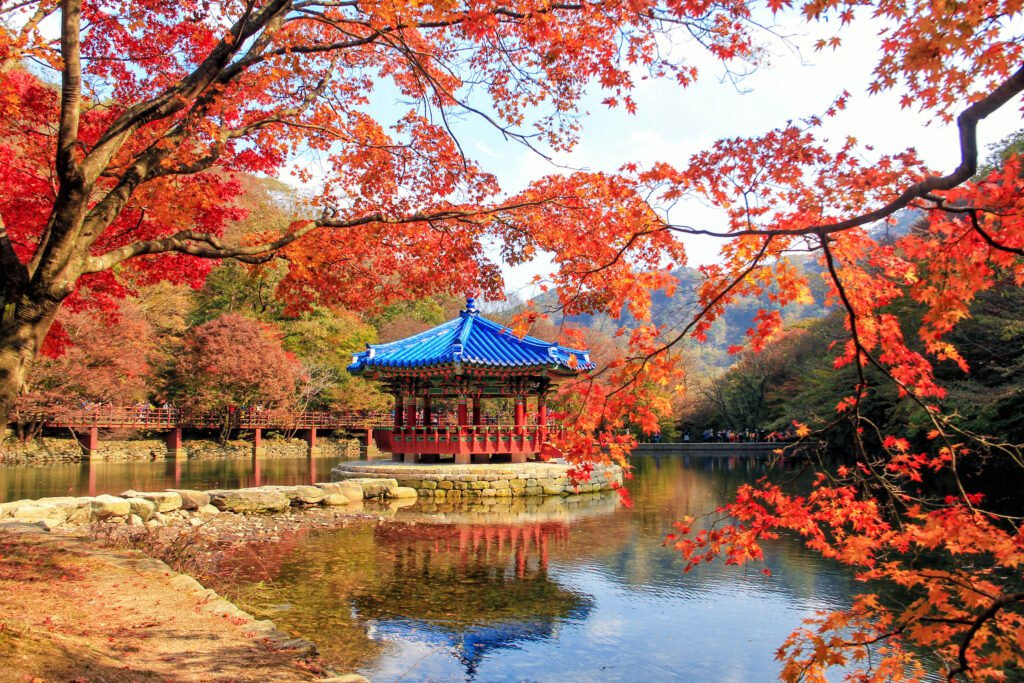
    Pavilion on a pond framed by red maple leaves in Naejangsan National Park
    Naejangsan in autumn. Photo: Tung Thanh Dang, CC BY-SA 3.0, via Wikimedia Commons
    • Getting there: Train from Yongsan to Jeongeup Station, then city bus 171 or 171-1 from Jeongeup Terminal to Naejang Terminal, near the park entrance
    • Free shuttle: October 30–November 15, between Naejangho parking lot (formerly Lot 4) and Wollyeonggyo Bridge (2.1 km). Weekdays 09:00–17:00, weekends 08:00–17:00.
    • Crowds: Jeongeup City has a crowd and traffic plan in place from October 26 to November 22, with its busiest period set for October 31–November 15. Expect heavy weekend traffic.

    Tips for Seeing Fall Foliage in Korea

    • Go on a weekday, and go early. Nami Island, Hwadam Forest and Naejangsan get packed on peak weekends. A weekday morning is much calmer.
    • Book what needs booking now. Hwadam Forest and the Secret Garden tours both sell out in autumn. You can walk into everything else on this list.
    • Check the weather the day before. Heavy rain or strong wind can strip trees in a day. Before the October 18 storm, the KMA even warned that fallen leaves could clog storm drains.
    • Dress in layers. Late-autumn mornings are cold, and mountain trails get colder and windier as you climb. Wear proper shoes for national parks. A light jacket you can take off is enough for city walks.
    • Use Naver Map for transit. It’s more accurate than Google Maps for buses in Korea, including the local buses to Nami Island, Hwadam Forest and Naejangsan.

    Korea Fall Foliage FAQ

    When is peak fall foliage in Korea in 2026?

    It depends on where you are. The Korea Forest Service forecast Seoraksan for October 20, Songnisan for October 28, Naejangsan for November 4 and Hallasan for November 6. Nationwide, it expected ginkgo to peak on October 30 and maples and oaks on October 31.

    Where can I see autumn leaves in Seoul?

    The palaces (Deoksugung, Gyeongbokgung and Changdeokgung’s Secret Garden), Namsan and Seoul Forest are the easiest. All four main palaces are free to enter from October 29 to November 15, 2026.

    Is it too late for fall foliage in Korea in November?

    No. Naejangsan’s forecast peak falls in the first week of November, Weatheri expects Jirisan and the south to peak November 5–13, and Hallasan on Jeju is forecast for November 6. The northern mountains, like Seoraksan, will be past their best by then.

    Do I need to book anything in advance?

    Yes, for Hwadam Forest, which takes advance reservations only through NOL, and for the Changdeokgung Secret Garden tour. Nami Island, the other palaces and the national parks don’t need a booking.

  • Korea Weather Next Week (Nov 2-8, 2026): Seoul, Busan, Jeju, Incheon & Gangneung + What to Wear

    Korea Weather Next Week (Nov 2-8, 2026): Seoul, Busan, Jeju, Incheon & Gangneung + What to Wear

    Short answer: next week (November 2–8, 2026) looks mostly dry and sunny across Korea. Monday morning brings rain to Busan and Jeju, so pack an umbrella if you’re there. Seoul mornings drop to 3–6°C (37–43°F) while afternoons reach 13–16°C (55–61°F), so dress in layers and bring a warm jacket for early starts and evenings.

    I put this together every Friday for the five places foreign visitors go most: Seoul, Busan, Jeju, Incheon and Gangneung.

    Source: Korea Meteorological Administration (KMA) mid-term forecast, issued Thursday, October 29, 2026 at 06:00 KST. Forecasts more than a few days out can change, so check the latest on weather.go.kr before you head out. Temperatures are lows/highs in °C, with °F in brackets.

    This week at a glance

    • Bring an umbrella on Monday morning (Nov 2) in Busan and Jeju, where the chance of rain is 60%. Seoul, Incheon and Gangneung are cloudy that morning with a 30% chance.
    • Tuesday to Sunday looks sunny almost everywhere.
    • KMA warns that inland areas may swing 10°C or more between morning and afternoon.
    • Busan and Jeju are the warmest, with highs around 18–20°C. Seoul has the coldest mornings, with lows of 3–6°C.

    Seoul Weather Next Week

    Day Sky Chance of rain Low / High
    Mon, Nov 2 Cloudy 30% AM / 10% PM 6 / 14°C (43 / 57°F)
    Tue, Nov 3 Sunny 10% 3 / 13°C (37 / 55°F)
    Wed, Nov 4 Sunny 10% 4 / 14°C (39 / 57°F)
    Thu, Nov 5 Partly cloudy 20% 5 / 16°C (41 / 61°F)
    Fri, Nov 6 Sunny 10% 5 / 15°C (41 / 59°F)
    Sat, Nov 7 Sunny 10% 6 / 14°C (43 / 57°F)
    Sun, Nov 8 Sunny 10% 6 / 14°C (43 / 57°F)

    What to wear in Seoul: it’s a coat-in-the-morning, sweater-by-lunch kind of week. Wear a long-sleeve top with a knit or hoodie, and add a warm jacket or light padded coat for mornings and nights. If you’ll be at Namsan or on the Han River after dark, a scarf helps. No umbrella needed after Monday.

    Yellow ginkgo trees above a traditional palace wall in Seoul in autumn
    Autumn ginkgo trees at Gyeongbokgung Palace, Seoul. Photo: Jeon Han, Korea.net, CC BY-SA 2.0, via Wikimedia Commons

    Incheon Weather Next Week

    Incheon, home to Korea’s main international airport, shares Seoul’s sky but runs a degree or two warmer in the mornings.

    Day Sky Chance of rain Low / High
    Mon, Nov 2 Cloudy 30% AM / 10% PM 8 / 14°C (46 / 57°F)
    Tue, Nov 3 Sunny 10% 5 / 13°C (41 / 55°F)
    Wed, Nov 4 Sunny 10% 5 / 14°C (41 / 57°F)
    Thu, Nov 5 Partly cloudy 20% 6 / 16°C (43 / 61°F)
    Fri, Nov 6 Sunny 10% 6 / 15°C (43 / 59°F)
    Sat, Nov 7 Sunny 10% 7 / 15°C (45 / 59°F)
    Sun, Nov 8 Sunny 10% 7 / 15°C (45 / 59°F)

    What to wear in Incheon: the same layers as Seoul. If you’re landing early in the morning, keep a jacket in your carry-on rather than your checked bag.

    Busan Weather Next Week

    Day Sky Chance of rain Low / High
    Mon, Nov 2 Cloudy with rain 60% AM / 10% PM 14 / 20°C (57 / 68°F)
    Tue, Nov 3 Sunny 10% 7 / 18°C (45 / 64°F)
    Wed, Nov 4 Sunny 10% 8 / 18°C (46 / 64°F)
    Thu, Nov 5 Sunny 10% 9 / 20°C (48 / 68°F)
    Fri, Nov 6 Sunny 10% 10 / 20°C (50 / 68°F)
    Sat, Nov 7 Sunny 10% 10 / 18°C (50 / 64°F)
    Sun, Nov 8 Sunny 10% 10 / 18°C (50 / 64°F)

    What to wear in Busan: bring an umbrella for Monday morning. After that, a long-sleeve shirt with a light jacket covers most of the day. Mornings on Tuesday and Wednesday are cooler (7–8°C), and the wind off the sea at Haeundae or Gwangalli can feel colder than the number suggests.

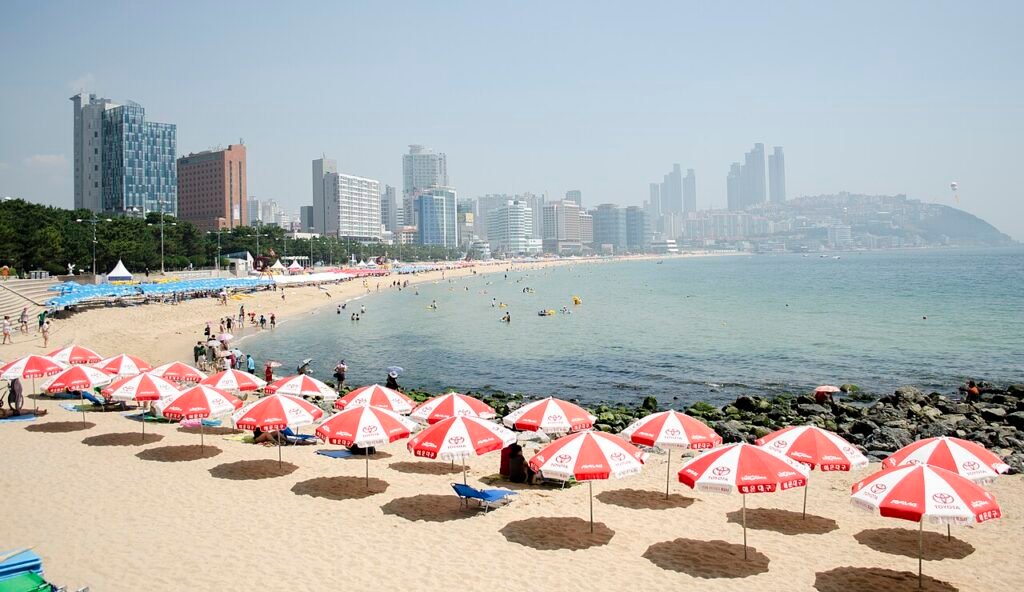
    Haeundae Beach in Busan with the city skyline behind it
    Haeundae Beach, Busan (summer photo). Photo: StephNurnberg, CC BY 2.0, via Wikimedia Commons

    Jeju Weather Next Week

    Day Sky Chance of rain Low / High
    Mon, Nov 2 Cloudy with rain 60% AM / 20% PM 16 / 19°C (61 / 66°F)
    Tue, Nov 3 Sunny 10% 12 / 18°C (54 / 64°F)
    Wed, Nov 4 Sunny 10% 13 / 18°C (55 / 64°F)
    Thu, Nov 5 Sunny 10% 13 / 19°C (55 / 66°F)
    Fri, Nov 6 Sunny 10% 13 / 19°C (55 / 66°F)
    Sat, Nov 7 Sunny 10% 13 / 20°C (55 / 68°F)
    Sun, Nov 8 Sunny 10% 13 / 19°C (55 / 66°F)

    What to wear in Jeju: the mildest of the five, with the smallest gap between morning and afternoon. A T-shirt with a light windbreaker works most days. Pack a rain jacket for Monday, and a warmer layer if you’re hiking Hallasan or climbing Seongsan Ilchulbong for sunrise, since it’s colder and windier up high.

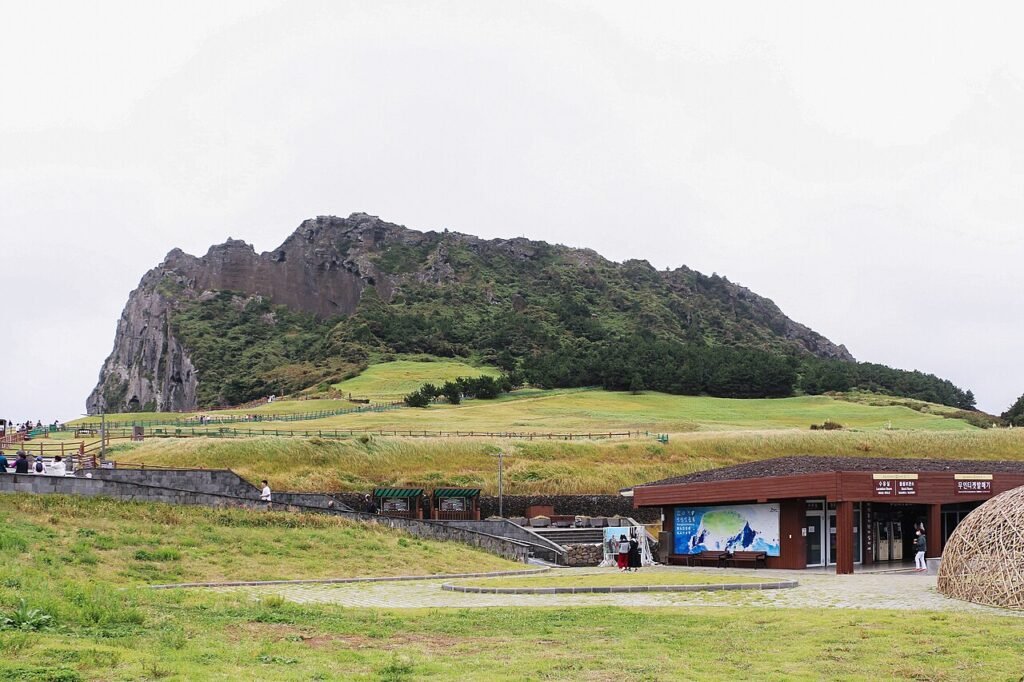
    Seongsan Ilchulbong volcanic cone on Jeju Island under a cloudy sky
    Seongsan Ilchulbong, Jeju. Photo: Bernard Gagnon, CC0, via Wikimedia Commons

    Gangneung Weather Next Week

    Gangneung is on the east coast in Gangwon Province.

    Day Sky Chance of rain Low / High
    Mon, Nov 2 Cloudy 30% AM / 10% PM 11 / 16°C (52 / 61°F)
    Tue, Nov 3 Sunny 10% 7 / 15°C (45 / 59°F)
    Wed, Nov 4 Sunny 10% 7 / 15°C (45 / 59°F)
    Thu, Nov 5 Sunny 10% 8 / 16°C (46 / 61°F)
    Fri, Nov 6 Sunny 10% 9 / 16°C (48 / 61°F)
    Sat, Nov 7 Sunny 10% 8 / 17°C (46 / 63°F)
    Sun, Nov 8 Sunny 10% 9 / 16°C (48 / 61°F)

    What to wear in Gangneung: a sweater and a mid-weight jacket. If you’re going into the mountains, add another layer, as it gets cold quickly once you climb.

    Quick Packing Guide for Korea This Week

    • Layers you can take off by noon and put back on after sunset, wherever you are
    • A warm jacket or light padded coat for Seoul, Incheon and Gangneung mornings and nights
    • A light jacket or windbreaker for Busan and Jeju
    • An umbrella for Monday, mainly in Busan and Jeju. If you forget one, convenience stores sell them.
    • Comfortable shoes, since the rest of the week is dry enough for long walks and hikes

    Korea Weather FAQ

    Will it rain in Seoul next week?

    Probably not much. KMA gives Seoul a 30% chance of rain on Monday morning and 10–20% for the rest of the week.

    What should I wear in Korea in early November?

    Layers. In Seoul, expect around 3–6°C in the morning and 13–16°C in the afternoon, so a warm jacket over a sweater works well. Busan and Jeju are milder, and a light jacket is enough there.

    Is early November a good time to visit Korea?

    For weather, yes. This week is mostly sunny and dry. Just plan for cold mornings and mild afternoons.

    Where can I check the latest Korea weather forecast?

    The Korea Meteorological Administration publishes forecasts in English at weather.go.kr. I update this post every Friday.

  • Best Restaurants in Myeongdong (2026): 10 Places Koreans Actually Review

    Best Restaurants in Myeongdong (2026): 10 Places Koreans Actually Review

    Short answer: if you only eat one meal in Myeongdong, make it kalguksu and dumplings at Myeongdong Kyoja. For something heartier, go for the dakhanmari (whole-chicken hot pot) at Hyodam, or the beef bone soup at Hadonggwan, which closes at 4 p.m. All ten places below are among the most-reviewed restaurants in Myeongdong on Naver Map, the map app Koreans actually use.

    Most Myeongdong lists you’ll find in English mix in cafés, chains and places that paid for exposure. I built this one differently. I sorted Naver Map by number of reviews, then removed ads, cafés, national franchises and places whose reviews come mostly from sponsored blog posts. What’s left is where Koreans and visitors actually line up.

    Last checked: 2026-10-28. Prices and hours are from each restaurant’s Naver Map page. Menus change, so check the Naver Map link before you go. US dollar amounts use Naver’s base exchange rate on 2026-10-28 (₩1,332.80 = US$1), rounded.

    Best Restaurants in Myeongdong at a Glance

    Restaurant What to eat Price Naver visitor reviews Booking
    Myeongdong Kyoja Kalguksu, dumplings ₩12,000–13,000 (~US$9–10) 21,837 Walk in
    101 Namsan Donkatsu Pork cutlet ₩13,000–23,000 (~US$10–17) 19,524 Walk in
    Namsan Sanchaejip Pork cutlet, bibimbap ₩14,000–16,000 (~US$11–12) 10,220 Naver booking
    Hyodam Kalguksu Dakhanmari Whole-chicken hot pot ₩13,000–15,000 (~US$10–11) 9,795 Walk in
    Onjeom Euljiro Korean BBQ, galbi ₩20,000–58,000 (~US$15–44) 5,203 Naver booking
    Huoguo Meokgo Chinese hot pot From ₩19,900 (~US$15) 4,494 Walk in
    Bobae Banjeom Jjamppong (spicy seafood noodles) ₩11,000–16,000 (~US$8–12) 4,069 Naver booking
    Bantianyao Kaoyu Chinese grilled fish From ₩43,000 to share (~US$32) 3,252 Naver booking
    Hadonggwan Gomtang (beef bone soup) ₩19,000–25,000 (~US$14–19) 2,251 Walk in
    Myeonghwadang Bunsik (Korean snack food) ₩4,800–8,500 (~US$4–6) 1,643 Walk in

    1. Myeongdong Kyoja (명동교자 본점) — Local Pick

    Why go: It’s the restaurant every Myeongdong list agrees on, and the review numbers back it up. The menu is short: knife-cut noodles, dumplings, bibim-guksu, and cold soybean noodles from April to October.

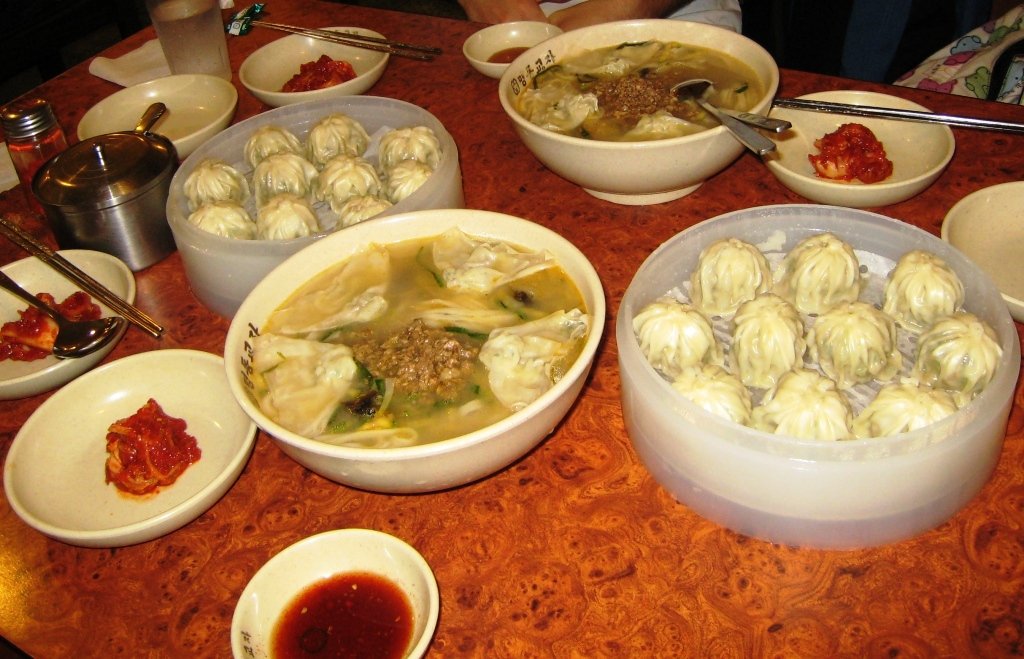
    Bowls of kalguksu noodle soup and steamed mandu dumplings in Myeongdong
    Kalguksu and mandu in Myeongdong. Photo: zio nörbi, CC BY 2.0, via Wikimedia Commons
    • What to order: Kalguksu (₩12,000) and a plate of mandu dumplings (₩13,000) to share
    • Price: ₩12,000–13,000 per person (about US$9–10)
    • Naver rating: 4.37 (21,837 visitor reviews)
    • Getting there: Myeongdong Station (Line 4), right outside Exit 8
    • Hours: Daily 10:30–21:00 (last order 20:30)
    • Wait & booking: No reservations for small groups. Expect a line at lunch.
    • Parking: None. The alley is closed to cars until 22:00.
    • Good to know: There’s a second branch, Myeongdong Kyoja 1st Branch (명동교자 1호점), about 300 m away with the same menu. If one line is long, try the other.
    • Naver Map: Myeongdong Kyoja main branch · 1st branch

    2. 101 Namsan Donkatsu (101번지남산돈까스 남산본점) — Local Pick

    Why go: Giant Korean-style pork cutlets on the walk up to the Namsan cable car. It works well as lunch before N Seoul Tower.

    • What to order: Namsan Wang Donkatsu, the classic big cutlet (₩13,900), or the spicy version (₩13,900)
    • Price: ₩13,000–23,000 per person (about US$10–17)
    • Naver rating: 4.47 (19,524 visitor reviews)
    • Getting there: Myeongdong Station Exit 3, about 7 minutes on foot. It’s 3 minutes from the Namsan cable car entrance.
    • Hours: Daily 10:30–22:00 (last order 21:00)
    • Wait & booking: Walk in
    • Parking: Free for customers
    • Naver Map: 101 Namsan Donkatsu

    3. Namsan Sanchaejip (남산산채집) — Local Pick

    Why go: A few doors from 101 Namsan Donkatsu, this one pairs pork cutlet with sanchae (wild mountain greens) bibimbap, so you get two Korean classics on one tray. Its Naver page is written partly in English, and plenty of overseas visitors eat here.

    • What to order: The Namsan donkatsu and bibimbap set (₩15,500), or the beef tartare bibimbap (₩16,000)
    • Price: ₩14,000–16,000 per person (about US$11–12)
    • Naver rating: 4.57 (10,220 visitor reviews)
    • Getting there: Myeongdong Station Exit 3, turn right at the Pacific Hotel and walk about 200 m uphill toward the cable car. First floor of the Chotbul Building.
    • Hours: Daily 10:30–20:50 (last order 20:00)
    • Wait & booking: Bookable on Naver
    • Parking: Two free lots; valet ₩3,000
    • Naver Map: Namsan Sanchaejip

    4. Hyodam Kalguksu Dakhanmari (효담칼국수 닭한마리 명동본점) — Local Pick

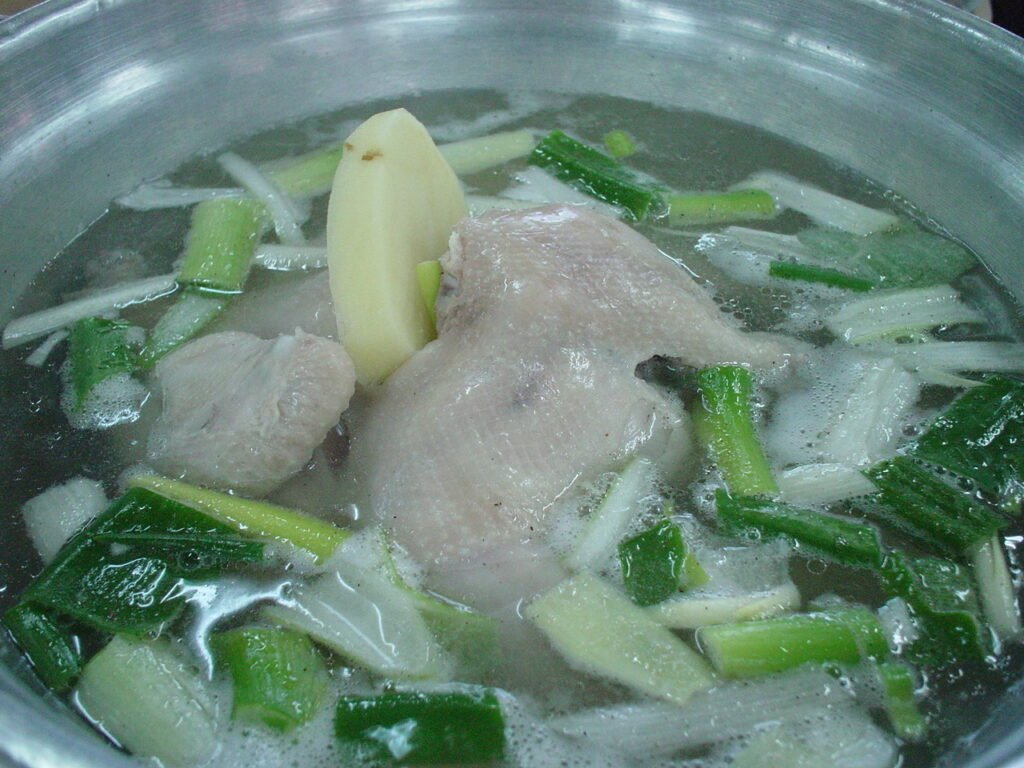
    Why go: Dakhanmari means “one whole chicken.” It’s boiled at your table in a light broth, and you finish by adding noodles to the pot. If you’re on your own, order the half-chicken kalguksu instead.

    Dakhanmari, a whole chicken boiled in broth with potato and green onion
    Dakhanmari (whole-chicken hot pot). Photo: shizu k, CC BY-SA 2.0, via Wikimedia Commons
    • What to order: Dakhanmari for two (₩30,000), or half-chicken kalguksu (₩13,000) for one. The potato pancake (₩18,000) is a popular side.
    • Price: about ₩13,000–15,000 per person (about US$10–11)
    • Naver rating: not shown (9,795 visitor reviews)
    • Getting there: Euljiro 1-ga Station (Line 2) Exit 6, about 2 minutes on foot
    • Hours: Daily 10:30–22:15 (last order 21:30)
    • Wait & booking: Walk in
    • Parking: None. Use a public lot nearby.
    • Naver Map: Hyodam Kalguksu Dakhanmari

    5. Onjeom Euljiro (온점 을지로점) — Local Pick

    Why go: The best-rated place on this list (4.95), and the one to choose if you want Korean BBQ near Myeongdong. Weekday lunch sets are much cheaper than dinner.

    • What to order: Signature galbi, 250 g (₩38,000). At lunch, the Gwangyang bulgogi set (₩23,000) or spicy pork set (₩20,000).
    • Price: ₩20,000–23,000 at lunch (about US$15–17); ₩28,000–58,000 per portion at dinner (about US$21–44)
    • Naver rating: 4.95 (5,203 visitor reviews)
    • Getting there: Euljiro 1-ga Station Exit 1-1, right at the exit. Basement 1 of The Zone Euljiro Tower (더존을지타워).
    • Hours: Mon–Fri 11:00–22:00, Sat 12:00–22:00 (last order 21:20). Closed Sundays.
    • Wait & booking: Private rooms bookable on Naver
    • Parking: In the building, first 2 hours free
    • Naver Map: Onjeom Euljiro

    6. Huoguo Meokgo (훠궈먹고 명동점) — Local Pick

    Why go: Chinese hot pot has become a big part of eating out in Seoul. You pick a broth, then cook meat and vegetables at the table.

    • What to order: Mala red broth or tomato broth (₩19,900)
    • Price: ₩19,900 per person (about US$15), ₩23,000 (about US$17) on weekends, holidays and weekdays after 15:00
    • Naver rating: not shown (4,494 visitor reviews)
    • Getting there: Euljiro 1-ga Station Exit 5, about 250 m. Second floor.
    • Hours: Daily 11:00–23:00 (last order 21:20)
    • Wait & booking: Expect a wait at lunch and dinner
    • Parking: Free
    • Naver Map: Huoguo Meokgo

    7. Bobae Banjeom (보배반점 명동점) — Local Pick

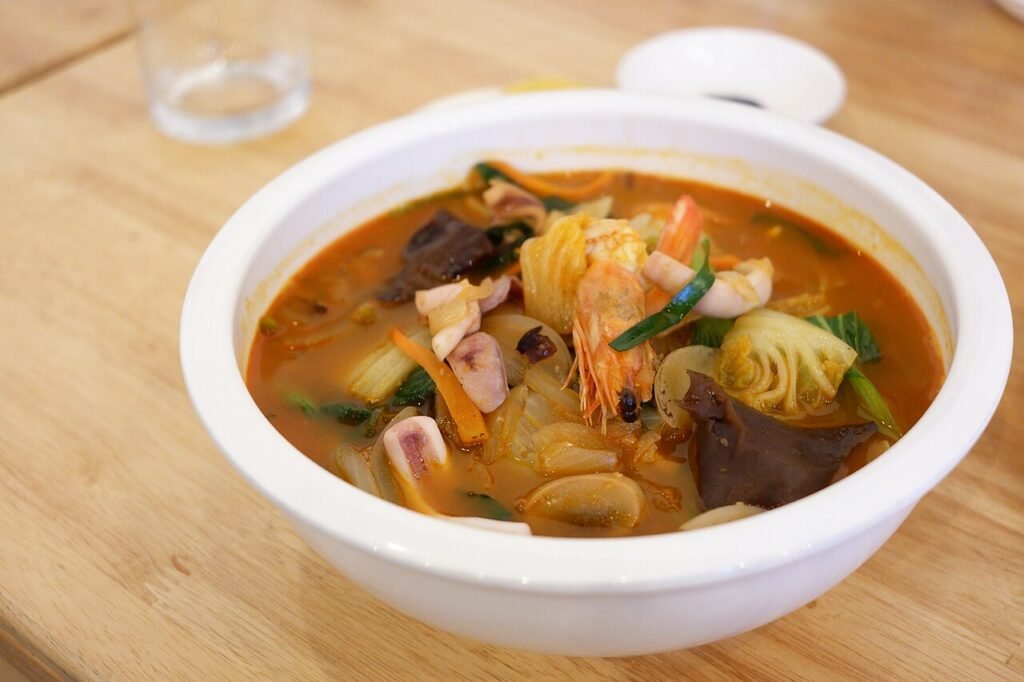
    Why go: Korean-Chinese food is its own cuisine, and jjamppong, a spicy seafood noodle soup, is the dish to try. Bobae Banjeom has several versions.

    A bowl of jjamppong, spicy Korean-Chinese seafood noodle soup
    Jjamppong, spicy seafood noodle soup. Photo: Vee Satayamas, CC BY 2.0, via Wikimedia Commons
    • What to order: Whole-squid jjamppong, the house signature (₩16,000), or the seafood tray jjajang for 2–3 people (₩24,000)
    • Price: ₩11,000–16,000 per person (about US$8–12)
    • Naver rating: not shown (4,069 visitor reviews)
    • Getting there: Euljiro 1-ga Station Exit 5, turn right at the Eulji Hanguk Building and walk about 200 m
    • Hours: Daily 10:30–23:00 (last order 22:20)
    • Wait & booking: Bookable on Naver for 1–12 people
    • Naver Map: Bobae Banjeom

    8. Bantianyao Kaoyu (반티엔야오 카오위 명동점) — Local Pick

    Why go: Kaoyu is a whole grilled fish served in a pan of spicy broth, Sichuan-style. It’s a sharing meal, so come with friends.

    • What to order: Mala kaoyu or tomato kaoyu (₩43,000 each)
    • Price: One fish (₩43,000–55,000, about US$32–41) usually feeds 2–3 people
    • Naver rating: 4.76 (3,252 visitor reviews)
    • Getting there: Euljiro 1-ga Station Exit 5, turn right at Cheonggiwa Town, then left at Olive Young
    • Hours: Daily 12:00–23:00 (last order 21:30)
    • Wait & booking: Request a booking on Naver; the restaurant confirms it
    • Parking: Paid lot nearby; 2-hour coupon ₩3,000 from the restaurant
    • Naver Map: Bantianyao Kaoyu

    9. Hadonggwan (하동관 명동본점) — Local Pick

    Why go: A clear beef bone soup with sliced brisket and rice, a classic Korean breakfast. It opens at 7 a.m. and closes at 4 p.m., so this is a morning or lunch stop.

    • What to order: Gomtang, regular (₩19,000)
    • Price: ₩19,000–25,000 per person (about US$14–19)
    • Naver rating: 4.04 (2,251 visitor reviews)
    • Getting there: Euljiro 1-ga Station Exit 5, about 50 m up the one-way street on the right
    • Hours: Mon–Sat 07:00–16:00. Closed Sundays.
    • Wait & booking: Walk in
    • Parking: None
    • Naver Map: Hadonggwan

    10. Myeonghwadang (명화당 명동1호점) — Local Pick

    Why go: The cheapest proper meal on this list. Bunsik is Korean snack food: gimbap, spicy rice cakes and noodles, the things Koreans eat after school or on a busy workday.

    • What to order: Jjolbokki, spicy chewy noodles with rice cakes (₩6,500), plus a roll of Myeonghwadang gimbap (₩4,800)
    • Price: ₩4,800–8,500 per dish (about US$4–6)
    • Naver rating: not shown (1,643 visitor reviews)
    • Getting there: Myeongdong Station Exit 6, about 250 m. Second floor.
    • Hours: Daily 09:00–22:30
    • Wait & booking: Walk in
    • Naver Map: Myeonghwadang

    Tips for Eating in Myeongdong

    • Use Naver Map, not Google Maps. Search the Korean name in brackets above. Naver shows today’s hours and whether a place is booking online.
    • Myeongdong costs more. Prices here run higher than in neighborhoods where mostly locals eat. The street food stalls on the main street are fun, but a sit-down meal at one of the places above is often better value.
    • Eat early or late. Lunchtime is the busiest. Arriving before noon or after 1:30 p.m. usually means a shorter wait.
    • Hot pot and BBQ are built for groups. Many grill and hot pot menus are priced for two or more. If you’re alone, Myeongdong Kyoja, Hadonggwan and Myeonghwadang are easy picks.

    Myeongdong Restaurants FAQ

    What is Myeongdong famous for food-wise?

    Myeongdong Kyoja’s kalguksu and dumplings are the best-known meal, and the main street is lined with street food stalls in the evening.

    Which Myeongdong restaurants are open late?

    Bobae Banjeom and Huoguo Meokgo both stay open until 23:00, and Myeonghwadang until 22:30. Check the last-order times above.

    Do I need a reservation?

    Not for most of these. Onjeom, Namsan Sanchaejip, Bobae Banjeom and Bantianyao Kaoyu take bookings on Naver, which helps for groups.

    Is Myeongdong expensive for food?

    It’s pricier than neighborhoods that cater mainly to locals, but you can still eat well for ₩5,000–15,000 (about US$4–11) at places like Myeonghwadang and Myeongdong Kyoja.

  • Korea Travel Checklist 2026: What to Do Before You Fly (From a Local)

    Korea Travel Checklist 2026: What to Do Before You Fly (From a Local)

    Short answer: before you fly to Korea, check whether you need a K-ETA (22 countries and territories, including the US, UK, Canada and Australia, are exempt until December 31, 2026), file the free e-Arrival Card within 3 days of landing, sort out a data plan, and download Naver Map instead of relying on Google Maps. Everything else on this list makes your trip easier, but those four will save you real headaches.

    I’m a Seoul local, and this checklist includes the things Korean friends tell visitors that most English guides skip: restaurant break times, why some BBQ places turn away solo diners, and how to sign up for Naver without a Korean phone number.

    Last checked: 2026-10-27. Entry rules change, so always confirm on the official sites linked below.

    Quick checklist

    • ☐ Passport valid for your whole stay (6+ months is safest)
    • ☐ K-ETA or visa status checked
    • ☐ e-Arrival Card filed (within 72 hours of arrival)
    • ☐ Hotel and train tickets booked
    • ☐ eSIM, SIM or pocket Wi-Fi ready
    • ☐ Naver Map, Papago and Kakao T downloaded
    • ☐ Some cash in won for T-money and markets
    • ☐ Medication rules checked
    • ☐ Plug adapter (Type C/F, 220V)
    • ☐ Emergency numbers saved: 112 and 119

    Korea Travel Checklist: When to Do What

    When What to do
    2–3 months before Check passport validity, check K-ETA or visa needs, book flights and hotels (earlier for spring cherry blossom and autumn foliage seasons)
    1 month before Book KTX train tickets for intercity trips, reserve popular restaurants and attractions, buy travel insurance, check medication rules
    1 week before Buy an eSIM or reserve a SIM or pocket Wi-Fi, download apps, set up your card for overseas use
    Within 3 days of arrival Submit the e-Arrival Card (unless you hold an approved K-ETA)
    On arrival Get some won, buy a T-money card, activate your data

    1. Entry Paperwork: K-ETA and the e-Arrival Card

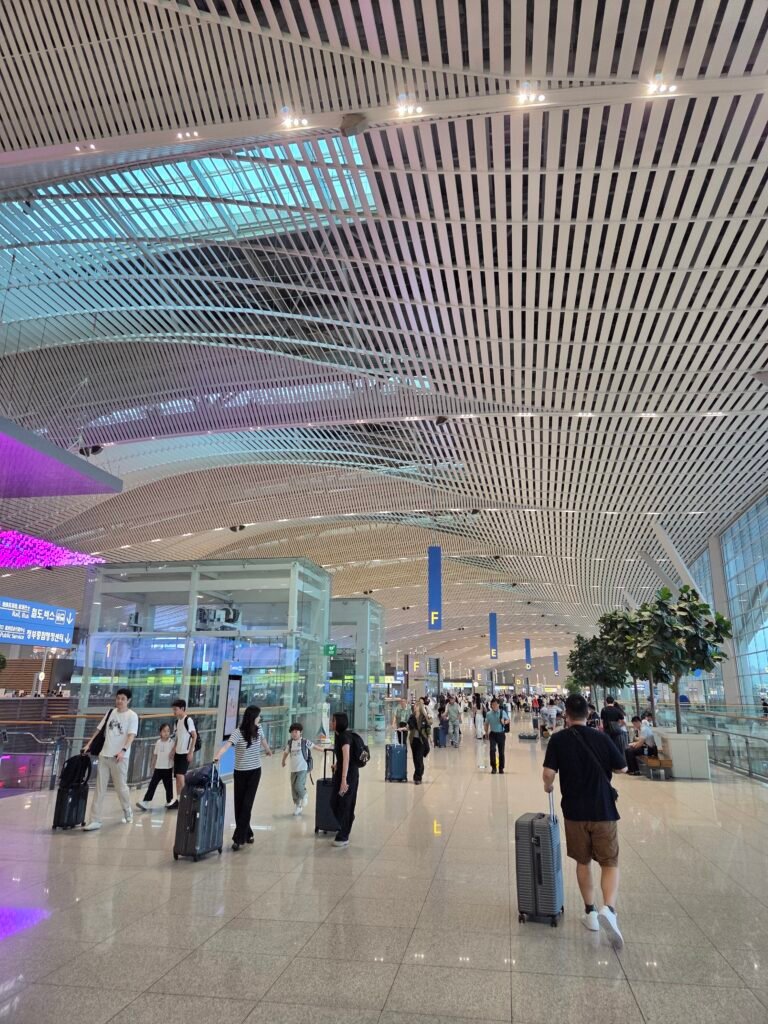
    Travelers with suitcases walking through Incheon International Airport
    Incheon International Airport. Photo: Jimmy

    K-ETA (Korea Electronic Travel Authorization)

    The K-ETA is an online travel permit for visa-free visitors. Right now, Korea has a temporary K-ETA exemption until December 31, 2026 for 22 countries and territories:

    Australia, Austria, Belgium, Canada, Denmark, Finland, France, Germany, Hong Kong, Italy, Japan, Macau, the Netherlands, New Zealand, Norway, Poland, Singapore, Spain, Sweden, Taiwan, the United Kingdom and the United States (including Guam).

    If your country is not on this list and you don’t need a visa, you’ll likely need a K-ETA. Apply only on the official site, k-eta.go.kr, and do it at least 72 hours before your flight. Copycat sites charge extra for the same form.

    Traveling in 2027? The exemption ends on December 31, 2026 unless Korea extends it again. If your trip is in January 2027 or later, check the official site a few weeks before you fly.

    e-Arrival Card

    The paper arrival card you used to fill out on the plane has been replaced by an online version. Submit it free at e-arrivalcard.go.kr up to 3 days before you land. You don’t need to print it.

    If you already have an approved K-ETA, you can skip the e-Arrival Card. That’s one reason some exempt travelers still choose to apply for a K-ETA.

    Passport

    Your passport needs to be valid for your stay, but many airlines and embassies recommend at least six months of validity. If yours expires soon, renew it before booking anything.

    2. Bookings to Make Early

    • Hotels: Spring (late March to early April) and autumn (October to November) are busy. Book a month or more ahead for those seasons.
    • KTX trains: Weekend and holiday trains between Seoul and Busan sell out. Korean holidays like Chuseok and Seollal are the worst. Avoid traveling on those dates if you can.
    • Popular restaurants: Many trendy restaurants in Seoul take bookings only through Korean apps like CatchTable or put you on a digital waitlist through Tabling. Some now have English versions, so check before you go.
    • Palaces and museums: Check closing days. Gyeongbokgung Palace closes on Tuesdays, and many museums close on Mondays.

    3. Phone, Data and the Apps You Actually Need

    Get mobile data before you land

    An eSIM is the easiest option if your phone supports it. You can also pick up a physical SIM or pocket Wi-Fi at Incheon Airport. You’ll use data all day for maps, translation and payment, so don’t rely on café Wi-Fi.

    Download these apps at home

    • Naver Map: the map Koreans actually use. It has an English mode, walking directions, subway and bus routes, and real reviews.
    • Papago: a translation app made in Korea. Its camera mode is great for menus.
    • Kakao T: for calling taxis.
    • Subway app: Naver Map covers this, but a dedicated subway app is handy underground.
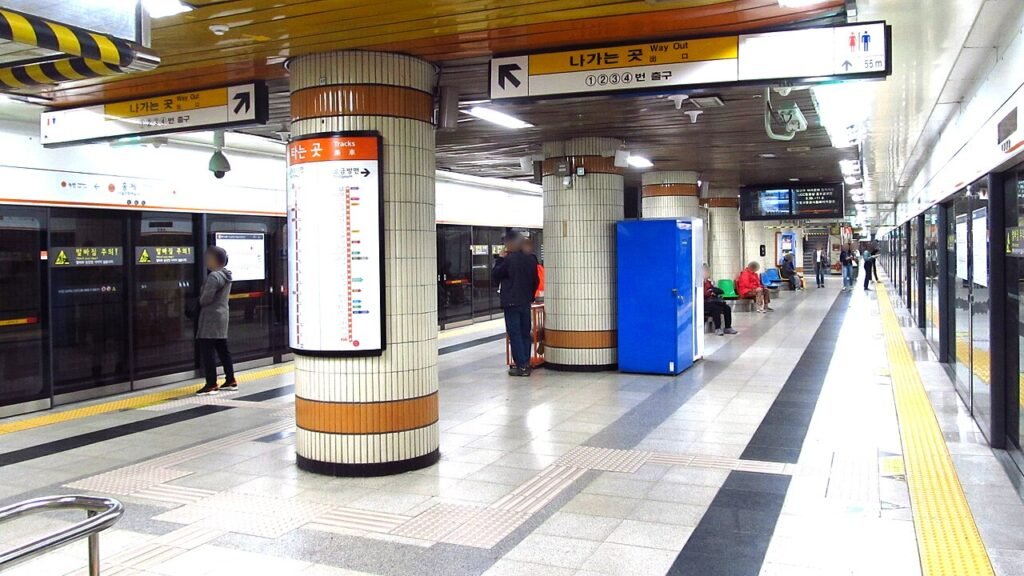
    Seoul subway platform with bilingual Korean and English signs
    A Seoul subway platform. Naver Map shows when the next train arrives. Photo: LERK, CC BY-SA 4.0, via Wikimedia Commons

    Why not just use Google Maps?

    For years, Google Maps couldn’t give proper walking or driving directions in Korea because of map data rules. In February 2026 Korea conditionally approved Google’s request to use detailed map data, but as of this update the full service hasn’t been confirmed as live. For now, Naver Map is still more accurate for walking routes, opening hours and reviews.

    Local tip: Naver Map works best when you search in Korean. Copy the Korean name of a place (from a blog, Instagram or this site) and paste it into the search bar. You’ll get far better results than with an English spelling.

    Jimmy’s note: Skip Google Maps and download Naver Map instead. It’s built around Korean, so translating a place name into Korean before you search usually gives you better results. Most Koreans still use Naver, our own search engine, instead of Google, and that’s why many visitors find getting around frustrating at first. But once you start using Naver Map, you can find great local restaurants and see exactly when the next subway or bus will arrive in real time, so you can plan your day much better.

    Can foreigners sign up for Naver?

    Yes, and you don’t need a Korean phone number.

    • Sign up with your own number: Naver accepts overseas mobile numbers for text-message verification.
    • Verify with your passport: Since June 4, 2026, foreign visitors can verify their identity with a foreign passport right on their phone. Once verified, you can make restaurant reservations, book other services and pay through Naver Map. Before this, travelers without a Korean number had to call customer support.
    • No account needed for the basics: Searching for places and getting directions on Naver Map work without signing up.

    4. Money: Cash, Cards and Tax Refunds

    GS25 convenience store in Seoul with an ATM at the entrance
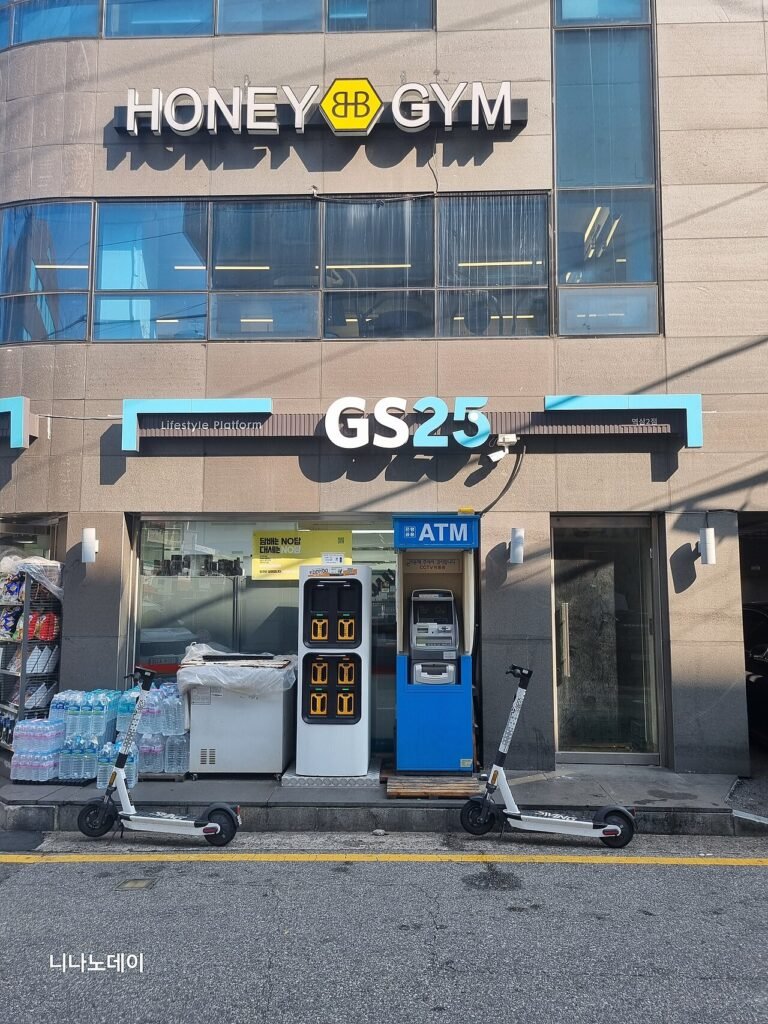
    Convenience stores like GS25 sell T-money cards, and many have an ATM. Photo: Ninanoday, CC0, via Wikimedia Commons
    • Cards: Visa and Mastercard work almost everywhere in cities. Tell your bank you’re traveling and check foreign transaction fees.
    • Cash: Keep some won for traditional markets, street food and small shops. Topping up a T-money card at a convenience store or subway machine usually needs cash.
    • T-money card: a rechargeable transport card for subways, buses and many taxis. Buy one at any convenience store (GS25, CU, 7-Eleven) or the airport.
    • Tax refunds: At stores marked “Tax Free,” foreign visitors staying less than six months can get an instant refund at the counter on purchases of ₩15,000 or more, up to ₩1,000,000 per purchase and ₩5,000,000 in total for the trip. Bring your passport when shopping.
    • Tipping: not expected in Korea. Prices are what you pay.

    5. Things Koreans Know That Guidebooks Don’t Tell You

    • Break time: Many restaurants close between lunch and dinner, often around 3 p.m. to 5 p.m. If you’re planning a late lunch, check the hours on Naver Map first.
    • Solo diners at BBQ places: Some Korean BBQ and hot pot restaurants require at least two orders, so a solo traveler may be turned away. Look for places that offer single portions, or go at lunchtime.
    • Lines move fast, waitlists move faster: At popular spots you may see a tablet at the door instead of a line. Enter your phone number and wait nearby.
    • Water is free: In most restaurants, water costs nothing, so don’t be surprised when it arrives without you asking. Tap water in Korea is generally fine to drink, and since COVID many restaurants serve bottled water for hygiene reasons.

    6. Health and Medication

    Korea has strict drug laws. Ordinary prescription medicine for personal use is usually fine if you keep it in its original packaging with a copy of your prescription. Medication containing controlled substances, including some ADHD medications, requires approval from Korea’s Ministry of Food and Drug Safety before you travel. If you take anything in this category, contact the Korean embassy in your country well ahead of your trip.

    Travel insurance is also worth it. Healthcare in Korea is high quality, but costs for visitors without insurance add up quickly.

    7. Packing Essentials

    • Plug adapter: Korea uses 220V with round two-pin plugs (Type C and F). Check that your chargers support 220V.
    • Comfortable walking shoes: Seoul is hilly and you’ll walk a lot, especially on subway transfers.
    • Weather-ready layers: Summers are hot and humid with a rainy season, and winters are cold and dry. Pack for the month you’re visiting.
    • Portable battery: you’ll be on your phone all day for maps and translation.

    8. Save These Emergency Numbers

    Number What it’s for
    112 Police
    119 Fire and ambulance

    Korea Travel Checklist FAQ

    Do Americans need a K-ETA for Korea in 2026?

    No. US citizens are on the temporary exemption list until December 31, 2026. You’ll still need to submit the e-Arrival Card unless you choose to get a K-ETA anyway.

    Is the e-Arrival Card mandatory?

    For most foreign visitors, yes. It’s free and takes a few minutes at e-arrivalcard.go.kr. Approved K-ETA holders and registered residents are exempt.

    Does Google Maps work in Korea?

    It shows places and public transit, but walking and driving directions have been limited for years. Korea approved Google’s use of detailed map data in February 2026, but Naver Map is still the safer choice for now.

    Do I need cash in Korea?

    A little. Cards work almost everywhere, but traditional markets, some street food stalls and T-money top-ups often need cash.

    Can I use my phone in Korea?

    Yes, as long as it’s unlocked for an eSIM or local SIM, or you use a pocket Wi-Fi. Check your phone supports eSIM before you buy one.

    What is the best time to visit Korea?

    Spring (April to May) and autumn (September to November) have the most comfortable weather. They’re also the busiest, so book early.