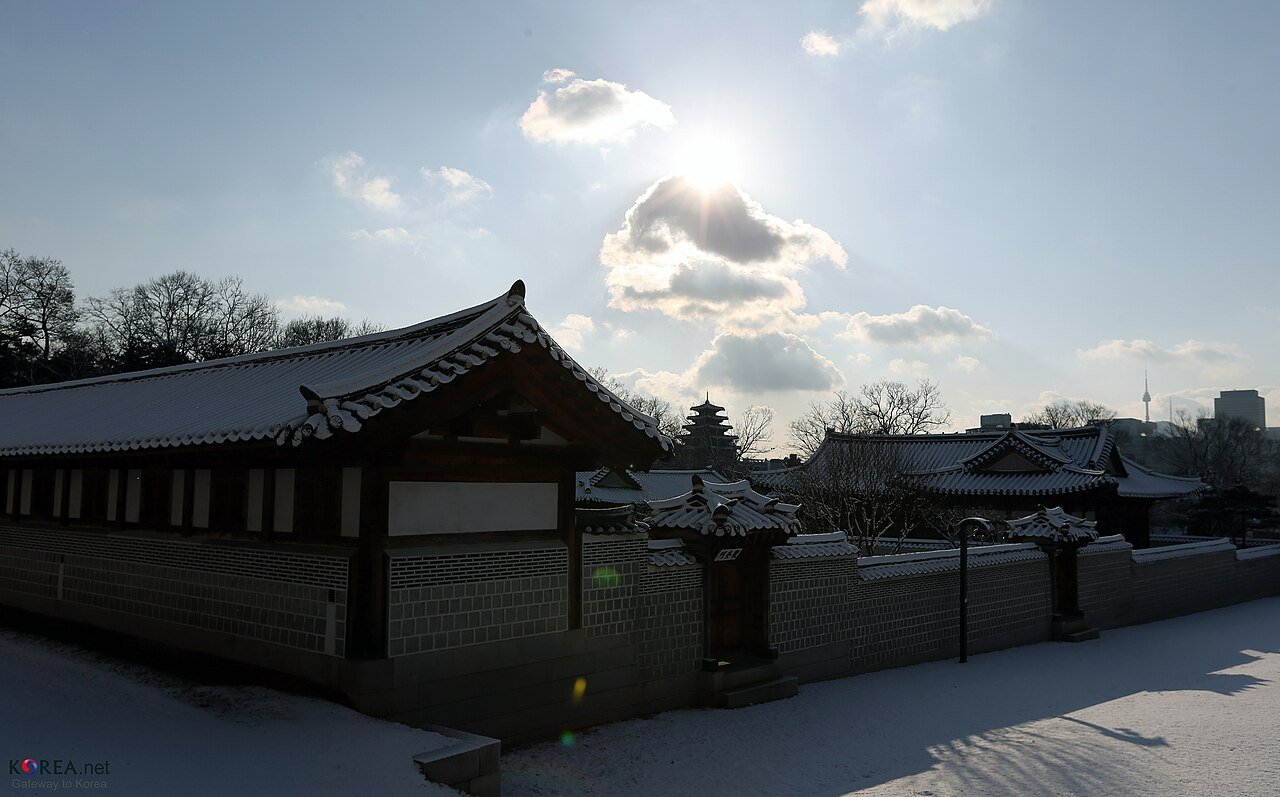
Short answer: Korea in winter is cold, dry and mostly sunny. In Seoul, January is the coldest month, with an average daily low of −5.5°C (22°F) and a high of just 2.1°C (36°F). Busan and Jeju are several degrees milder. Pack a long padded coat, thermal layers, gloves and shoes with grip. In return you get ski resorts a couple of hours from Seoul, ice fishing festivals, hot street snacks and long evenings at a jjimjilbang.
Two dates matter if you’re planning a December or January trip. Christmas Day (Friday, December 25, 2026) and New Year’s Day (Friday, January 1, 2027) are public holidays. The Lunar New Year (Seollal) break runs from February 6 to 9, 2027, and that is when trains and highways fill up.
Last checked: 2026-10-29. Temperatures are the Korea Meteorological Administration (KMA) 1991–2020 climate normals. Holiday dates are from the 2027 calendar announced by the Korea AeroSpace Administration on June 29, 2026. Festival dates are from each festival’s official website. Anything not yet announced is marked as such.
Korea Winter Weather by Month (Seoul, Busan, Jeju)
These are 30-year averages, not a forecast. Any given week can be several degrees colder or warmer, and a cold snap in Seoul can push daytime highs well below freezing for a few days.
| Month | City | Average | Average high | Average low | Precipitation |
|---|---|---|---|---|---|
| December | Seoul | 0.2°C (32°F) | 4.2°C (40°F) | −3.4°C (26°F) | 22.6 mm |
| December | Busan | 5.8°C (42°F) | 10.4°C (51°F) | 2.0°C (36°F) | 33.8 mm |
| December | Jeju | 8.3°C (47°F) | 11.0°C (52°F) | 5.6°C (42°F) | 55.6 mm |
| January | Seoul | −1.9°C (29°F) | 2.1°C (36°F) | −5.5°C (22°F) | 16.8 mm |
| January | Busan | 3.6°C (38°F) | 8.2°C (47°F) | −0.1°C (32°F) | 34.5 mm |
| January | Jeju | 6.1°C (43°F) | 8.6°C (48°F) | 3.7°C (39°F) | 67.5 mm |
| February | Seoul | 0.7°C (33°F) | 5.1°C (41°F) | −3.2°C (26°F) | 28.2 mm |
| February | Busan | 5.4°C (42°F) | 10.2°C (50°F) | 1.5°C (35°F) | 49.6 mm |
| February | Jeju | 6.8°C (44°F) | 9.9°C (50°F) | 4.0°C (39°F) | 57.2 mm |
Source: KMA climate normals 1991–2020 (data.kma.go.kr), stations Seoul (108), Busan (159) and Jeju (184). Fahrenheit is converted and rounded to the nearest degree.
What the table means in practice:
- Seoul drops below freezing most nights from December to February. It is also dry: January averages only 16.8 mm of precipitation, so you get a lot of clear, cold days, and the wind makes it feel colder than the number on the thermometer.
- Busan is about 5°C warmer than Seoul in January, with lows hovering around freezing. A good coat is still needed, but it’s a gentler winter.
- Jeju rarely freezes at sea level (January low 3.7°C), but it is the wettest and windiest of the three. Hallasan, the mountain in the middle of the island, is a different story and gets proper snow.
- Gangwon Province, where most ski resorts are, is colder than Seoul and much snowier, especially in the mountains.
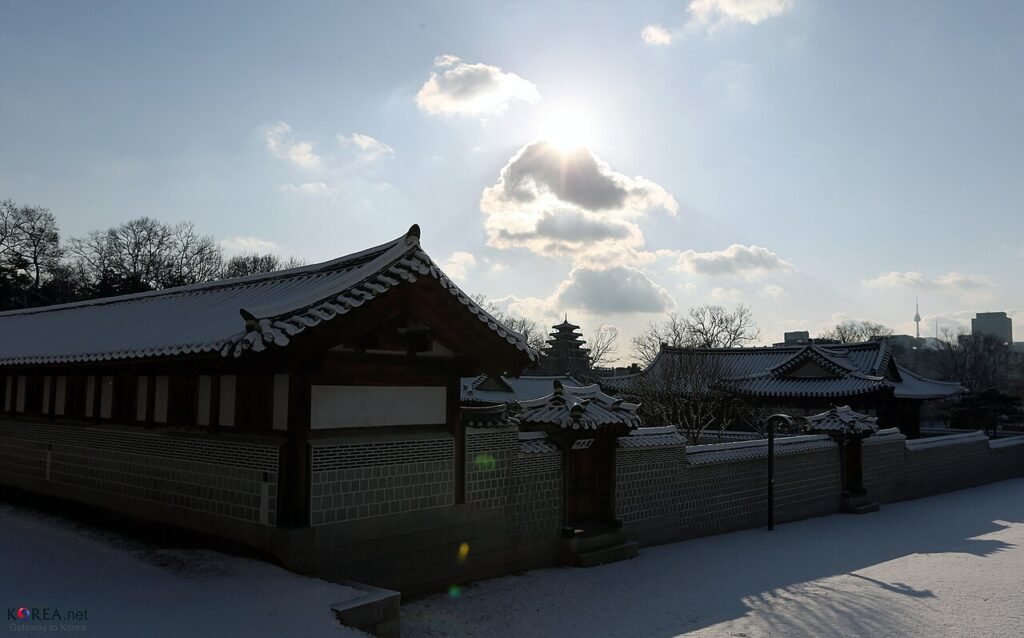
What to Wear in Korea in Winter
In a Korean winter you go back and forth between freezing streets and very warm rooms all day. Subway cars, cafes, shops and restaurants with heated floors (ondol) can all feel hot. Wear a warm coat you can take off easily, with thinner layers underneath.
Packing list for December to February
- A long padded coat. A knee-length down or synthetic puffer is what most people in Seoul wear, and it keeps your legs warm in the wind. A short ski jacket is fine for Busan or Jeju.
- Thermal base layers. A thin thermal top and leggings under normal clothes do more than a thick sweater, and they don’t make you overheat indoors.
- Hat, scarf and gloves. Touchscreen gloves help, since you’ll be checking Naver Map a lot.
- Shoes with grip. Sidewalks, stairs and palace courtyards get icy after snow. Waterproof boots or sneakers with a good sole are better than smooth-soled fashion boots.
- Warm socks. Bring an extra pair if you’re going to an ice festival or a ski resort.
- Hand warmers. Disposable heat packs are sold at convenience stores across Korea, so you don’t need to pack many.
- Lip balm and moisturizer. The air outside is dry, and indoor heating dries it out further.
December vs. January vs. February
December starts cool and gets colder. Early in the month a warm jacket and layers are often enough in Seoul. By late December and through January you’ll want the full setup above. February is still cold, especially in the first half, but averages a few degrees higher than January.
Things to Do in Korea in Winter
Ski and snowboard near Seoul
Korea has a compact ski scene, and several resorts are close enough to Seoul for a day trip:
- Konjiam Resort (Gwangju, Gyeonggi) and Jisan Forest Resort (Icheon, Gyeonggi), the closest options to Seoul
- Elysian Gangchon (Chuncheon, Gangwon) and Vivaldi Park (Hongcheon, Gangwon), further east, with bigger mountains
- Yongpyong Resort and Phoenix Pyeongchang (Pyeongchang, Gangwon), both venues of the 2018 Winter Olympics, best done as an overnight trip
As of October 29, 2026, the resorts had not posted their 2026–27 opening dates. Several run seasonal shuttle buses from Seoul. Schedules and booking appear on each resort’s own website once the season is confirmed, so check there rather than relying on last year’s timetable. Gear and clothing rental are available on site.
Ice fishing festivals
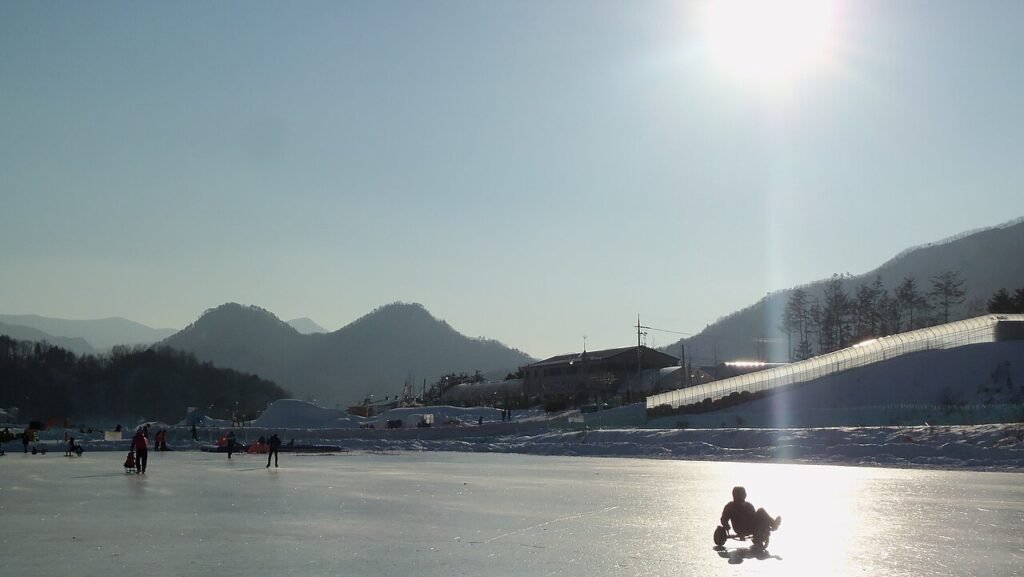
Ice fishing festivals are a big part of winter in Gangwon Province. You sit over a hole in a frozen river and try to catch trout, and many festivals will grill your catch for you on the spot.
- Hwacheon Sancheoneo Ice Festival (Hwacheon, Gangwon) is the biggest. Its official website lists the 2027 festival for January 9–31, 2027 (23 days). Besides ice fishing, there are snow and ice activities, ice sculptures and lantern-lit streets. Ticket prices for 2027 hadn’t been published when we checked, so look at the official site before you go.
- Pyeongchang Trout Festival (Pyeongchang, Gangwon) is a smaller alternative that also offers ice fishing and sledding on a frozen river. Check its official channels for dates.
All of these depend on the ice being thick enough, so schedules can change in a mild winter.
Christmas and New Year in Seoul
Seoul decorates heavily for the holidays, with light displays and markets around the city center, especially near Gwanghwamun and Cheonggyecheon. As of October 29, 2026, the city had not announced dates for this year’s events. Check Visit Seoul (english.visitseoul.net) from late November for the confirmed schedule. If you want to see in the New Year, expect big crowds in central Seoul on December 31.
Winter street food
A lot of Korean snacks mostly appear once it gets cold. Look for small street carts and market stalls:
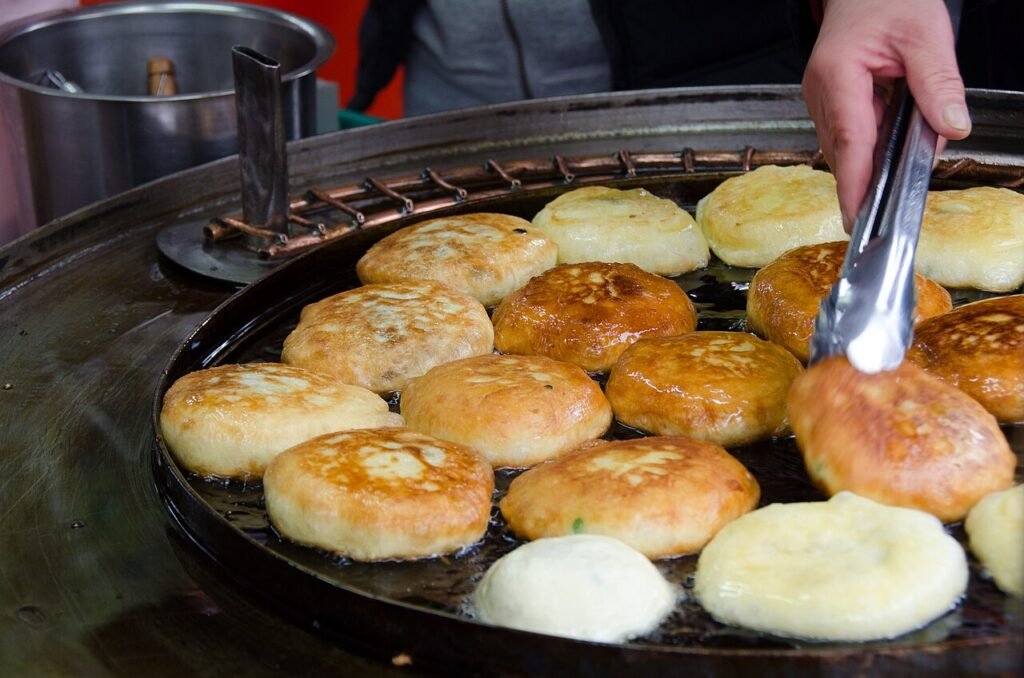
- Hotteok: a griddle-fried pancake filled with brown sugar, cinnamon and nuts. Bite carefully, because the syrup inside is very hot.
- Bungeoppang: a fish-shaped waffle filled with sweet red bean paste, and sometimes custard.
- Gyeran-ppang: a small sweet bread with a whole egg baked on top.
- Eomuk: fish cake skewers simmered in broth. You can usually sip the broth from a paper cup while you eat.
- Roasted sweet potatoes and chestnuts from barrel roasters on the street.
Warm up at a jjimjilbang
A jjimjilbang is a Korean bathhouse with gender-separated baths, plus shared heated rooms where everyone wears the provided T-shirt and shorts. After a cold day of walking, it’s a cheap and easy way to warm up. Bathing areas are nude, so leave your swimsuit at home. Prices and opening hours vary by place, so check before you go.
Indoor backups for the coldest days
On days when the wind makes walking miserable, plan around indoor places: museums, underground shopping streets near subway stations, covered markets, and cafes. Seoul’s palaces are still worth a visit after snow, but keep it to an hour or two.
Holidays and Crowds: Dates to Watch
| Date | Holiday | What it means for travelers |
|---|---|---|
| Fri, Dec 25, 2026 | Christmas Day (public holiday) | Busy evening in shopping and nightlife areas. It’s more of a date night than a family holiday in Korea. |
| Thu, Dec 31, 2026 | New Year’s Eve (not a public holiday) | Big crowds in central Seoul around midnight. |
| Fri, Jan 1, 2027 | New Year’s Day (public holiday) | Some people head out early to watch the first sunrise of the year. |
| Sat, Feb 6 to Tue, Feb 9, 2027 | Seollal (Lunar New Year), with Feb 9 as a substitute holiday | The biggest travel period of the winter. Trains and intercity buses sell out, and many small family-run restaurants and shops close for a day or more. |
Source: 2027 calendar announced by the Korea AeroSpace Administration (June 29, 2026). Seollal itself falls on Sunday, February 7, 2027.
If your trip overlaps Seollal, book KTX trains and long-distance buses as early as you can, and avoid moving between cities on the first and last day of the break. In Seoul, the days of Seollal are actually fairly quiet, as many residents go to their hometowns, but check opening days for any specific restaurant or attraction you plan to visit.
Tips for a Winter Trip to Korea
- Check the weather every evening. Cold snaps come and go in Korea. The KMA app or Naver Weather shows the “feels like” temperature, which is the more useful number.
- Look at the air quality too. Some winter days have high fine dust (misemeonji) levels. Naver Weather shows it next to the forecast. If it’s bad, a KF94 mask from any convenience store helps.
- Days are short. It gets dark in the late afternoon in December and January, so start early if you’re doing a day trip.
- Use Naver Map for transit. It’s more accurate than Google Maps for buses and walking routes in Korea.
- Keep phone batteries warm. Cold drains them fast at ski resorts and ice festivals. Carry a power bank in an inside pocket.
Korea in Winter FAQ
How cold is Korea in winter?
In Seoul, the coldest month is January, averaging −1.9°C (29°F), with average lows of −5.5°C (22°F), according to the KMA’s 1991–2020 normals. Busan averages 3.6°C (38°F) in January and Jeju 6.1°C (43°F).
Is December or January better for visiting Korea?
December is a little milder and has the holiday lights and Christmas atmosphere. January is colder but is the main season for ice festivals like Hwacheon (January 9–31, 2027) and for skiing. Both avoid the Seollal rush in February 2027.
Does it snow in Seoul in winter?
Yes, but not often heavily, and it rarely stays on the ground for long. Seoul’s winter is mostly dry, with only 16.8 mm of average precipitation in January. For reliable snow, head to the ski resorts in Gangwon.
What should I wear in Seoul in January?
A long padded coat, thermal base layers, a hat, gloves, a scarf and shoes with good grip. Dress in layers you can take off, because buildings and subways are well heated.
When is Seollal in 2027?
Seollal falls on Sunday, February 7, 2027. The public holiday runs from February 6 to 9, including a substitute holiday on Tuesday, February 9.
Leave a Reply